Culture Ark · D-1553 · Design · Browse the gallery · The full 2,000-pick list
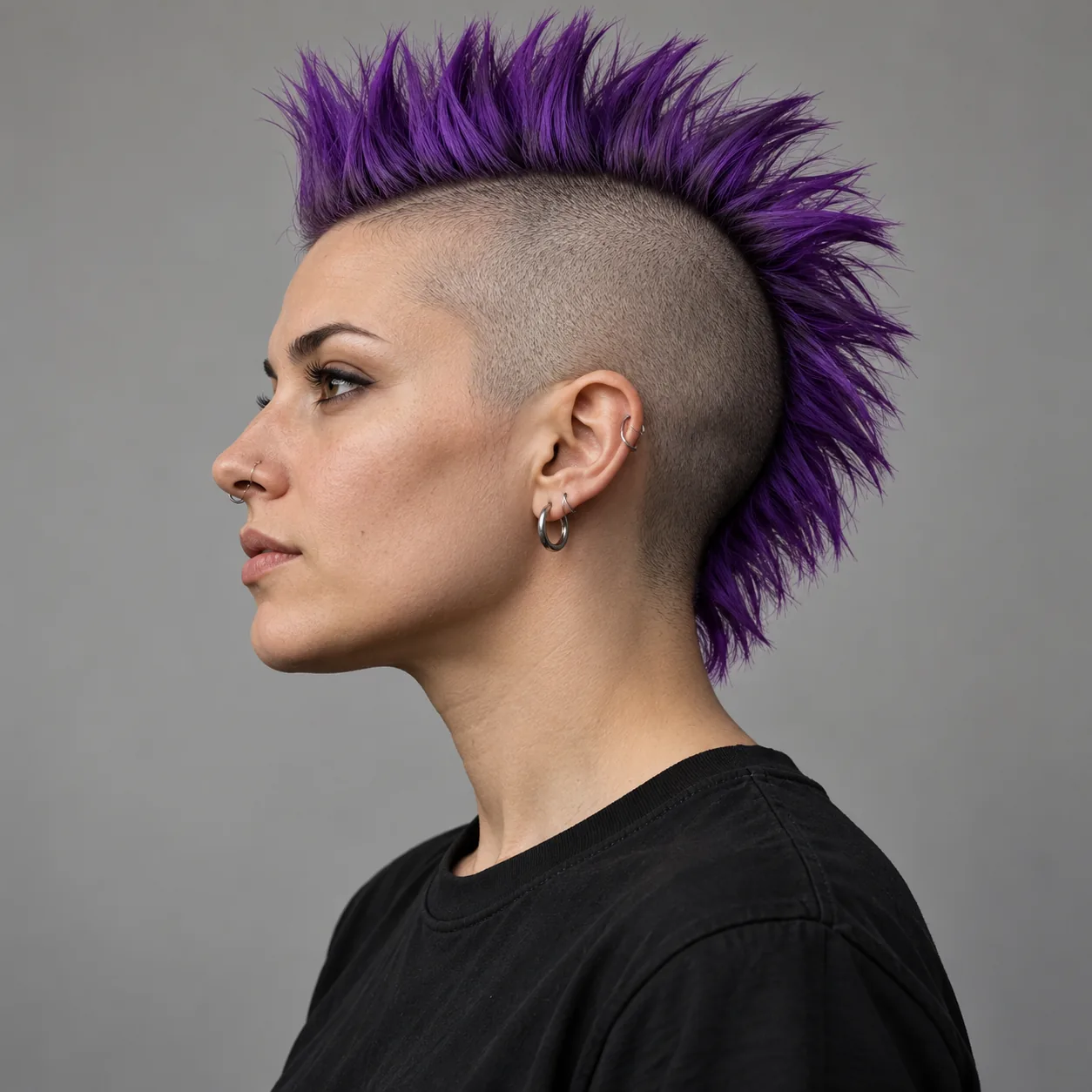
Generated interpretation, not documentary evidence. Generated fictional punk portrait with purple upright hair; not Henry Grant’s photographed subject or Indigenous cultural evidence.
Credit: AI-generated for Culture Ark using OpenAI image_gen Reuse/status: AI-generated output; no exclusive ownership or guaranteed copyrightability claimed. Underlying works, marks and cultural permissions remain separate. Generated fictional punk portrait with purple upright hair; not Henry Grant’s photographed subject or Indigenous cultural evidence. This entry concerns modern punk styling, not an account of Mohawk or other Indigenous peoples. Museum wording uses mohican; hairstyle labels must not collapse distinct communities. Its photograph is CC BY-NC and was not downloaded or cleared for commercial reuse.
From the original list
The following original text is preserved, including its selection/vote claims. Preservation is not independent verification of every assertion.
Why: A strip of upright hair: punk icon.
What to preserve: Spiked styles: high-resolution images or 3D scans, plus its making, meaning and history
Year and origin: 1970s (punk revival) · United Kingdom
Vote: 4/9 (historian 1 · future kid 2 · curator 1)
Learn more: Mohawk hairstyle on Wikipedia
Supplemental context
An upright strip of hair with closely cut sides can turn the body into a conspicuous declaration of style. London Museum preserves a Henry Grant photograph from 1978 of a man described as a punk and a car mechanic whose employer accepted his hairstyle. That small detail matters: dress and hair were negotiated not only at concerts but also in workplaces and everyday relationships. The record offers evidence of one wearer rather than a definition of all punk identity. Future readers can use this selection to examine how appearance communicates affiliation, challenges expectations and depends on practical permissions. Photographs, personal testimony and the language used to label hairstyles should be preserved together.
Creator/community: Punk participants, hairstylists and individual wearers Place/era: 1970 s punk contexts; documented London example dated 1978
Context and limits
This entry concerns modern punk styling, not an account of Mohawk or other Indigenous peoples. Museum wording uses mohican; hairstyle labels must not collapse distinct communities. Its photograph is CC BY-NC and was not downloaded or cleared for commercial reuse.
Where to learn more
- https://apiarybee.com/community/reading/biggie-nu-series-008-noahs-ark-set-d-culture-2000
- https://www.londonmuseum.org.uk/collections/v/object-950620/negative/
Apiary library | Original Culture Ark article
Public ID and individual routes: pending publisher allocation. Internal source ID: D-1553
Part of the Culture Ark: 2,000 things people should still be able to see in 2,000 years, picked by AI research teams. This page keeps the original list entry for D-1553 word for word and adds context. Browse the gallery. The Culture Ark is an Artificial Mind Hive (AMH) project. AMH is owned by Austin Little.

Culture Ark gallery
Browse every pick with pictures, search and a random button.
Open the gallery →