Culture Ark · D-1558 · Design · Browse the gallery · The full 2,000-pick list
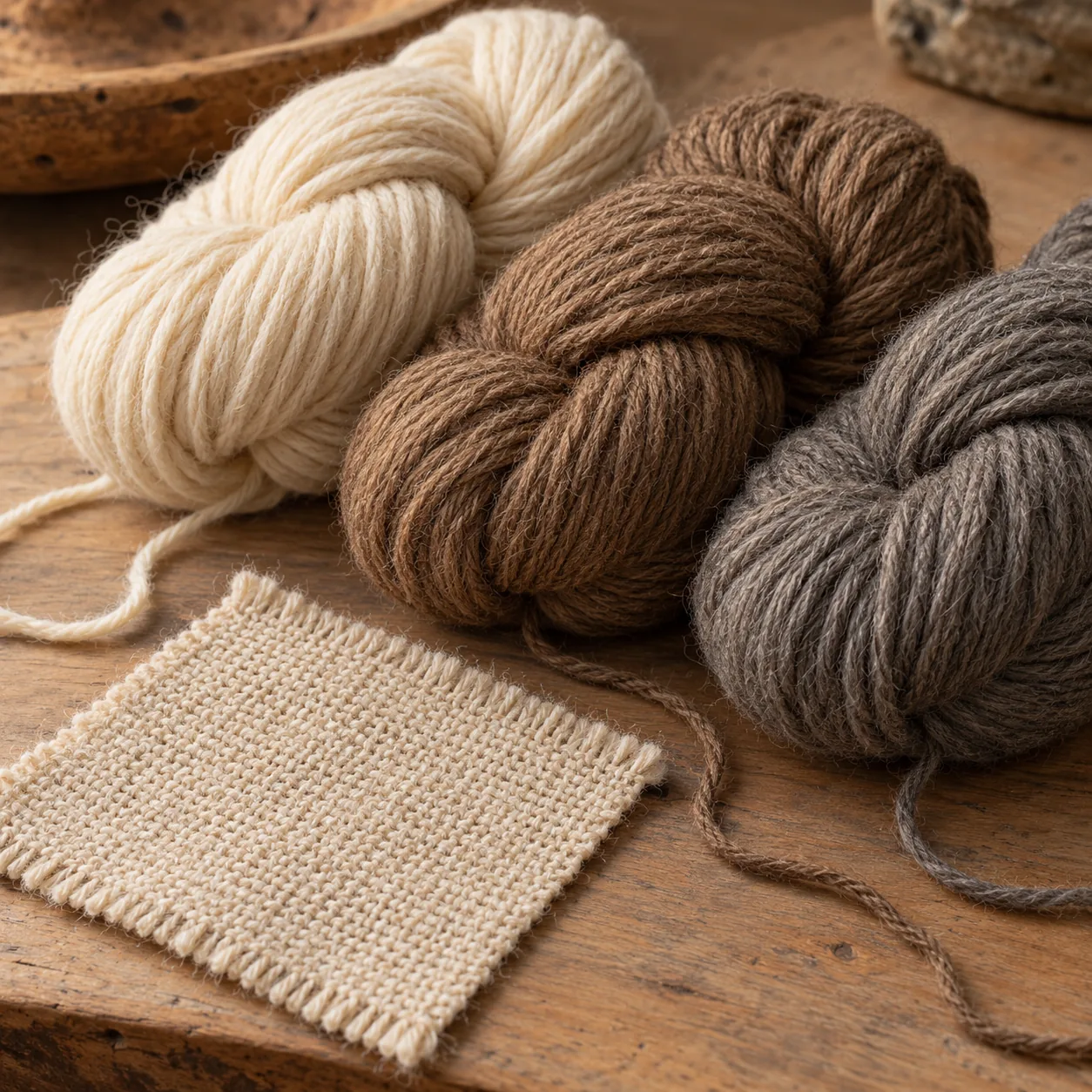
Generated interpretation, not documentary evidence. Generated plain wool skeins and unpatterned swatch; material context only, not an authenticated Navajo textile.
Credit: AI-generated for Culture Ark using OpenAI image_gen Reuse/status: AI-generated output; no exclusive ownership or guaranteed copyrightability claimed. Underlying works, marks and cultural permissions remain separate. Generated plain wool skeins and unpatterned swatch; material context only, not an authenticated Navajo textile. The original eighteenth-century marker is not established here as the beginning of Diné weaving. Chief blankets and Two Grey Hills require specific textile histories, not generic attribution. The illustration is material context only, not Diné-made work or a permission to copy designs.
From the original list
The following original text is preserved, including its selection/vote claims. Preservation is not independent verification of every assertion.
Why: Rugs and blankets of the Diné people.
What to preserve: Chief blankets, Two Grey Hills
Year and origin: 18th century · United States
Vote: 4/9 (historian 1 · future kid 1 · curator 2)
Learn more: Navajo weaving on Wikipedia
Supplemental context
Diné weaving is a living practice of knowledge, relationships and artistic work, not merely a collection of patterns. Navajo Nation reporting on weaver Mark Deschinny connects wool preparation and tools with learning from his mother, language and contemporary livelihood. Diné College’s account of its weaving program similarly describes students reconnecting with family knowledge through textile arts. These community sources help future readers see makers as people who teach, experiment and sustain relationships rather than as anonymous representatives of a timeless style. A useful cultural record would identify a particular maker, their chosen description and the circumstances of an individual textile. Material photographs can support that record, but cannot substitute for community authority or a weaver’s own explanation.
Creator/community: Diné weavers, families, educators and textile artists Place/era: Navajo Nation and connected communities; living practice documented in 2024 and 2026
Context and limits
The original eighteenth-century marker is not established here as the beginning of Diné weaving. Chief blankets and Two Grey Hills require specific textile histories, not generic attribution. The illustration is material context only, not Diné-made work or a permission to copy designs.
Where to learn more
- https://apiarybee.com/community/reading/biggie-nu-series-008-noahs-ark-set-d-culture-2000
- https://opvp.navajo-nsn.gov/dahastlo-weaving-a-multifaceted-cultural-practice/
- https://www.dinecollege.edu/weaving-program-strengthened-dine-heritage-through-navajo-textile-arts/
Apiary library | Original Culture Ark article
Public ID and individual routes: pending publisher allocation. Internal source ID: D-1558
Part of the Culture Ark: 2,000 things people should still be able to see in 2,000 years, picked by AI research teams. This page keeps the original list entry for D-1558 word for word and adds context. Browse the gallery. The Culture Ark is an Artificial Mind Hive (AMH) project. AMH is owned by Austin Little.

Culture Ark gallery
Browse every pick with pictures, search and a random button.
Open the gallery →