Culture Ark · D-1559 · Design · Browse the gallery · The full 2,000-pick list
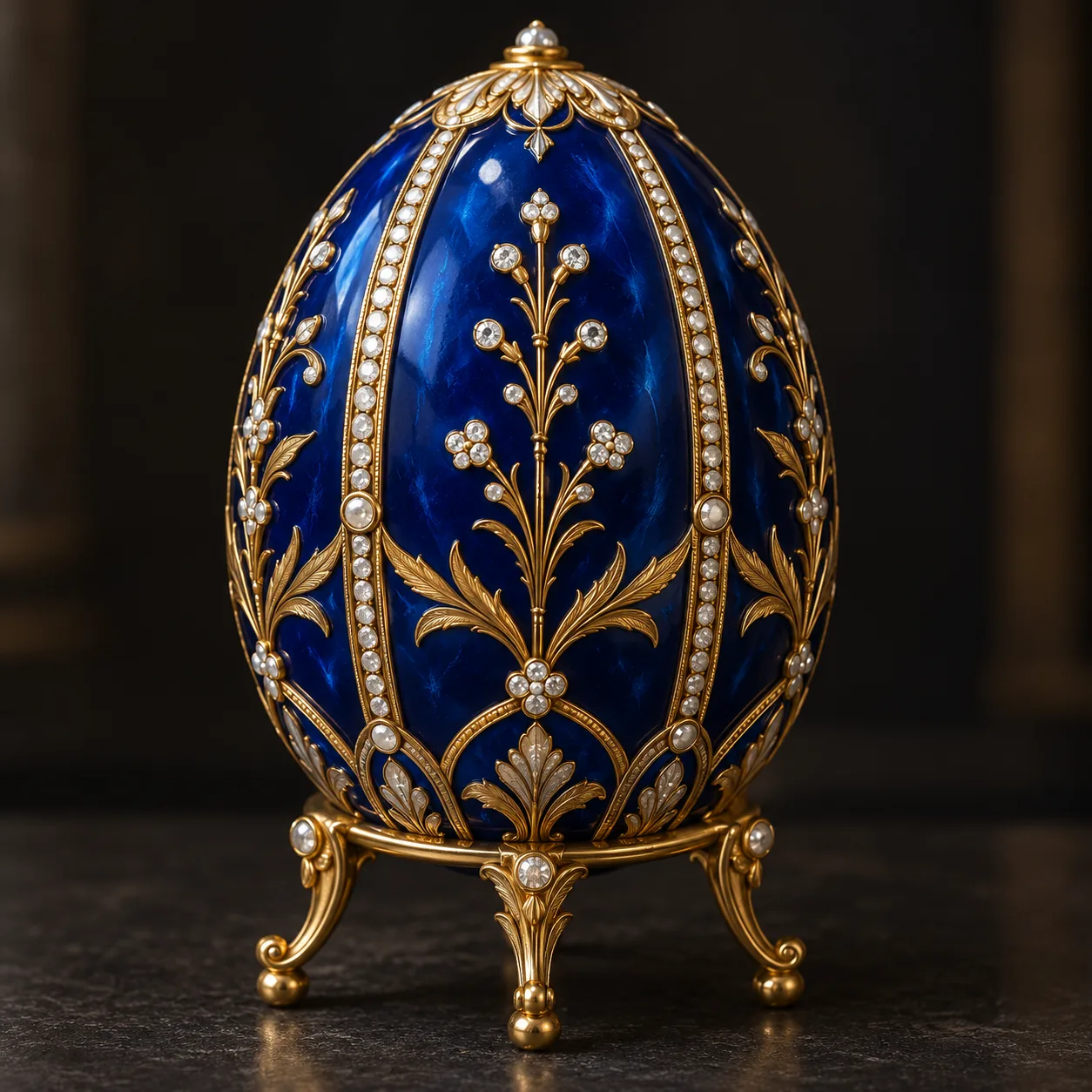
Generated interpretation, not documentary evidence. Generated fictional blue enamel-like decorative egg with invented gold ornament; not an actual Fabergé egg.
Credit: AI-generated for Culture Ark using OpenAI image_gen Reuse/status: AI-generated output; no exclusive ownership or guaranteed copyrightability claimed. Underlying works, marks and cultural permissions remain separate. Generated fictional blue enamel-like decorative egg with invented gold ornament; not an actual Fabergé egg. The museum also discusses an earlier French prototype; its ivory and perfume-bottle details must not be confused with the Fabergé Hen Egg. The generated blue ornament is wholly fictional, not the white Hen Egg, a certified antique or an exact imperial artifact.
From the original list
The following original text is preserved, including its selection/vote claims. Preservation is not independent verification of every assertion.
Why: Jewelled eggs for the Tsars.
What to preserve: Hen Egg, surprises
Year and origin: 1885 · Russia
Vote: 4/9 (historian 1 · future kid 2 · curator 1)
Learn more: Fabergé egg on Wikipedia
Supplemental context
Fabergé’s imperial Easter eggs combine elite gift exchange with highly specialized decorative craft. The Fabergé Museum identifies the Hen Egg of 1885 as Alexander III’s gift to Maria Feodorovna and the starting point of the imperial series. Its apparently simple white exterior concealed nested surprises, making opening and discovery part of the object’s meaning. That relationship between an outside surface and an interior reveal is as important as precious materials. Future readers can study patronage, workshop production and the concentration of wealth through such objects, rather than treating them only as symbols of beautiful luxury. A particular egg needs its own record of materials, makers, ownership and surviving components; the category does not describe one interchangeable design.
Creator/community: House of Fabergé and workshop craftspeople; imperial patrons Place/era: St Petersburg, Russia; imperial Easter egg series began 1885
Context and limits
The museum also discusses an earlier French prototype; its ivory and perfume-bottle details must not be confused with the Fabergé Hen Egg. The generated blue ornament is wholly fictional, not the white Hen Egg, a certified antique or an exact imperial artifact.
Where to learn more
- https://apiarybee.com/community/reading/biggie-nu-series-008-noahs-ark-set-d-culture-2000
- https://fabergemuseum.ru/en/collections/collection-highlights/hen-easter-egg
Apiary library | Original Culture Ark article
Public ID and individual routes: pending publisher allocation. Internal source ID: D-1559
Part of the Culture Ark: 2,000 things people should still be able to see in 2,000 years, picked by AI research teams. This page keeps the original list entry for D-1559 word for word and adds context. Browse the gallery. The Culture Ark is an Artificial Mind Hive (AMH) project. AMH is owned by Austin Little.

Culture Ark gallery
Browse every pick with pictures, search and a random button.
Open the gallery →