Culture Ark · D-1560 · Design · Browse the gallery · The full 2,000-pick list
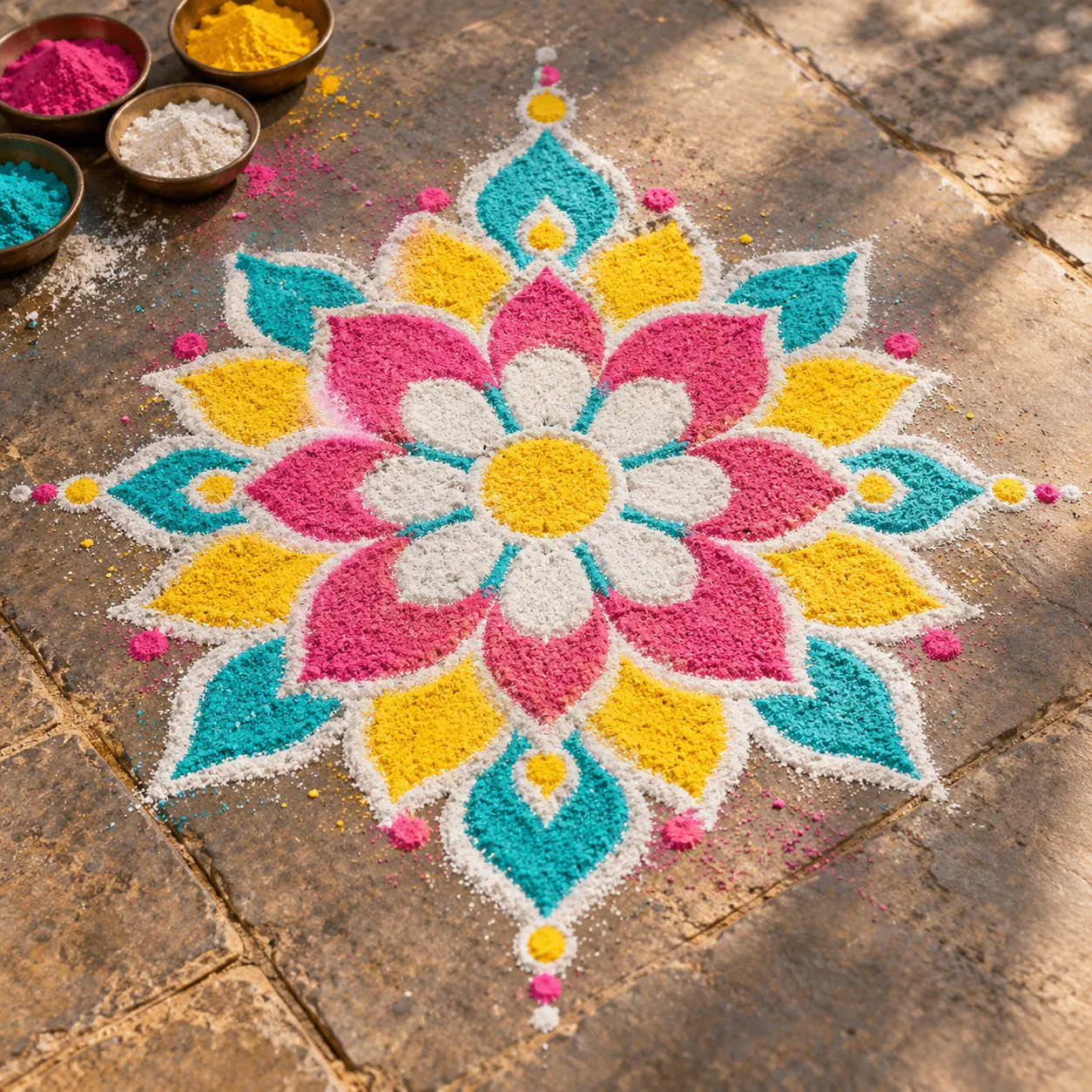
Generated interpretation, not documentary evidence. Generated invented floral powder-floor arrangement inspired by rangoli; not a documented ritual or authoritative regional pattern.
Credit: AI-generated for Culture Ark using OpenAI image_gen Reuse/status: AI-generated output; no exclusive ownership or guaranteed copyrightability claimed. Underlying works, marks and cultural permissions remain separate. Generated invented floral powder-floor arrangement inspired by rangoli; not a documented ritual or authoritative regional pattern. The source presents one practitioner’s account, not all households or beliefs. Rangoli, kolam and other regional terms should not be treated as perfectly interchangeable techniques. Ancient is not a precise origin date. The invented illustration is not ritual evidence or a pattern instruction.
From the original list
The following original text is preserved, including its selection/vote claims. Preservation is not independent verification of every assertion.
Why: Coloured floor patterns for festivals.
What to preserve: Diwali rangoli, kolam
Year and origin: ancient · India
Vote: 4/9 (historian 1 · future kid 2 · curator 1)
Learn more: Rangoli on Wikipedia
Supplemental context
Rangoli brings visual art into the spaces of arrival, daily activity and celebration. Practitioner Malathi Iyengar’s account for the Rangoli Foundation describes designs made at thresholds and other household spaces, using materials that can include powders, grains and flower petals. She emphasizes welcome, auspicious intention and the temporary life of the image. For future readers, that impermanence is important: a work may matter because it is renewed, not because its physical surface survives for centuries. The selection encourages documentation of who makes a pattern, when it is made and what its maker says it means. An attractive photograph without that context can flatten a situated practice into an anonymous decorative motif.
Creator/community: Rangoli practitioners; many local and family traditions Place/era: India and diasporic communities; continuing floor-art practices
Context and limits
The source presents one practitioner’s account, not all households or beliefs. Rangoli, kolam and other regional terms should not be treated as perfectly interchangeable techniques. Ancient is not a precise origin date. The invented illustration is not ritual evidence or a pattern instruction.
Where to learn more
- https://apiarybee.com/community/reading/biggie-nu-series-008-noahs-ark-set-d-culture-2000
- https://rangoli.org/what-is-rangoli
Apiary library | Original Culture Ark article
Public ID and individual routes: pending publisher allocation. Internal source ID: D-1560
Part of the Culture Ark: 2,000 things people should still be able to see in 2,000 years, picked by AI research teams. This page keeps the original list entry for D-1560 word for word and adds context. Browse the gallery. The Culture Ark is an Artificial Mind Hive (AMH) project. AMH is owned by Austin Little.

Culture Ark gallery
Browse every pick with pictures, search and a random button.
Open the gallery →