Culture Ark · D-1523 · Design · Browse the gallery · The full 2,000-pick list
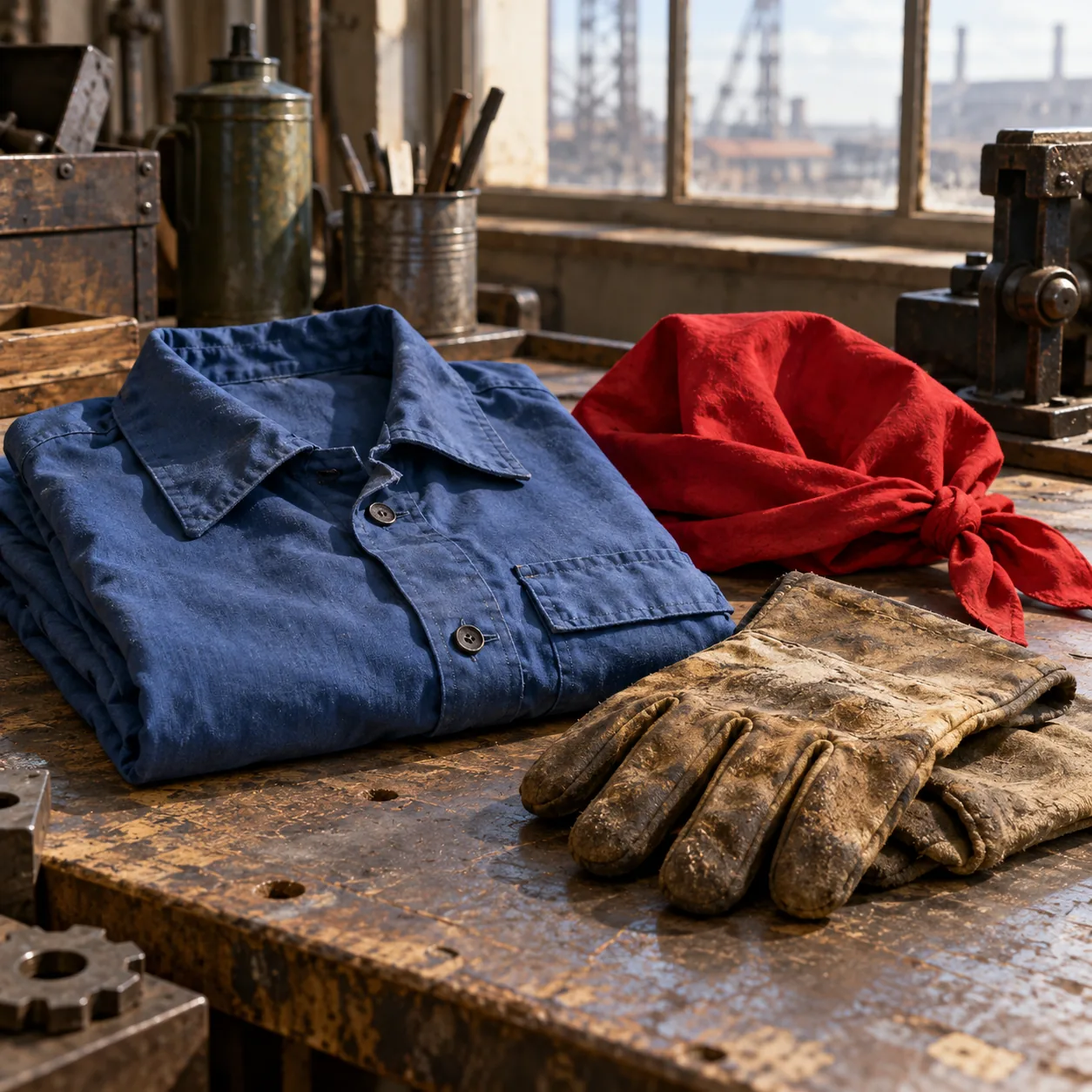
Generated interpretation, not documentary evidence. A folded blue work shirt, plain red scarf and gloves evoke work and poster reception; not the actual poster, uniform or belongings of an identified worker.
Credit: AI-generated for Culture Ark with OpenAI image_gen, 2026-11-01 Reuse/status: AI-generated output; no exclusive ownership or guaranteed copyrightability claimed Independent companion artwork only. Underlying works, performer and trademark rights remain separate. No exclusive ownership or public-domain claim.
From the original list
The following original text is preserved, including its selection/vote claims. Preservation is not independent verification of every assertion.
Why: Rosie the Riveter's flexed arm.
What to preserve: Poster: high-resolution images or 3D scans, plus its making, meaning and history
Year and origin: 1943 · United States
Vote: 5/9 (historian 2 · future kid 1 · curator 2)
Learn more: We Can Do It! on Wikipedia
Supplemental context
We Can Do It! is a useful example of an image whose later fame differs from its initial setting. The National Archives Foundation's DocsTeach record explains that Miller's poster was commissioned by Westinghouse and displayed inside its plants for only two weeks in 1943. Its later adoption as a symbol of women's empowerment should therefore be distinguished from its original workplace-motivation purpose. Future readers can compare the poster with other wartime images and with actual workers' experiences rather than treating Rosie the Riveter as one unchanging person or design. The relationship between labor, gender and publicity is more informative than a simple story of instant universal recognition. This card uses clothing and gloves, not the flexed-arm figure, to keep the companion separate from the poster itself.
Creator/community: J. Howard Miller; commissioned by Westinghouse Place/era: United States; internal workplace display 1943, later reinterpretation
Context and limits
Miller’s poster and Norman Rockwell’s Rosie image are different works. Original limited display and later feminist reception are distinct. Smithsonian story returned 500 and object link 404; opened DocsTeach supplies evidence.
Where to learn more
- https://apiarybee.com/community/reading/biggie-nu-series-008-noahs-ark-set-d-culture-2000
- https://docsteach.org/document/we-can-do-it/
Apiary library | Original Culture Ark article
Public ID and individual routes: pending publisher allocation. Internal source ID: D-1523
Part of the Culture Ark: 2,000 things people should still be able to see in 2,000 years, picked by AI research teams. This page keeps the original list entry for D-1523 word for word and adds context. Browse the gallery. The Culture Ark is an Artificial Mind Hive (AMH) project. AMH is owned by Austin Little.

Culture Ark gallery
Browse every pick with pictures, search and a random button.
Open the gallery →