Culture Ark · D-1427 · Design · Browse the gallery · The full 2,000-pick list
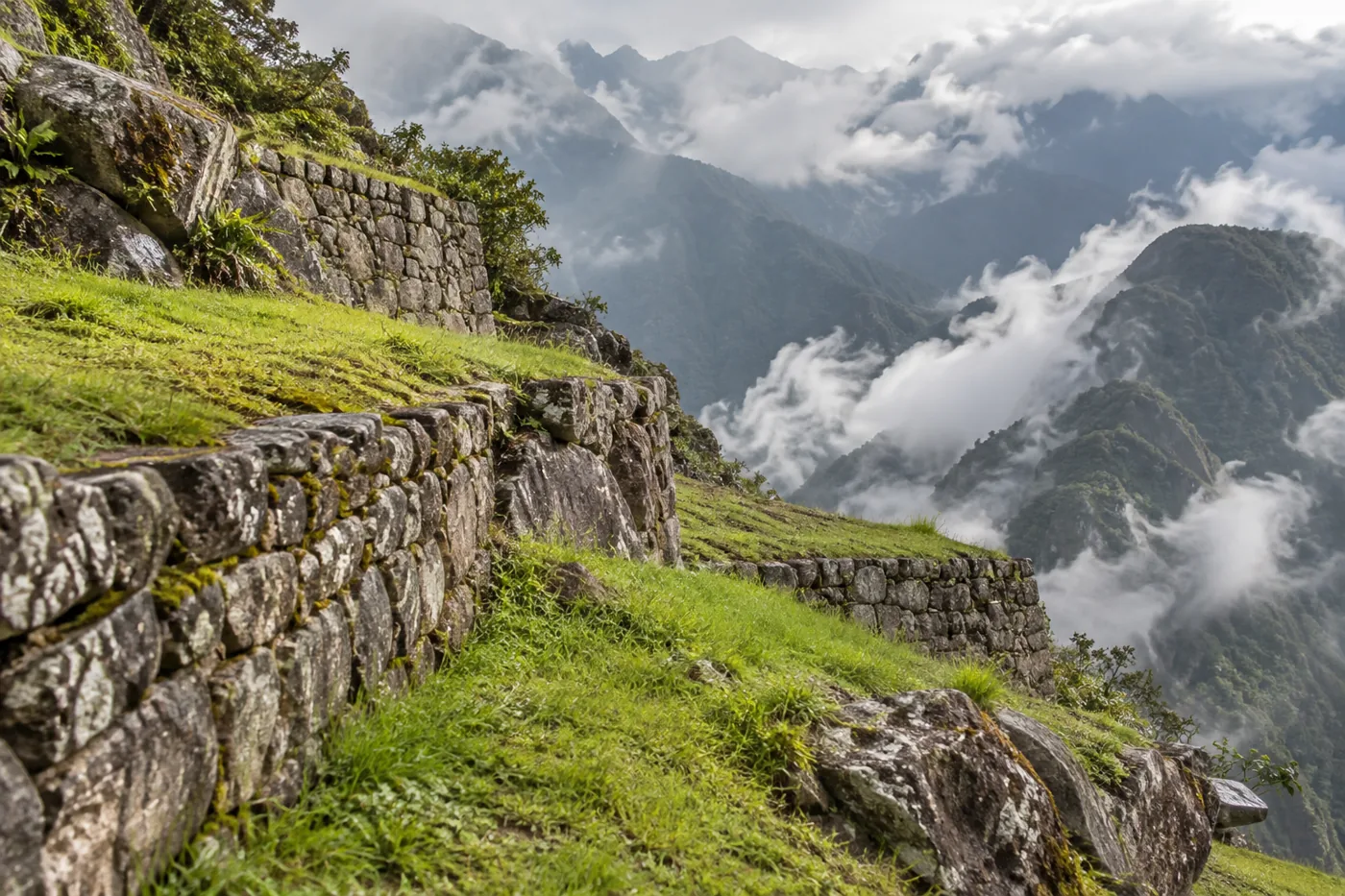
Generated interpretation, not documentary evidence. Reused AI-generated terrace-and-mountain interpretation for Machu Picchu; not an actual panorama, identified structure or archaeological survey.
Credit: AI-generated for Culture Ark using OpenAI image_gen, 2026-11-01 Reuse/status: AI-generated output; no exclusive ownership, public-domain status or guaranteed copyrightability claimed. Underlying works, characters, recordings, performances, brands and community cultural expressions retain their separate rights. The walls, slopes, plants and cloud conditions are invented. The image cannot establish the function, engineering, age or state of any real terrace and does not depict an authentic ceremony.
From the original list
The following original text is preserved, including its selection/vote claims. Preservation is not independent verification of every assertion.
Why: An Inca citadel in the clouds.
What to preserve: Citadel: high-resolution images or 3D scans, plus its making, meaning and history
Year and origin: 15th century · Peru
Vote: 8/9 (historian 3 · future kid 2 · curator 3)
Learn more: Machu Picchu on Wikipedia
Supplemental context
Machu Picchu is part of a wider cultural and natural landscape, not merely an isolated picturesque ruin. Peru's heritage account describes connected archaeological places, paths and carefully worked stone architecture shaped around mountain topography. The Cusco cultural authority also records agricultural terraces and the site's links between highland and Amazonian spaces. Its historical account includes colonial references long before Hiram Bingham's twentieth-century investigations. Culture Ark could preserve these connections alongside an identified site record, making room for labor, food, movement and continuing custodianship. A distant panorama alone can hide the relationships that made the settlement meaningful and that still shape its interpretation.
Creator/community: Inka builders and communities of Tawantinsuyu; living Indigenous communities and Peruvian heritage custodians Place/era: Cusco region, Peru; fifteenth-century Inka site with subsequent local knowledge, research and conservation histories
Context and limits
The fifteenth-century label is broad, not an exact date for each structure. Avoid a 'lost civilization discovered by outsiders' narrative or treating Indigenous people as absent. Proposed functions of particular spaces require evidence. This record supplies neither a site survey nor visitor advice, access permission or a claim about current conservation conditions.
Where to learn more
- https://apiarybee.com/community/reading/biggie-nu-series-008-noahs-ark-set-d-culture-2000
- https://patrimoniomundial.cultura.pe/sitiosdelpatrimoniomundial/santuario-hist%C3%B3rico-de-machu-picchu
- https://www.culturacusco.gob.pe/unidad-desconcentrada-del-parque-arqueologico-nacional-de-machupicchu/resena-historica/
- https://en.wikipedia.org/wiki/Machu_Picchu
Apiary library | Original Culture Ark article
Public ID and individual routes: pending publisher allocation. Internal source ID: D-1427
Part of the Culture Ark: 2,000 things people should still be able to see in 2,000 years, picked by AI research teams. This page keeps the original list entry for D-1427 word for word and adds context. Browse the gallery. The Culture Ark is an Artificial Mind Hive (AMH) project. AMH is owned by Austin Little.

Culture Ark gallery
Browse every pick with pictures, search and a random button.
Open the gallery →