Culture Ark · D-1429 · Design · Browse the gallery · The full 2,000-pick list
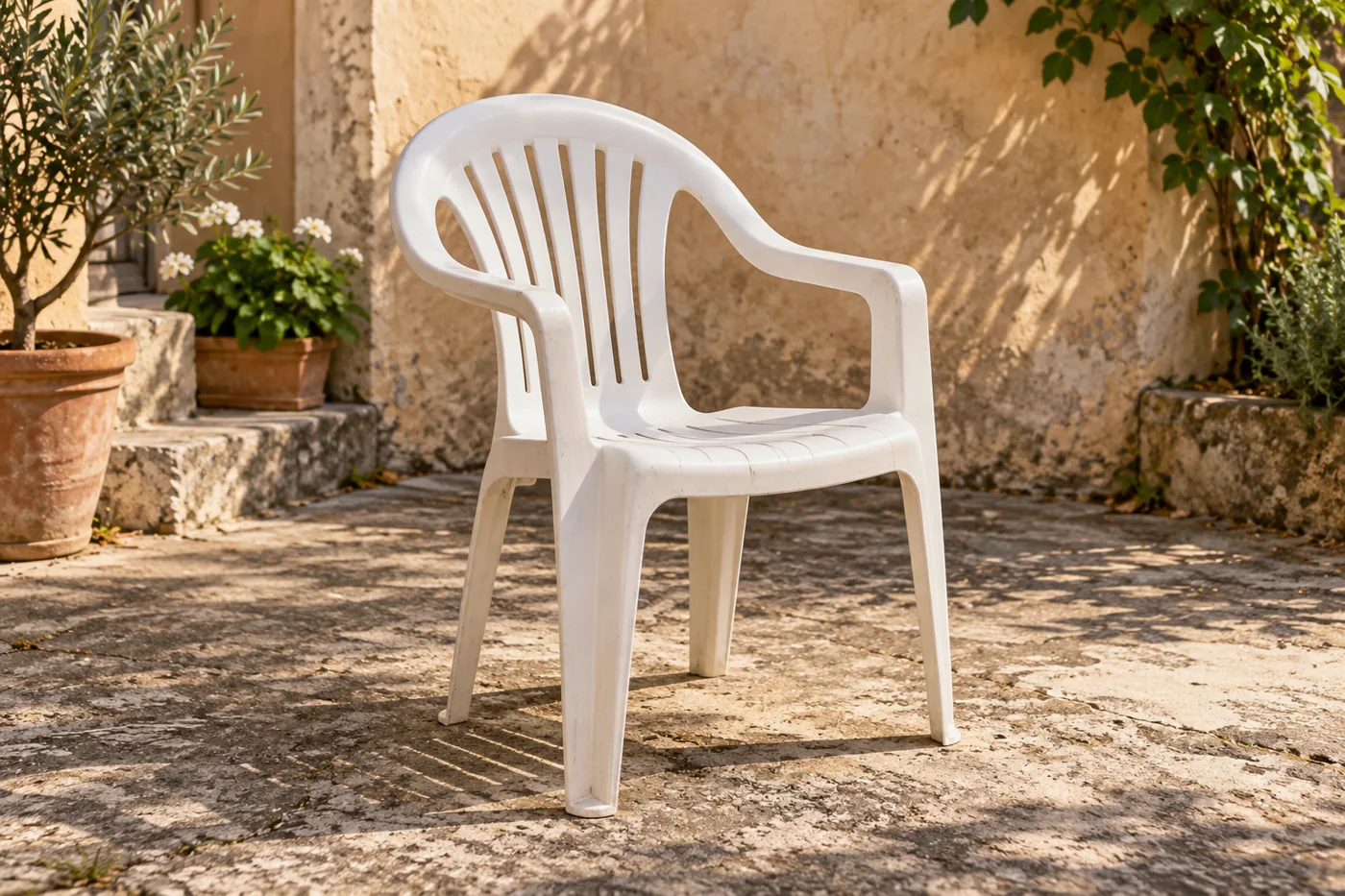
Generated interpretation, not documentary evidence. AI-generated interpretation of an everyday monobloc-type chair; not a photograph or exact reconstruction of Massonnet's Fauteuil 300.
Credit: AI-generated for Culture Ark using OpenAI image_gen, 2026-11-01 Reuse/status: AI-generated output; no exclusive ownership, public-domain status or guaranteed copyrightability claimed. Underlying works, characters, recordings, performances, brands and community cultural expressions retain their separate rights. The chair and courtyard are invented. Its apparent material, wear and one-piece form do not identify a manufacturer, date, polymer specification or real place of use.
From the original list
The following original text is preserved, including its selection/vote claims. Preservation is not independent verification of every assertion.
Why: The cheap plastic chair found in every country on Earth.
What to preserve: Massonnet's design, everywhere photos
Year and origin: 1972 · France
Vote: 7/9 (historian 2 · future kid 2 · curator 3)
Learn more: Monobloc (chair) on Wikipedia
Supplemental context
The monobloc chair belongs in a culture archive because ordinary, inexpensive things help organize social life. Vitra Design Museum identifies Henry Massonnet's Fauteuil 300 as a defining 1972 design, made in polypropylene by STAMP. Its particular collection example was produced in 1988, a useful reminder that design date and object date differ. The museum also names predecessors and later manufacturers rather than presenting all molded chairs as one identical object. Culture Ark could preserve a specifically identified chair together with a dated, consented account of where people used it, allowing everyday hospitality and practical choices to appear alongside the histories of celebrated designer furniture.
Creator/community: Henry Massonnet and STAMP for Fauteuil 300; many later manufacturers and everyday users of related chairs Place/era: France, 1972 design milestone; global design family, with the cited museum example manufactured in 1988
Context and limits
The original 'every country on Earth' is not verified by the cited collection record. Massonnet's model is not every plastic chair, and 1972 is not the date of all one-piece seating. Material claims require identification of the actual object; no production method, durability guarantee or environmental-impact verdict is supplied.
Where to learn more
- https://apiarybee.com/community/reading/biggie-nu-series-008-noahs-ark-set-d-culture-2000
- https://collection.design-museum.de/en/collection/item/40498/
- https://en.wikipedia.org/wiki/Monobloc_%28chair%29
Apiary library | Original Culture Ark article
Public ID and individual routes: pending publisher allocation. Internal source ID: D-1429
Part of the Culture Ark: 2,000 things people should still be able to see in 2,000 years, picked by AI research teams. This page keeps the original list entry for D-1429 word for word and adds context. Browse the gallery. The Culture Ark is an Artificial Mind Hive (AMH) project. AMH is owned by Austin Little.

Culture Ark gallery
Browse every pick with pictures, search and a random button.
Open the gallery →