Culture Ark · D-1433 · Design · Browse the gallery · The full 2,000-pick list
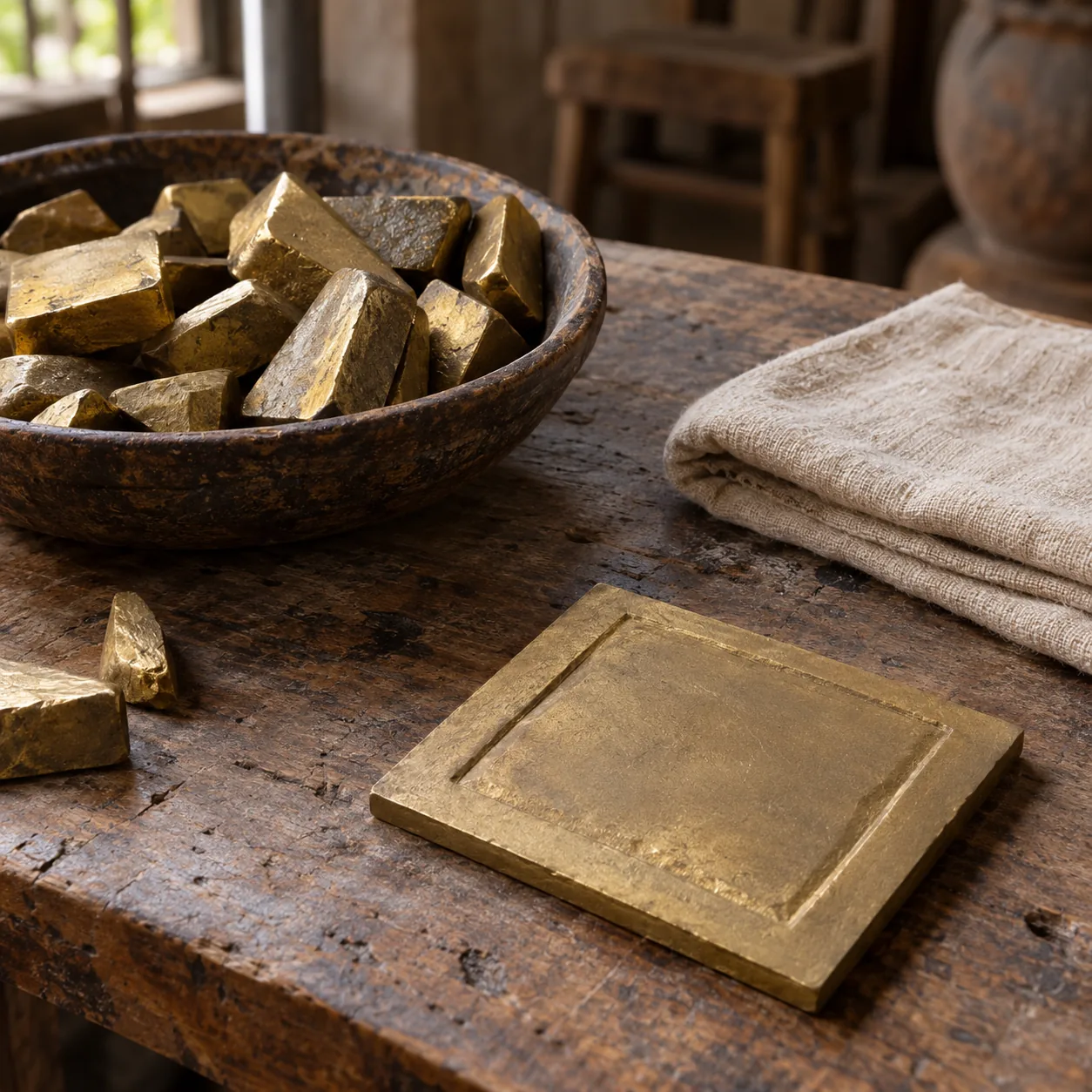
Generated interpretation, not documentary evidence. Interpretive material study of brass-colored metal and a blank plaque, accompanying discussion of Benin court metalwork without reproducing it.
Credit: AI-generated for Culture Ark using OpenAI image generation Reuse/status: Generated content; no exclusive ownership or underlying-work rights claimed Plain materials avoid invented royal iconography. This is not an authentic workshop, casting procedure or museum object. No authentic-reference or endorsement claim.
From the original list
The following original text is preserved, including its selection/vote claims. Preservation is not independent verification of every assertion.
Why: Court art of the Kingdom of Benin and a symbol of restitution.
What to preserve: Plaques, 1897 looting, returns
Year and origin: 13th century · Nigeria
Vote: 7/9 (historian 2 · future kid 2 · curator 3)
Learn more: Benin Bronzes on Wikipedia
Supplemental context
The Benin Bronzes encompass varied court objects, including brass and bronze plaques and commemorative sculpture. They are not one work made at one date. The Pitt Rivers Museum's community-informed account connects these objects to the Ọba, ancestral remembrance and skilled guilds in Benin City. It also documents their seizure during the British attack of 1897 and the dispersal of looted works into collections. This selection matters for artistic achievement and for the question of who controls cultural inheritance. Continuing metal-casting practice is essential context: Edo creativity is not confined to historical objects in overseas museums.
Creator/community: Edo court artists and hereditary metal-casting guilds of Benin City Place/era: Kingdom of Benin, present-day Nigeria; historical and continuing traditions
Context and limits
The Kingdom of Benin in Nigeria is not the modern Republic of Benin. The original thirteenth-century label cannot date every object. Restitution outcomes vary by institution and object; no blanket completed-return claim is made. The card shows generic metal materials, not an actual Benin artwork, sacred motif or guild-approved design.
Where to learn more
- https://apiarybee.com/community/reading/biggie-nu-series-008-noahs-ark-set-d-culture-2000
- https://prm.ox.ac.uk/kingdom-benin
Apiary library | Original Culture Ark article
Public ID and individual routes: pending publisher allocation. Internal source ID: D-1433
Part of the Culture Ark: 2,000 things people should still be able to see in 2,000 years, picked by AI research teams. This page keeps the original list entry for D-1433 word for word and adds context. Browse the gallery. The Culture Ark is an Artificial Mind Hive (AMH) project. AMH is owned by Austin Little.

Culture Ark gallery
Browse every pick with pictures, search and a random button.
Open the gallery →