Culture Ark · D-1430 · Design · Browse the gallery · The full 2,000-pick list
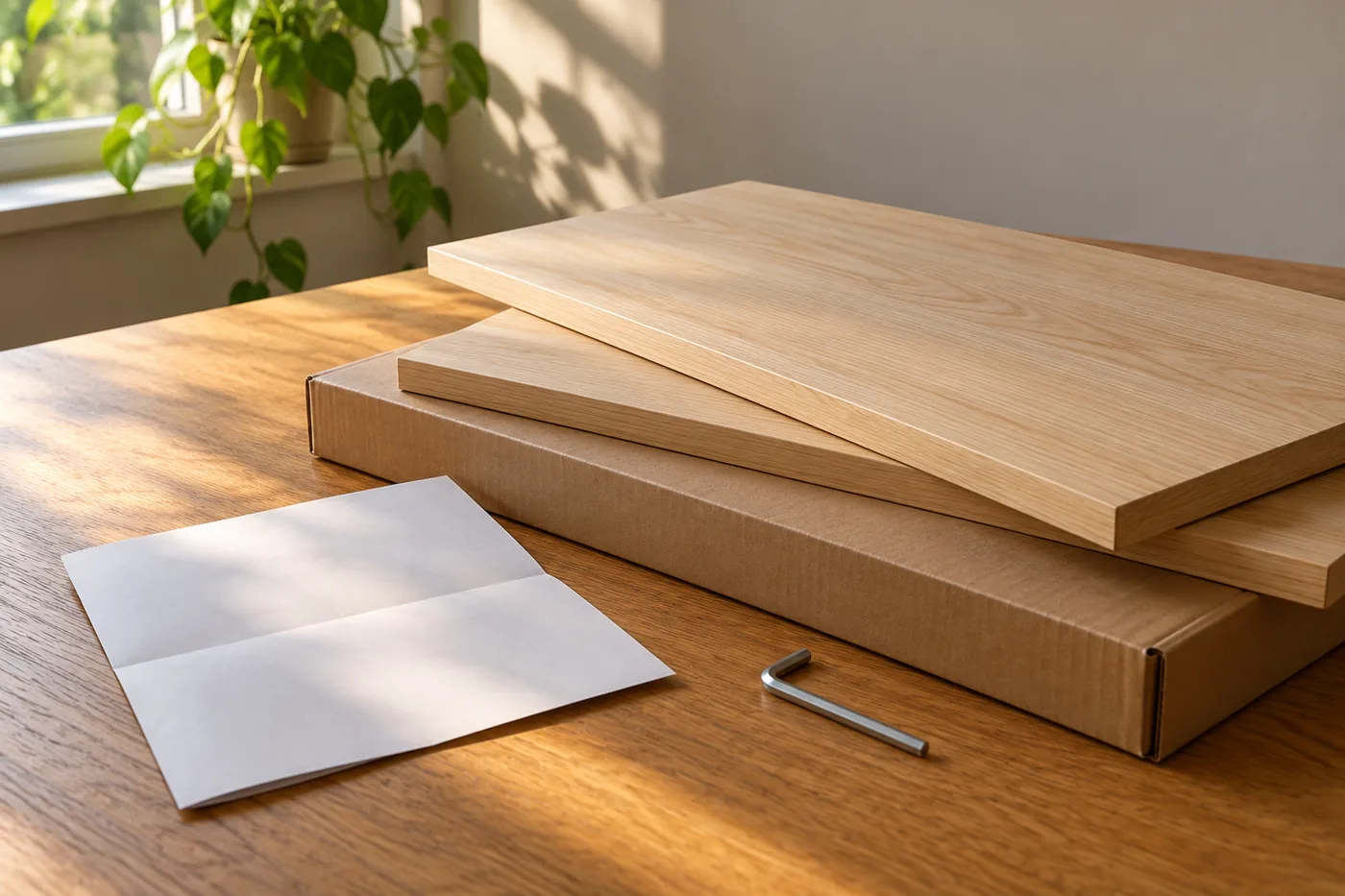
Generated interpretation, not documentary evidence. AI-generated materials metaphor for flat-pack domestic culture; not an IKEA product photograph, catalogue page or functional assembly kit.
Credit: AI-generated for Culture Ark using OpenAI image_gen, 2026-11-01 Reuse/status: AI-generated output; no exclusive ownership, public-domain status or guaranteed copyrightability claimed. Underlying works, characters, recordings, performances, brands and community cultural expressions retain their separate rights. The boards, carton and paper are invented and have no model-specific fittings or steps. The blank sheet is not an instruction manual, and the image should never be used to assemble furniture.
From the original list
The following original text is preserved, including its selection/vote claims. Preservation is not independent verification of every assertion.
Why: Flat-pack furniture and Swedish meatballs for the world.
What to preserve: Allen key, assembly instructions, catalogue
Year and origin: 1943 · Sweden
Vote: 7/9 (historian 3 · future kid 2 · curator 2)
Learn more: IKEA on Wikipedia
Supplemental context
IKEA can be preserved as a system of domestic expectations as well as a collection of furniture. Its museum dates the company's registration to 1943, when its business was not yet the furniture operation familiar to later customers. The museum also explicitly states that IKEA did not invent flatpacking, and identifies self-assembly tables in its 1953 catalogue. That distinction prevents a company founding date from becoming the supposed origin of every associated practice. Culture Ark could preserve a particular catalogue, product and dated instruction booklet alongside consented customer accounts, showing how shopping, transport and work at home became connected in this retail model.
Creator/community: Ingvar Kamprad and IKEA teams, suppliers, designers, workers and customers Place/era: Sweden; company registered in 1943, with furniture and self-assembly developments in later years
Context and limits
The preserved 1943 date refers to the company, not simultaneously to flatpacks, catalogues or meatballs. The company museum is a primary account of its own history, not independent proof of universal affordability or sustainability. Brands, photographs and instruction designs have separate reuse considerations; no actual catalogue or usable assembly directions are supplied.
Where to learn more
- https://apiarybee.com/community/reading/biggie-nu-series-008-noahs-ark-set-d-culture-2000
- https://ikeamuseum.com/en/explore/the-story-of-ikea/?decade=our-roots-1940s
- https://ikeamuseum.com/en/explore/the-story-of-ikea/flatpacks/
- https://en.wikipedia.org/wiki/IKEA
Apiary library | Original Culture Ark article
Public ID and individual routes: pending publisher allocation. Internal source ID: D-1430
Part of the Culture Ark: 2,000 things people should still be able to see in 2,000 years, picked by AI research teams. This page keeps the original list entry for D-1430 word for word and adds context. Browse the gallery. The Culture Ark is an Artificial Mind Hive (AMH) project. AMH is owned by Austin Little.

Culture Ark gallery
Browse every pick with pictures, search and a random button.
Open the gallery →