Culture Ark · D-1432 · Design · Browse the gallery · The full 2,000-pick list
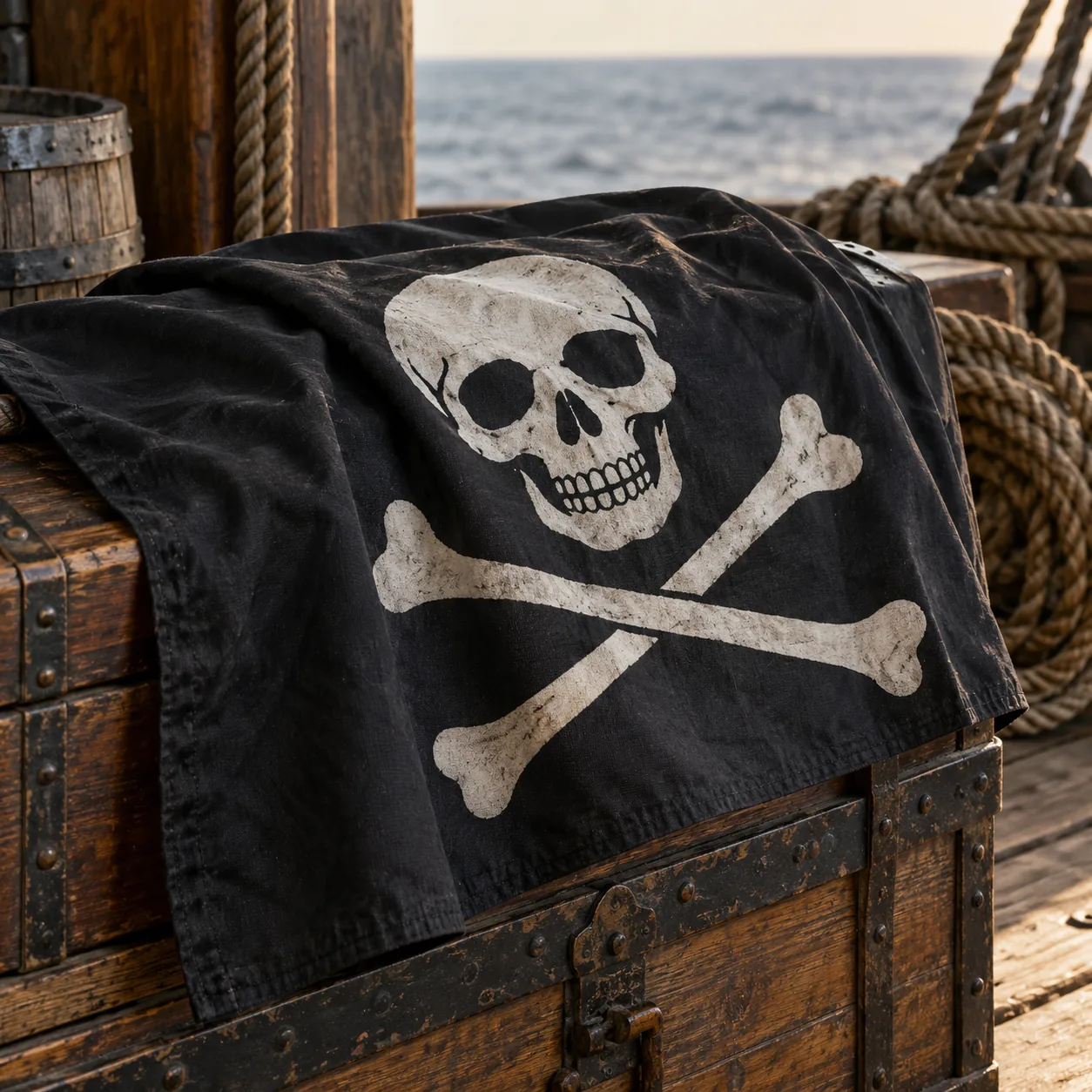
Generated interpretation, not documentary evidence. Invented skull-and-crossbones cloth flag on a wooden chest in a maritime setting.
Credit: AI-generated for Culture Ark using OpenAI image generation Reuse/status: Generated content; no exclusive ownership or underlying-work rights claimed Readable generic emblem and material texture; no claim of belonging to a historical captain. No authentic-reference or endorsement claim.
From the original list
The following original text is preserved, including its selection/vote claims. Preservation is not independent verification of every assertion.
Why: The pirate skull and crossbones.
What to preserve: Variants: high-resolution images or 3D scans, plus its making, meaning and history
Year and origin: 18th century · Caribbean
Vote: 7/9 (historian 2 · future kid 3 · curator 2)
Learn more: Jolly Roger on Wikipedia
Supplemental context
Jolly Roger names a family of pirate-associated flags rather than one standardized national emblem. Royal Museums Greenwich describes their intimidating purpose: signalling piracy and encouraging a ship to surrender. Its educational account notes skulls, skeletons, hourglasses and plain black flags. These images drew on a vocabulary of death familiar to contemporary viewers. A future audience can use the selection to consider how a small, distant visual sign communicated threats before electronic communication. Its later familiarity should not erase the coercion behind the historical signal: the entertaining pirate image and the experience of people attacked at sea are different perspectives.
Creator/community: Pirate crews and later popular interpreters; no single flag designer Place/era: Maritime worlds, especially seventeenth and eighteenth centuries
Context and limits
Do not assign every modern skull-and-crossbones design to a named captain. Specific attributions and surviving flags need individual provenance. Caribbean shorthand does not define the entire geographical history of piracy. The illustration is a generic invented flag and chest, not a recovered object or an endorsement of violence.
Where to learn more
- https://apiarybee.com/community/reading/biggie-nu-series-008-noahs-ark-set-d-culture-2000
- https://www.rmg.co.uk/file/13409/download?token=gAE9PMCL
Apiary library | Original Culture Ark article
Public ID and individual routes: pending publisher allocation. Internal source ID: D-1432
Part of the Culture Ark: 2,000 things people should still be able to see in 2,000 years, picked by AI research teams. This page keeps the original list entry for D-1432 word for word and adds context. Browse the gallery. The Culture Ark is an Artificial Mind Hive (AMH) project. AMH is owned by Austin Little.

Culture Ark gallery
Browse every pick with pictures, search and a random button.
Open the gallery →