Culture Ark · D-1425 · Design · Browse the gallery · The full 2,000-pick list
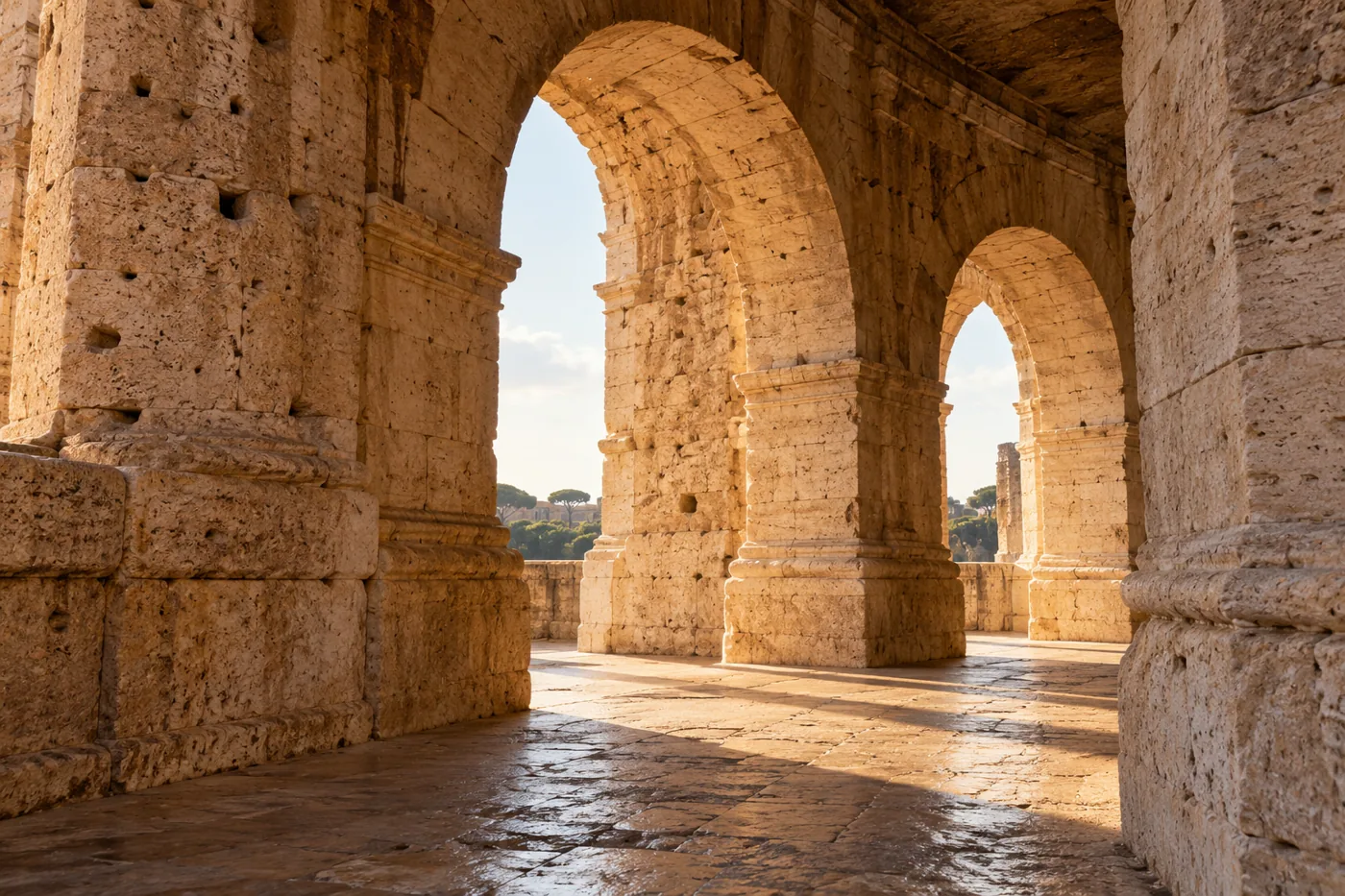
Generated interpretation, not documentary evidence. AI-generated Roman-amphitheatre material study for the Colosseum; not an exact location, archaeological reconstruction or current-condition photograph.
Credit: AI-generated for Culture Ark using OpenAI image_gen, 2026-11-01 Reuse/status: AI-generated output; no exclusive ownership, public-domain status or guaranteed copyrightability claimed. Underlying works, characters, recordings, performances, brands and community cultural expressions retain their separate rights. Stone joints, architectural details, views and proportions are invented. The empty passage avoids staging authentic combat or claiming a particular historical configuration; it is not a construction plan.
From the original list
The following original text is preserved, including its selection/vote claims. Preservation is not independent verification of every assertion.
Why: The arena of gladiators.
What to preserve: Amphitheatre: high-resolution images or 3D scans, plus its making, meaning and history
Year and origin: 80 · Italy
Vote: 8/9 (historian 3 · future kid 3 · curator 2)
Learn more: Colosseum on Wikipedia
Supplemental context
The Colosseum is both a building and a record of how public spectacle expresses power. Its archaeological park identifies it as the Flavian Amphitheatre and describes animal hunts and gladiatorial games among its ancient uses. A separate park account places Titus's inaugural events in 80 CE. That date is a milestone, not the entire history of construction or occupation. Later uses included workshops, houses and the reuse of building material. Culture Ark could preserve accounts from these different phases beside carefully dated documentation of the structure, rather than presenting one imagined arena scene as the complete meaning of a place that changed over centuries.
Creator/community: Flavian imperial patrons, builders, performers and audiences; later Roman users and heritage custodians Place/era: Rome, first century CE; inauguration in 80 CE followed by many changes in use and fabric
Context and limits
The preserved date does not mean every surviving part was completed in 80 CE. Ancient spectacle should not be romanticized or reduced to heroic combat. The park's modern multimedia reconstruction is interpretation, not a surviving recording. No 3D survey, structural assessment, restoration design or evidence of present site conditions is supplied.
Where to learn more
- https://apiarybee.com/community/reading/biggie-nu-series-008-noahs-ark-set-d-culture-2000
- https://colosseo.it/en/area/the-colosseum/
- https://colosseo.it/en/event/blood-and-the-arena/
- https://en.wikipedia.org/wiki/Colosseum
Apiary library | Original Culture Ark article
Public ID and individual routes: pending publisher allocation. Internal source ID: D-1425
Part of the Culture Ark: 2,000 things people should still be able to see in 2,000 years, picked by AI research teams. This page keeps the original list entry for D-1425 word for word and adds context. Browse the gallery. The Culture Ark is an Artificial Mind Hive (AMH) project. AMH is owned by Austin Little.

Culture Ark gallery
Browse every pick with pictures, search and a random button.
Open the gallery →