Culture Ark · D-1424 · Design · Browse the gallery · The full 2,000-pick list
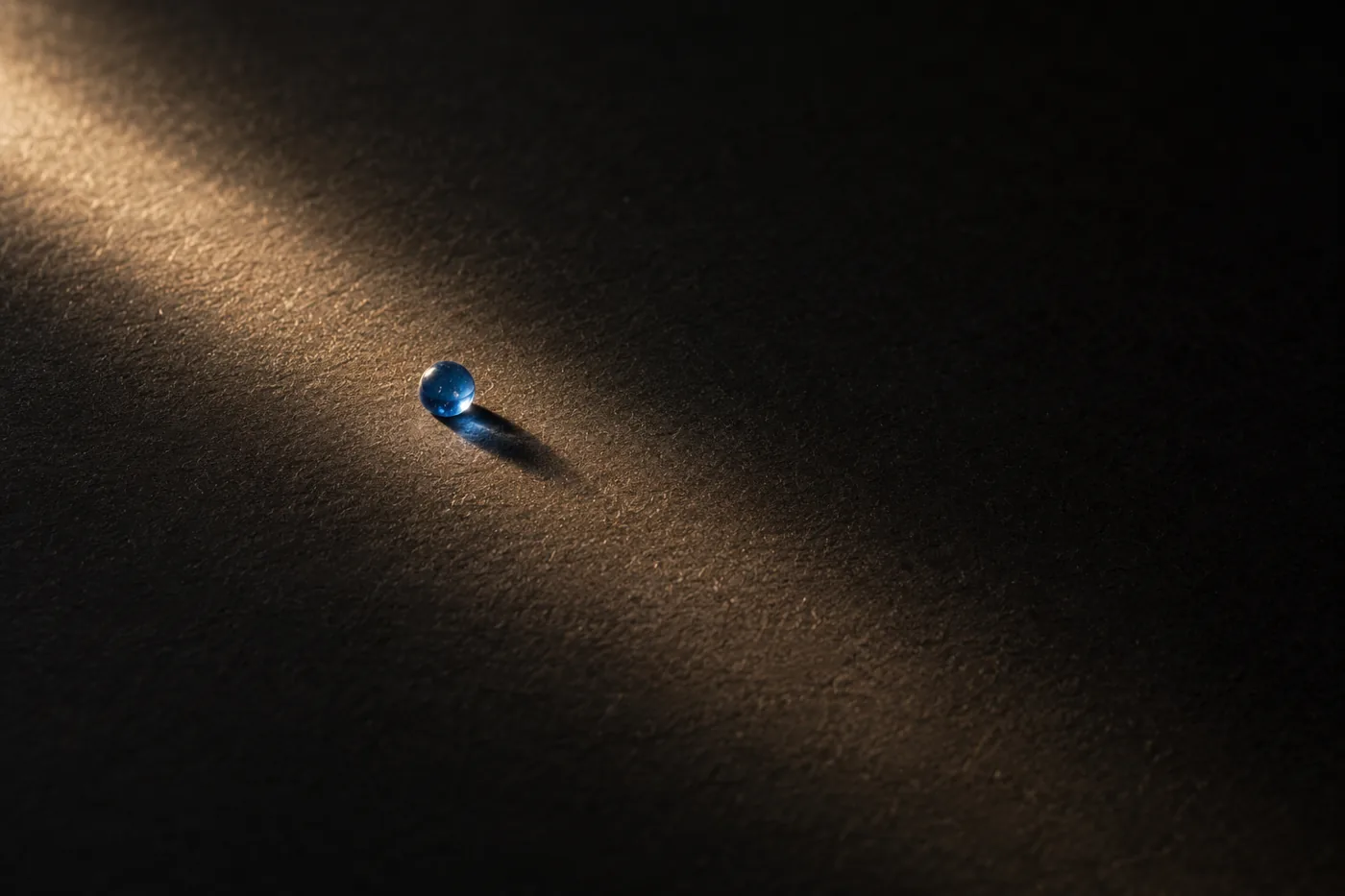
Generated interpretation, not documentary evidence. AI-generated physical metaphor for Pale Blue Dot; not Voyager's photograph, a reprocessing of its data or a measured representation of cosmic distance.
Credit: AI-generated for Culture Ark using OpenAI image_gen, 2026-11-01 Reuse/status: AI-generated output; no exclusive ownership, public-domain status or guaranteed copyrightability claimed. Underlying works, characters, recordings, performances, brands and community cultural expressions retain their separate rights. The bead, surface and light are invented studio elements. They evoke attention and smallness, not a physical ray beside Earth or an accurate account of the original camera's optics.
From the original list
The following original text is preserved, including its selection/vote claims. Preservation is not independent verification of every assertion.
Why: Earth as a speck from Voyager 1.
What to preserve: Photograph, Sagan text
Year and origin: 1990 · Space (United States)
Vote: 8/9 (historian 2 · future kid 3 · curator 3)
Learn more: Pale Blue Dot on Wikipedia
Supplemental context
Pale Blue Dot asks an audience to find its home in an image that offers almost no familiar detail. NASA dates Voyager 1's Earth exposures to 14 February 1990 and describes Carl Sagan's advocacy for the distant view. The result depended on mission planning, imaging work and transmission back to Earth, not on an astronaut pressing a handheld camera shutter. Sagan's subsequent writing adds an interpretation rather than being part of the camera data. Culture Ark should therefore preserve the image's provenance, a specified version and the relevant writing as distinct records, allowing future readers to compare observation with the meanings people gave it.
Creator/community: NASA/JPL Voyager imaging and mission teams; Carl Sagan as advocate and later author Place/era: Voyager 1 Earth image, 14 February 1990; subsequent writing and the 2020 reprocessed image are separate works
Context and limits
NASA distinguishes the 1990 image from Pale Blue Dot Revisited, a 2020 processing of the data. These versions should not be silently merged. Sagan's prose has separate authorship and reuse considerations. No extended quotation, original image or licensed text edition is supplied; the illustration is not astronomical evidence.
Where to learn more
- https://apiarybee.com/community/reading/biggie-nu-series-008-noahs-ark-set-d-culture-2000
- https://science.nasa.gov/mission/voyager/voyager-1s-pale-blue-dot/
- https://en.wikipedia.org/wiki/Pale_Blue_Dot
Apiary library | Original Culture Ark article
Public ID and individual routes: pending publisher allocation. Internal source ID: D-1424
Part of the Culture Ark: 2,000 things people should still be able to see in 2,000 years, picked by AI research teams. This page keeps the original list entry for D-1424 word for word and adds context. Browse the gallery. The Culture Ark is an Artificial Mind Hive (AMH) project. AMH is owned by Austin Little.

Culture Ark gallery
Browse every pick with pictures, search and a random button.
Open the gallery →