Culture Ark · D-1355 · Inventions · Browse the gallery · The full 2,000-pick list
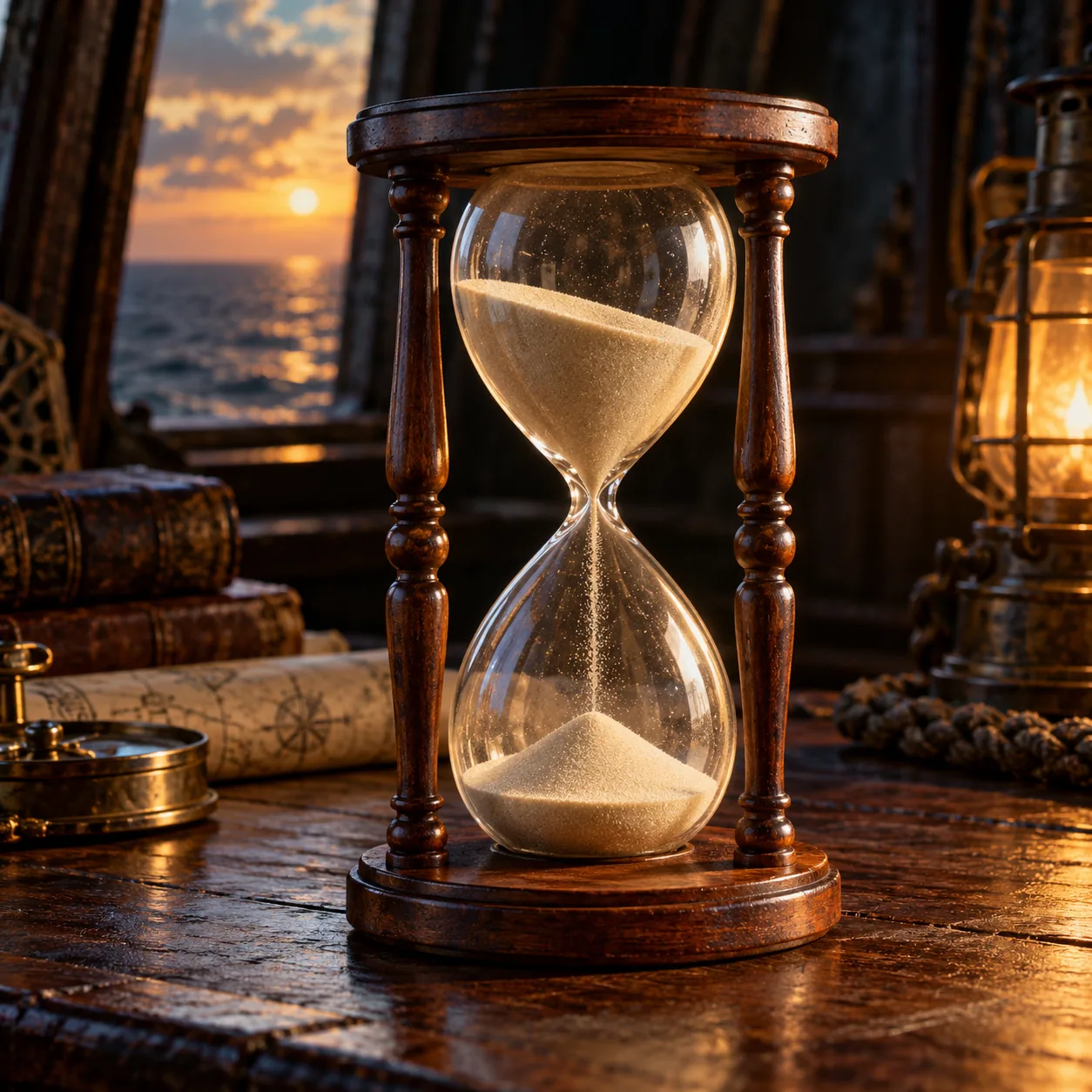
Generated interpretation, not documentary evidence. Generated sandglass in a fictional maritime-like interior; not Greenwich object AST 0110 and not calibrated to any duration.
Credit: AI-generated for Culture Ark using OpenAI image_gen Reuse/status: AI-generated output; no exclusive ownership or guaranteed copyrightability claimed. Underlying works, marks and cultural permissions remain separate. Generated sandglass in a fictional maritime-like interior; not Greenwich object AST 0110 and not calibrated to any duration. The museum says probable naval use, not certainty. Its four-hour duration must not be generalized to all hourglasses. This object record does not verify the original selection’s fourteenth-century origin or a documented genealogy of loading icons. The illustration is uncalibrated and not a measurement guide.
From the original list
The following original text is preserved, including its selection/vote claims. Preservation is not independent verification of every assertion.
Why: Time made visible as falling sand.
What to preserve: Ship sandglasses, loading icon descendant
Year and origin: 14th century · Europe
Vote: 4/9 (historian 1 · future kid 2 · curator 1)
Learn more: Hourglass on Wikipedia
Supplemental context
An hourglass makes duration tangible: a limited quantity moves from one chamber into another while someone waits, works or takes a turn. Royal Museums Greenwich preserves a large example dated around 1700 whose measured interval is four hours rather than one. The museum suggests that it probably timed watches at sea, connecting a small object to the organization of collective labor. Its yellow sand, wooden frame and bound central joint also make it a useful reminder that familiar forms have varied construction histories. Future readers could compare the physical experience of watching grains fall with later waiting symbols on screens. The cultural importance lies as much in routines and expectations as in the device's ability to mark an interval.
Creator/community: Unknown historical makers; seafarers and other users of sandglasses Place/era: European maritime example circa 1700; broader duration-measuring tradition
Context and limits
The museum says probable naval use, not certainty. Its four-hour duration must not be generalized to all hourglasses. This object record does not verify the original selection’s fourteenth-century origin or a documented genealogy of loading icons. The illustration is uncalibrated and not a measurement guide.
Where to learn more
- https://apiarybee.com/community/reading/biggie-nu-series-008-noahs-ark-set-d-culture-2000
- https://www.rmg.co.uk/collections/objects/rmgc-object-10272
Apiary library | Original Culture Ark article
Public ID and individual routes: pending publisher allocation. Internal source ID: D-1355
Part of the Culture Ark: 2,000 things people should still be able to see in 2,000 years, picked by AI research teams. This page keeps the original list entry for D-1355 word for word and adds context. Browse the gallery. The Culture Ark is an Artificial Mind Hive (AMH) project. AMH is owned by Austin Little.

Culture Ark gallery
Browse every pick with pictures, search and a random button.
Open the gallery →