Culture Ark · D-1360 · Inventions · Browse the gallery · The full 2,000-pick list
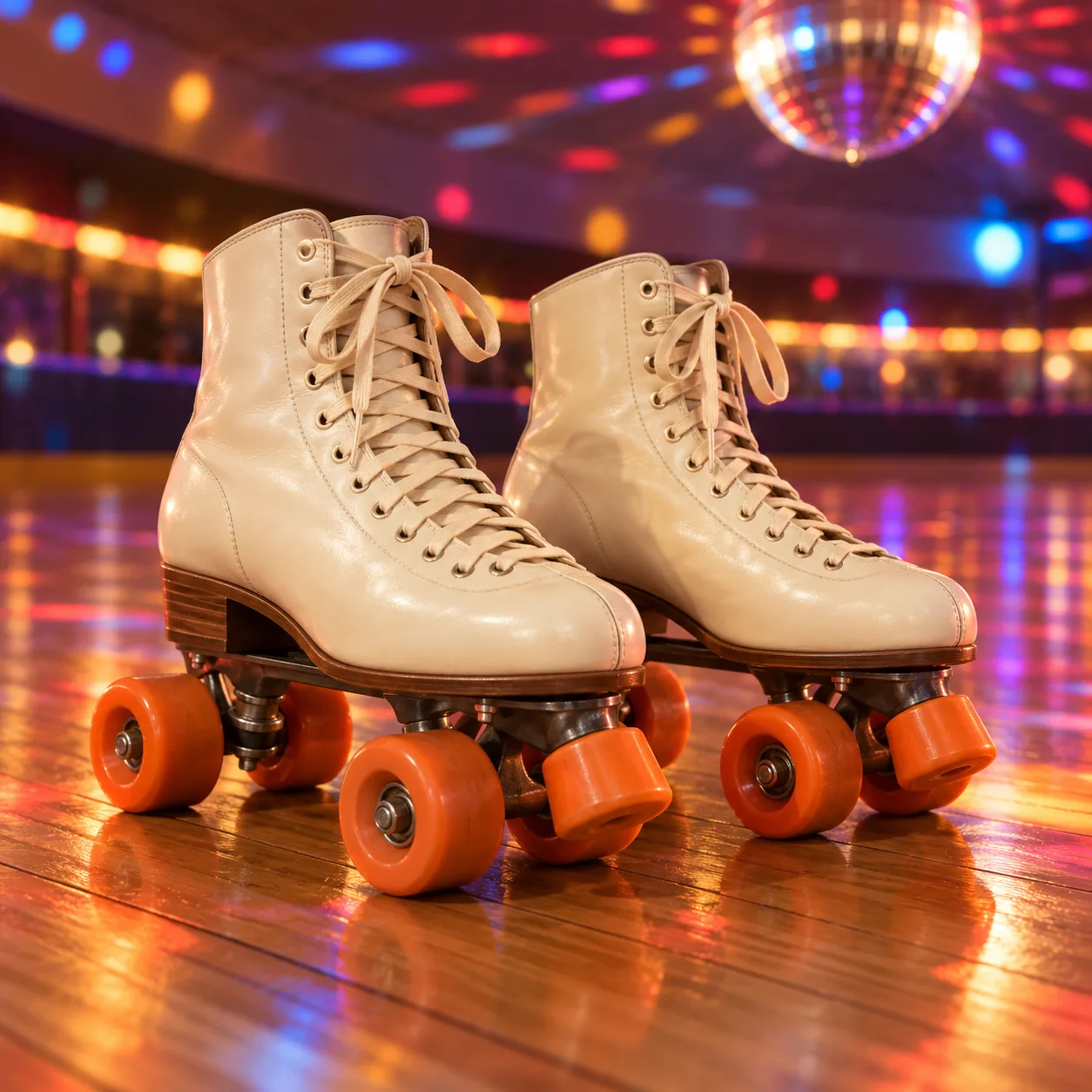
Generated interpretation, not documentary evidence. Generated quad skates on a fictional disco-lit rink floor; not Merlin’s prototype, the museum’s adjustable skates or a documentary performance.
Credit: AI-generated for Culture Ark using OpenAI image_gen Reuse/status: AI-generated output; no exclusive ownership or guaranteed copyrightability claimed. Underlying works, marks and cultural permissions remain separate. Generated quad skates on a fictional disco-lit rink floor; not Merlin’s prototype, the museum’s adjustable skates or a documentary performance. The original 1760 Belgiumlabel compresses a contested origin story; the museum notes earlier references. Quad and inline skates are distinct forms, not a single unchanged design. Inclusive community histories do not mean every rink was inclusive. The image supplies no fitting, skating or equipment-safety advice.
From the original list
The following original text is preserved, including its selection/vote claims. Preservation is not independent verification of every assertion.
Why: Wheels on feet, from Merlin to roller discos.
What to preserve: Quad skates, inline skates
Year and origin: 1760 · Belgium
Vote: 4/9 (historian 1 · future kid 2 · curator 1)
Learn more: Roller skates on Wikipedia
Supplemental context
Roller skates make a floor into a place for movement, skill and sociability. A Science Museum Group record for adjustable quad skates connects their material design with a longer history: it treats Merlin's eighteenth-century invention credit cautiously, notes earlier references, and identifies Plimpton's 1863 quad-skate patent as an important later milestone. The same account looks beyond inventors to rinks as social spaces, including struggles against racial segregation and their significance for Black and LGBTQ+ communities. Future readers should therefore preserve more than wheels and boots. Music, admission practices, exclusion, friendships and local styles help explain why skating mattered. The object is a doorway into leisure cultures that were never experienced equally by everyone.
Creator/community: Many skate makers and skating communities; James Plimpton among important nineteenth-century designers Place/era: European eighteenth-century precursors; nineteenth- and twentieth-century international rink cultures
Context and limits
The original 1760 Belgiumlabel compresses a contested origin story; the museum notes earlier references. Quad and inline skates are distinct forms, not a single unchanged design. Inclusive community histories do not mean every rink was inclusive. The image supplies no fitting, skating or equipment-safety advice.
Where to learn more
- https://apiarybee.com/community/reading/biggie-nu-series-008-noahs-ark-set-d-culture-2000
- https://collection.sciencemuseumgroup.org.uk/objects/co25567/pair-of-four-wheeled-roller-skates-roller-skates
Apiary library | Original Culture Ark article
Public ID and individual routes: pending publisher allocation. Internal source ID: D-1360
Part of the Culture Ark: 2,000 things people should still be able to see in 2,000 years, picked by AI research teams. This page keeps the original list entry for D-1360 word for word and adds context. Browse the gallery. The Culture Ark is an Artificial Mind Hive (AMH) project. AMH is owned by Austin Little.

Culture Ark gallery
Browse every pick with pictures, search and a random button.
Open the gallery →