Culture Ark · D-1357 · Inventions · Browse the gallery · The full 2,000-pick list
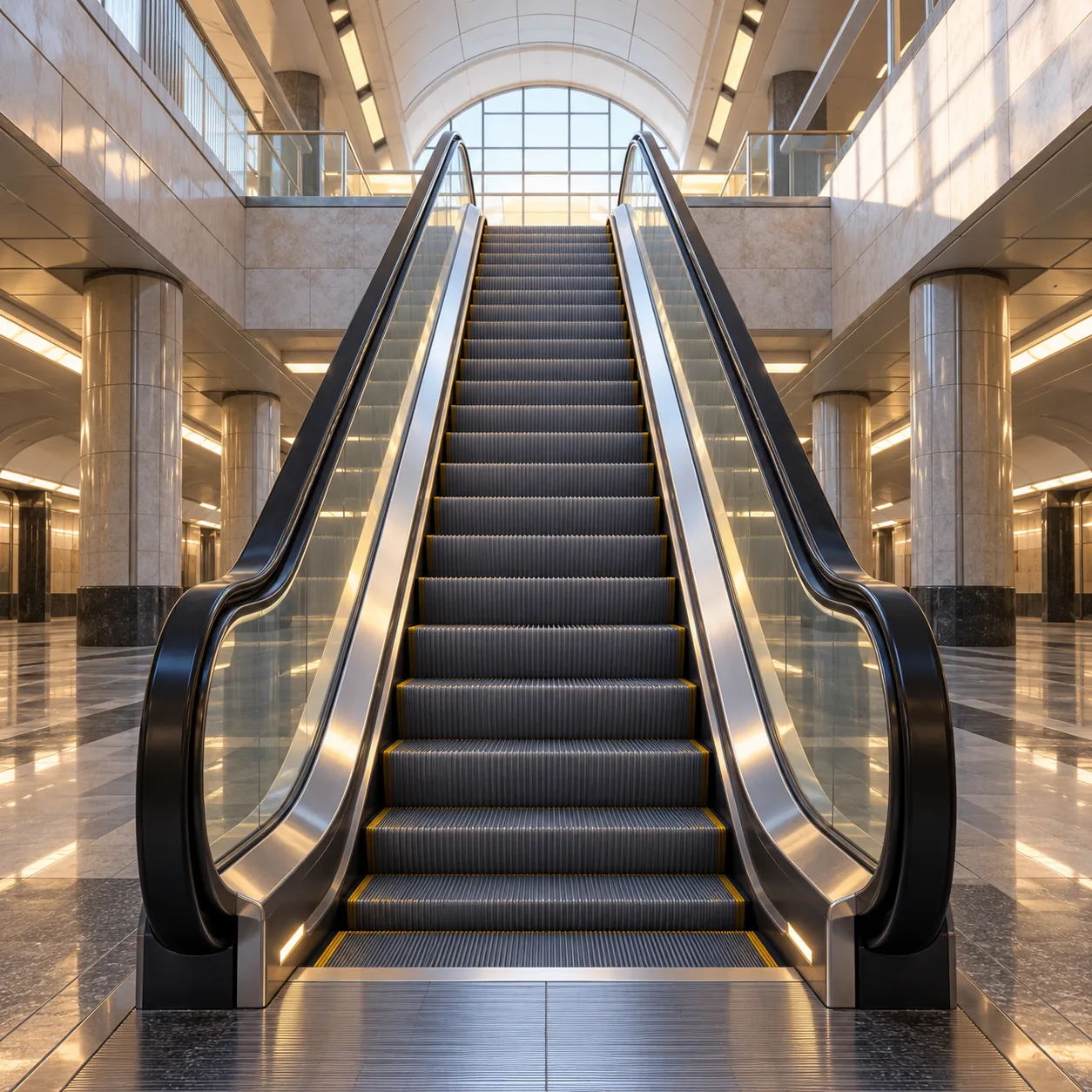
Generated interpretation, not documentary evidence. Generated modern escalator in a fictional concourse; not Reno’s device, a Moscow station or a functional construction plan.
Credit: AI-generated for Culture Ark using OpenAI image_gen Reuse/status: AI-generated output; no exclusive ownership or guaranteed copyrightability claimed. Underlying works, marks and cultural permissions remain separate. Generated modern escalator in a fictional concourse; not Reno’s device, a Moscow station or a functional construction plan. The checked manufacturer history supports the 1900 exhibition and naming story, not a complete first-invention chronology or the original 1896 Reno claim. Early inclined conveyors and later moving steps should not be conflated. An escalator is not a substitute for step-free access. No installation or operating-safety specification is implied.
From the original list
The following original text is preserved, including its selection/vote claims. Preservation is not independent verification of every assertion.
Why: Moving stairs in malls and metros.
What to preserve: Reno's inclined elevator, Moscow's deep escalators
Year and origin: 1896 · United States
Vote: 4/9 (historian 1 · future kid 2 · curator 1)
Learn more: Escalator on Wikipedia
Supplemental context
An escalator is a machine people encounter through habits: approaching, stepping aboard, sharing space and arriving on another level. Its cultural story therefore extends beyond a single patent to shopping, transport and the design of public interiors. Otis's company history records a moving staircase winning a prize at the 1900 Paris exposition and connects Charles Seeberger with the name “escalator.” It also describes that name's transition from a trademark into an ordinary word. For future readers, this offers a compact example of commercial language entering everyday speech while a once conspicuous attraction becomes background infrastructure. Preserving descriptions of use alongside machinery would help explain how buildings encouraged movement, shaped encounters and organized people's experience of vertical space.
Creator/community: Multiple inventors and manufacturers, including Jesse Reno, Charles Seeberger and Otis Place/era: United States and international exhibitions/transit, late nineteenth century onward
Context and limits
The checked manufacturer history supports the 1900 exhibition and naming story, not a complete first-invention chronology or the original 1896 Reno claim. Early inclined conveyors and later moving steps should not be conflated. An escalator is not a substitute for step-free access. No installation or operating-safety specification is implied.
Where to learn more
- https://apiarybee.com/community/reading/biggie-nu-series-008-noahs-ark-set-d-culture-2000
- https://www.otis.com/en/us/our-company/history
Apiary library | Original Culture Ark article
Public ID and individual routes: pending publisher allocation. Internal source ID: D-1357
Part of the Culture Ark: 2,000 things people should still be able to see in 2,000 years, picked by AI research teams. This page keeps the original list entry for D-1357 word for word and adds context. Browse the gallery. The Culture Ark is an Artificial Mind Hive (AMH) project. AMH is owned by Austin Little.

Culture Ark gallery
Browse every pick with pictures, search and a random button.
Open the gallery →