Culture Ark · D-1313 · Inventions · Browse the gallery · The full 2,000-pick list
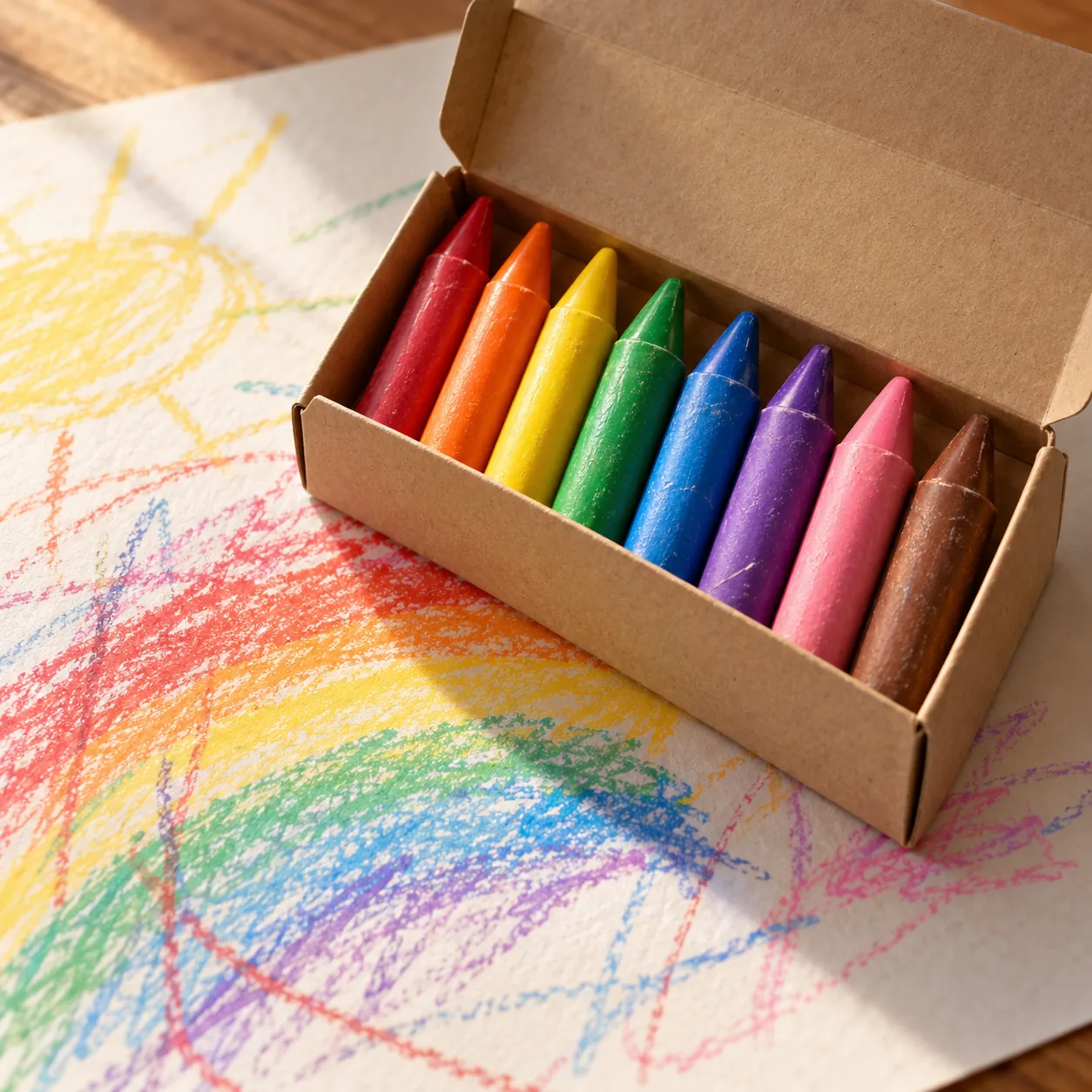
Generated interpretation, not documentary evidence. Generated eight unbranded wax crayons and invented scribbles; not Crayola packaging or the documented 1903 palette, which included black rather than the pictured pink.
Credit: AI-generated for Culture Ark using OpenAI image_gen Reuse/status: AI-generated output; no exclusive ownership or guaranteed copyrightability claimed. Underlying works, marks and cultural permissions remain separate. Generated eight unbranded wax crayons and invented scribbles; not Crayola packaging or the documented 1903 palette, which included black rather than the pictured pink. 1903 is a brand milestone, not the invention of all crayons or children’s drawing. The company is a primary source for its own account, not independent proof of universal popularity or product safety. The generated palette includes pink and omits black, so it is explicitly not the original eight-color set.
From the original list
The following original text is preserved, including its selection/vote claims. Preservation is not independent verification of every assertion.
Why: The first colours of millions of children's drawings.
What to preserve: Original 8-pack, crayon colour names, the smell
Year and origin: 1903 · United States
Vote: 5/9 (historian 1 · future kid 3 · curator 1)
Learn more: Crayola on Wikipedia
Supplemental context
A box of crayons connects industrial color manufacture with very personal marks on paper. Crayola’s own historical FAQ dates its first eight-color box to 1903 and identifies a school market for affordable wax crayons. It credits Alice Binney, a former teacher, with the name. The listed original colors include brown and black as well as the brighter spectrum colors. For future readers, the box invites questions about how packaged materials organize creative choices: a child chooses from colors already selected, named and sold by someone else. The cultural record should include drawings and classroom memories alongside company history. Smell, worn tips and torn wrappers are also reminders that these objects were handled repeatedly rather than merely displayed.
Creator/community: Binney & Smith workers and founders; Alice Binney credited with the name; generations of children and educators Place/era: United States;Crayola brand launched 1903 and later international art-material culture
Context and limits
1903 is a brand milestone, not the invention of all crayons or children’s drawing. The company is a primary source for its own account, not independent proof of universal popularity or product safety. The generated palette includes pink and omits black, so it is explicitly not the original eight-color set.
Where to learn more
- https://apiarybee.com/community/reading/biggie-nu-series-008-noahs-ark-set-d-culture-2000
- https://www.crayola.com/en-ca/faqs/what-were-the-original-eight-8-colors-in-the-1903-box-of-crayola-crayons-faq
Apiary library | Original Culture Ark article
Public ID and individual routes: pending publisher allocation. Internal source ID: D-1313
Part of the Culture Ark: 2,000 things people should still be able to see in 2,000 years, picked by AI research teams. This page keeps the original list entry for D-1313 word for word and adds context. Browse the gallery. The Culture Ark is an Artificial Mind Hive (AMH) project. AMH is owned by Austin Little.

Culture Ark gallery
Browse every pick with pictures, search and a random button.
Open the gallery →