Culture Ark · D-1316 · Inventions · Browse the gallery · The full 2,000-pick list
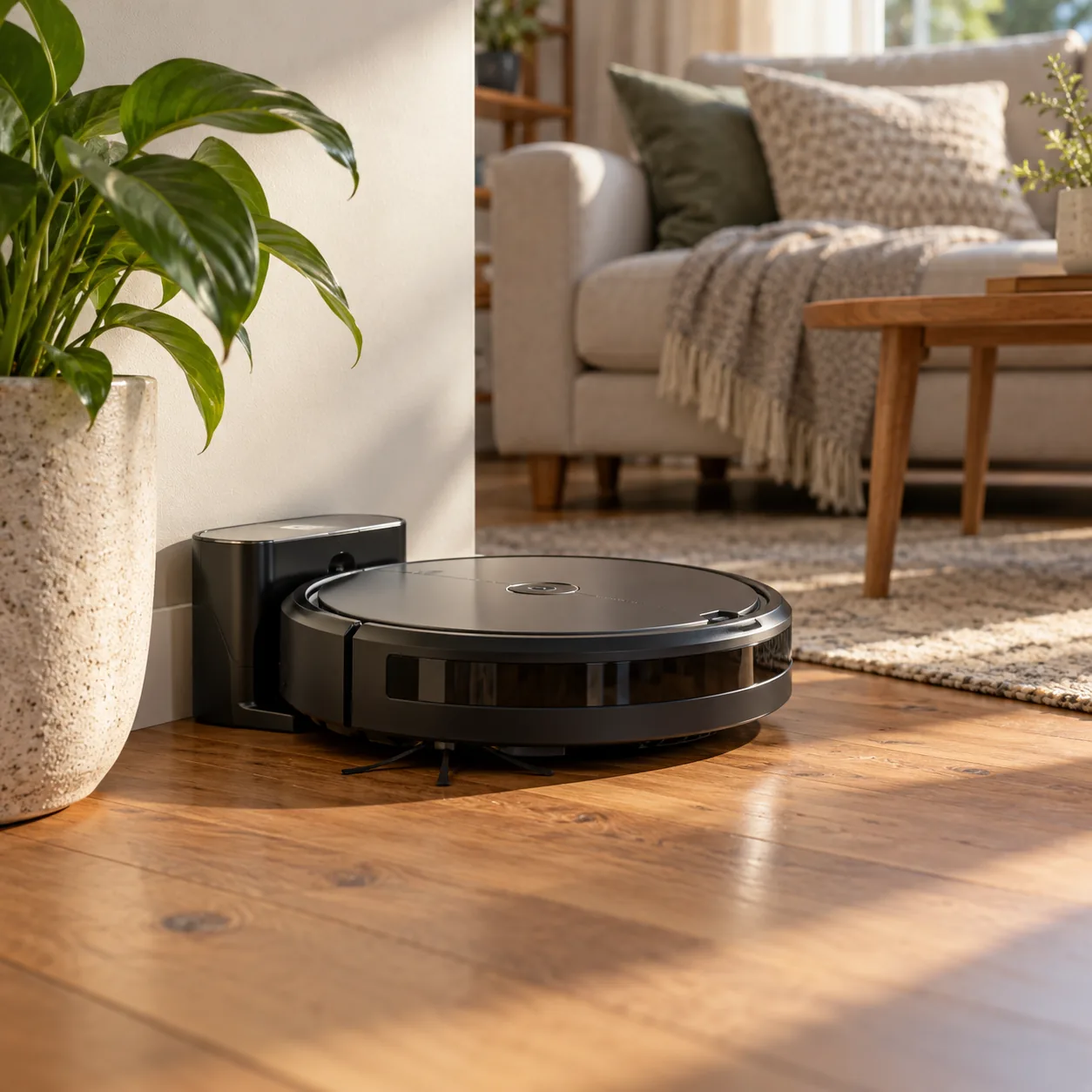
Generated interpretation, not documentary evidence. Generated generic round robotic vacuum beside an imagined dock; not an exact Roomba model, manufacturer photograph or verified navigation system.
Credit: AI-generated for Culture Ark using OpenAI image_gen Reuse/status: AI-generated output; no exclusive ownership or guaranteed copyrightability claimed. Underlying works, marks and cultural permissions remain separate. Generated generic round robotic vacuum beside an imagined dock; not an exact Roomba model, manufacturer photograph or verified navigation system. Roomba is a brand, not a synonym for every robot vacuum. The 2002 museum account does not establish the capabilities of later models, complete autonomy in every home or a first-robot-ever claim. The frequency of cat-riding videos is unverified; placing pets on machines is not encouraged. No current product recommendation is made.
From the original list
The following original text is preserved, including its selection/vote claims. Preservation is not independent verification of every assertion.
Why: A robot that vacuums, often ridden by cats.
What to preserve: Device, cat videos
Year and origin: 2002 · United States
Vote: 5/9 (historian 1 · future kid 3 · curator 1)
Learn more: Roomba on Wikipedia
Supplemental context
Roomba brought an autonomous moving machine into the familiar setting of a household floor. The Computer History Museum’s 2002 timeline describes its use of a cleaning algorithm and obstacle detection, linking the story to Rodney Brooks’s earlier robotics research. This matters culturally because a domestic robot need not resemble a human to change how people imagine machines and housework. Future readers can examine expectations of convenience, the division of household labor and the tendency to give personality to an object that moves by itself. The archived selection also points toward humorous pet videos, but those should be preserved as particular media examples rather than treated as a normal operating practice. Different model generations require their own documentation.
Creator/community: iRobot engineering teams and household users; Rodney Brooks among company co-founders Place/era: United States;Roomba introduced 2002 and later model generations
Context and limits
Roomba is a brand, not a synonym for every robot vacuum. The 2002 museum account does not establish the capabilities of later models, complete autonomy in every home or a first-robot-ever claim. The frequency of cat-riding videos is unverified; placing pets on machines is not encouraged. No current product recommendation is made.
Where to learn more
- https://apiarybee.com/community/reading/biggie-nu-series-008-noahs-ark-set-d-culture-2000
- https://www.computerhistory.org/timeline/2002/
Apiary library | Original Culture Ark article
Public ID and individual routes: pending publisher allocation. Internal source ID: D-1316
Part of the Culture Ark: 2,000 things people should still be able to see in 2,000 years, picked by AI research teams. This page keeps the original list entry for D-1316 word for word and adds context. Browse the gallery. The Culture Ark is an Artificial Mind Hive (AMH) project. AMH is owned by Austin Little.

Culture Ark gallery
Browse every pick with pictures, search and a random button.
Open the gallery →