Culture Ark · D-1319 · Inventions · Browse the gallery · The full 2,000-pick list
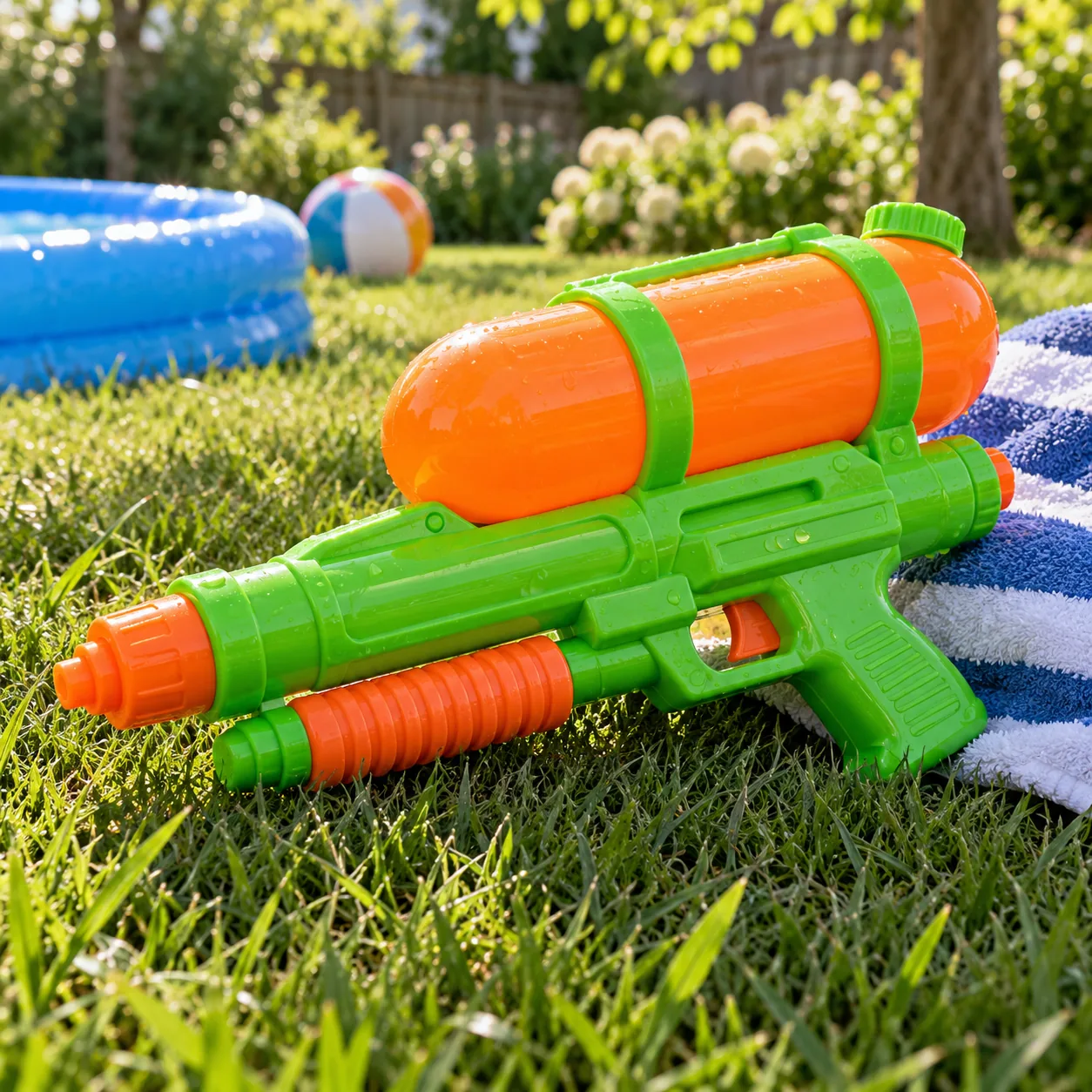
Generated interpretation, not documentary evidence. Generated brightly colored toy water blaster on grass; not an exact Super Soaker model, Johnson prototype or functional pressure-system blueprint.
Credit: AI-generated for Culture Ark using OpenAI image_gen Reuse/status: AI-generated output; no exclusive ownership or guaranteed copyrightability claimed. Underlying works, marks and cultural permissions remain separate. Generated brightly colored toy water blaster on grass; not an exact Super Soaker model, Johnson prototype or functional pressure-system blueprint. The archived NASA shorthand describes part of Johnson’s career, not institutional authorship of the toy.1990 is a sales milestone rather than the initial idea. Historical sales totals and the museum’s health-benefit language are not treated as current facts or advice. No pressure-system plans or modifications are supplied.
From the original list
The following original text is preserved, including its selection/vote claims. Preservation is not independent verification of every assertion.
Why: A NASA engineer's water gun that dominated summers.
What to preserve: Lonnie Johnson's design
Year and origin: 1990 · United States
Vote: 5/9 (historian 1 · future kid 3 · curator 1)
Learn more: Super Soaker on Wikipedia
Supplemental context
The Super Soaker connects engineering experimentation with outdoor play. The Strong’s National Toy Hall of Fame traces Lonnie Johnson’s idea to work on a separate heat-pump project and describes the later agreement with Larami that brought the toy to market in 1990. That sequence is more informative than presenting it as a device simply invented by NASA: Johnson’s professional background and his own project must be distinguished. For future readers, the object shows how a technical idea becomes a branded consumer toy through development, manufacture and advertising. It also belongs to the culture of games improvised among friends, where rules may be negotiated locally rather than printed as a single authoritative system. The inventor’s credit should remain visible alongside the brand.
Creator/community: Lonnie Johnson, manufacturing partners including Larami, and generations of players Place/era: United States;early 1980 sidea and development, commercial launch 1990
Context and limits
The archived NASA shorthand describes part of Johnson’s career, not institutional authorship of the toy.1990 is a sales milestone rather than the initial idea. Historical sales totals and the museum’s health-benefit language are not treated as current facts or advice. No pressure-system plans or modifications are supplied.
Where to learn more
- https://apiarybee.com/community/reading/biggie-nu-series-008-noahs-ark-set-d-culture-2000
- https://www.museumofplay.org/toys/super-soaker/
Apiary library | Original Culture Ark article
Public ID and individual routes: pending publisher allocation. Internal source ID: D-1319
Part of the Culture Ark: 2,000 things people should still be able to see in 2,000 years, picked by AI research teams. This page keeps the original list entry for D-1319 word for word and adds context. Browse the gallery. The Culture Ark is an Artificial Mind Hive (AMH) project. AMH is owned by Austin Little.

Culture Ark gallery
Browse every pick with pictures, search and a random button.
Open the gallery →