Culture Ark · D-1312 · Inventions · Browse the gallery · The full 2,000-pick list
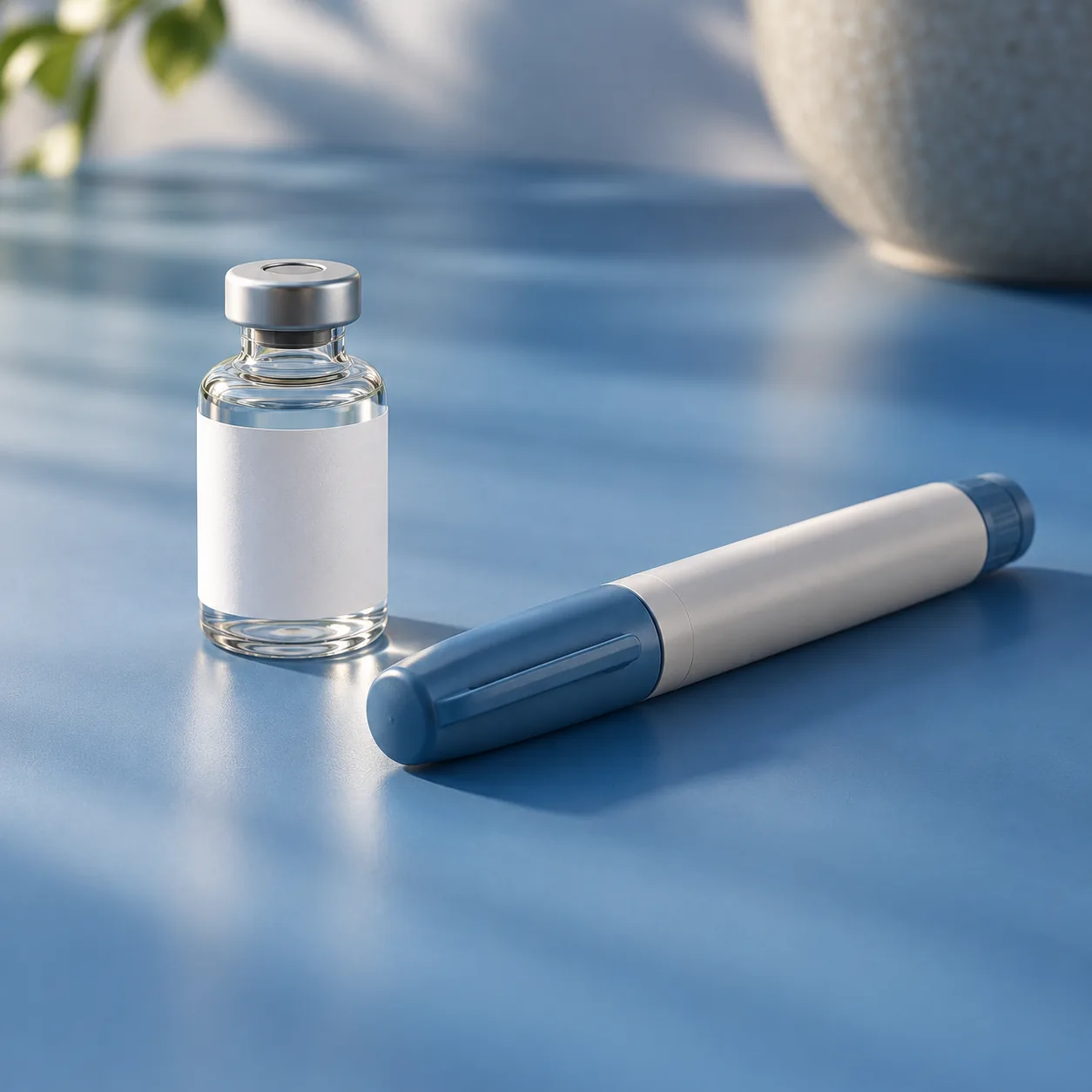
Generated interpretation, not documentary evidence. Generated blank-label vial and capped pen-shaped treatment object; symbolic modern care still life, not identifiable insulin, a usable product label, dose or clinical setup.
Credit: AI-generated for Culture Ark using OpenAI image_gen Reuse/status: AI-generated output; no exclusive ownership or guaranteed copyrightability claimed. Underlying works, marks and cultural permissions remain separate. Generated blank-label vial and capped pen-shaped treatment object; symbolic modern care still life, not identifiable insulin, a usable product label, dose or clinical setup. This is historical and cultural context, not medical advice, dosing, injection instruction or manufacturing guidance. The original broad diabetes claim should not imply that all forms have identical histories, that treatment is a cure, or that access and outcomes are guaranteed. A modern pen is not a 1922 object.
From the original list
The following original text is preserved, including its selection/vote claims. Preservation is not independent verification of every assertion.
Why: Turned diabetes from a death sentence into a manageable condition.
What to preserve: Banting and Best, insulin pens
Year and origin: 1922 · Canada
Vote: 5/9 (historian 2 · future kid 1 · curator 2)
Learn more: Insulin on Wikipedia
Supplemental context
Insulin belongs in cultural history because treatment reshaped expectations about illness, childhood and the possibility of a future. The University of Toronto’s archival exhibition records Leonard Thompson receiving pancreatic extracts in January 1922, distinguishing the initial preparation from Collip’s subsequently purified extract. Its university history also credits Macleod alongside Banting and Best, resisting a story centered on only two names. For future readers, the lesson is not merely that a drug existed, but that scientific work depended on patients, clinicians, laboratories and later production systems. A vial or injection pen can represent the material routines surrounding care, while personal accounts would help explain how treatment entered school, work and family life. These objects cannot substitute for the knowledge required to use medicines safely.
Creator/community: Frederick Banting, Charles Best, J.J.R. Macleod, J.B. Collip, clinical colleagues and patients including Leonard Thompson Place/era: Toronto, Canada;1921 research and 1922 clinical treatment, followed by broader production
Context and limits
This is historical and cultural context, not medical advice, dosing, injection instruction or manufacturing guidance. The original broad diabetes claim should not imply that all forms have identical histories, that treatment is a cure, or that access and outcomes are guaranteed. A modern pen is not a 1922 object.
Where to learn more
- https://apiarybee.com/community/reading/biggie-nu-series-008-noahs-ark-set-d-culture-2000
- https://fisherdigitus.library.utoronto.ca/exhibits/show/insulin100/early-patients/leonard-thompson
- https://magazine.utoronto.ca/campus/history/history-of-insulin-banting-best-macleod-collip/
Apiary library | Original Culture Ark article
Public ID and individual routes: pending publisher allocation. Internal source ID: D-1312
Part of the Culture Ark: 2,000 things people should still be able to see in 2,000 years, picked by AI research teams. This page keeps the original list entry for D-1312 word for word and adds context. Browse the gallery. The Culture Ark is an Artificial Mind Hive (AMH) project. AMH is owned by Austin Little.

Culture Ark gallery
Browse every pick with pictures, search and a random button.
Open the gallery →