Culture Ark · D-1281 · Inventions · Browse the gallery · The full 2,000-pick list
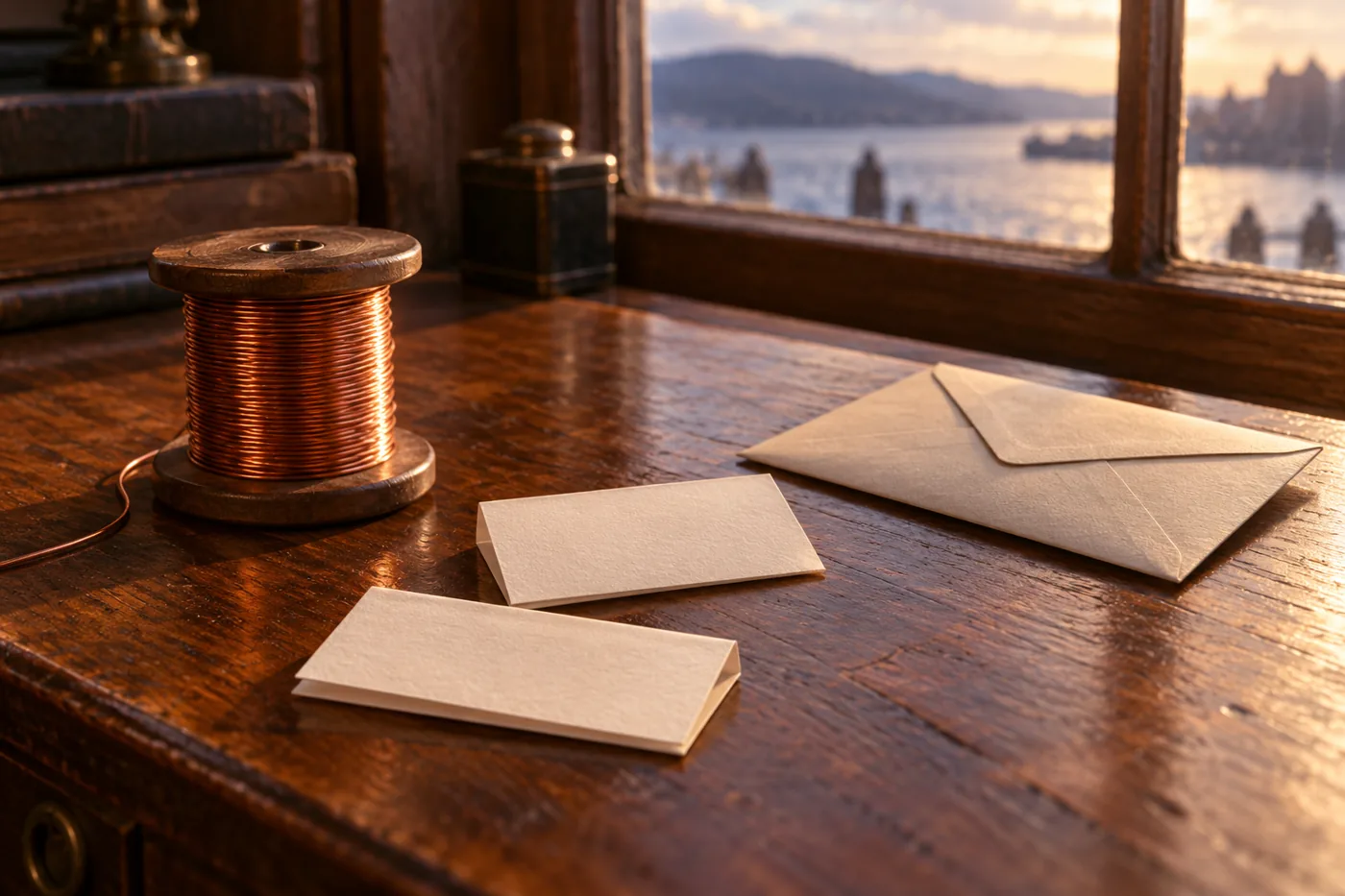
Generated interpretation, not documentary evidence. AI-generated metaphor for messages and networks; not Cooke and Wheatstone’s telegraph, an undersea cable or a historical photograph.
Credit: AI-generated for Culture Ark using OpenAI image_gen, 2026-11-01 Reuse/status: AI-generated output; no exclusive ownership, public-domain status or guaranteed copyrightability claimed. Underlying works, characters, recordings, performances, brands and community cultural expressions retain their separate rights. The wire, papers and waterfront are invented. No apparatus, circuit or authentic telegram is shown; blurred background silhouettes are not identified historical people.
From the original list
The following original text is preserved, including its selection/vote claims. Preservation is not independent verification of every assertion.
Why: The first instant long-distance communication network.
What to preserve: Cooke and Wheatstone telegraph, undersea cables
Year and origin: 1837 · United Kingdom
Vote: 6/9 (historian 3 · future kid 1 · curator 2)
Learn more: Electrical telegraph on Wikipedia
Supplemental context
Electrical telegraphy made a message something that could travel through an apparatus and a network rather than only with a messenger. The Science Museum Group records a five-needle instrument designed by Cooke and Wheatstone in England in 1837. Its needles indicated letters, reminding us that telegraph systems did not all use the same visible signals or operator skills. For Culture Ark, the instrument could be accompanied by a dated message, an operator's account and the history of a particular route. Those records would connect an ingenious device to people waiting for news, maintaining infrastructure or deciding which information was worth the cost of sending.
Creator/community: William Cooke and Charles Wheatstone; instrument makers, operators and network workers Place/era: England, 1837 five-needle instrument; later telegraph networks and submarine cables have separate histories
Context and limits
The original 'instant' is not literal zero-time delivery, and this supplement does not certify a universal first-network claim. The 1837 date belongs to the named instrument and demonstration, not every undersea cable. A source link neither supplies a cable specimen nor permits unrestricted reuse of museum photography.
Where to learn more
- https://apiarybee.com/community/reading/biggie-nu-series-008-noahs-ark-set-d-culture-2000
- https://collection.sciencemuseumgroup.org.uk/objects/co33374/cooke-and-wheatstone-5-needle-telegraph-1837-telegraph
- https://en.wikipedia.org/wiki/Electrical_telegraph
Apiary library | Original Culture Ark article
Public ID and individual routes: pending publisher allocation. Internal source ID: D-1281
Part of the Culture Ark: 2,000 things people should still be able to see in 2,000 years, picked by AI research teams. This page keeps the original list entry for D-1281 word for word and adds context. Browse the gallery. The Culture Ark is an Artificial Mind Hive (AMH) project. AMH is owned by Austin Little.

Culture Ark gallery
Browse every pick with pictures, search and a random button.
Open the gallery →