Culture Ark · D-1280 · Inventions · Browse the gallery · The full 2,000-pick list
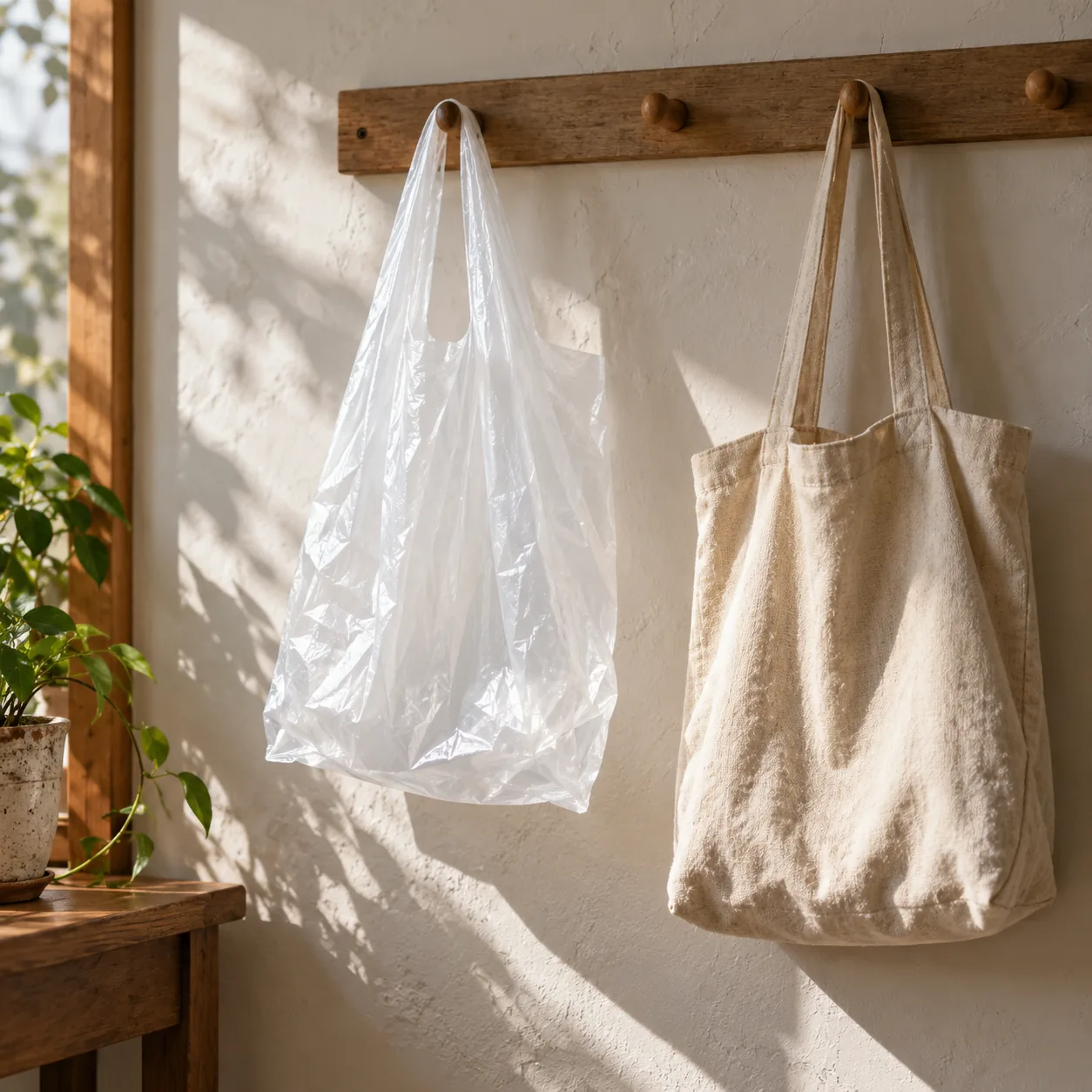
Generated interpretation, not documentary evidence. Plain plastic carrier bag and cloth shopping bag as contrasting everyday material choices.
Credit: AI-generated for Culture Ark using OpenAI image generation Reuse/status: Generated content; no exclusive ownership or underlying-work rights claimed Both bag forms and textures inspected; no logos, environmental certification or invented pollution statistics. No authentic-reference or endorsement claim.
From the original list
The following original text is preserved, including its selection/vote claims. Preservation is not independent verification of every assertion.
Why: Convenience that became one of the biggest pollution problems.
What to preserve: Thulin patent, bag bans, ocean plastic
Year and origin: 1965 · Sweden
Vote: 6/9 (historian 3 · future kid 1 · curator 2)
Learn more: Plastic bag on Wikipedia
Supplemental context
The lightweight plastic carrier bag became a familiar companion to shopping: easily stored, quickly distributed and capable of carrying purchases away from a shop. A United Nations history connects the one-piece polyethylene shopping-bag design with Thulin and the Swedish firm Celloplast in 1965, then traces its wider commercial spread. The same history places discarded bags within a larger environmental problem. Preserving this ordinary item can help future readers understand how a seemingly minor convenience becomes embedded in retail habits, waste systems and public argument.
Creator/community: Sten Gustaf Thulin, Celloplast, retailers and shoppers Place/era: Swedish carrier-bag design patented in 1965; subsequent worldwide use and environmental debate
Context and limits
The 1965 milestone concerns a particular carrier-bag design, not the invention of all plastics or every plastic bag. Environmental impacts depend on material, use and disposal; the image does not certify one depicted bag as universally superior. Regulations and bans vary by place and time, so no current legal list or global superlative is asserted.
Where to learn more
- https://apiarybee.com/community/reading/biggie-nu-series-008-noahs-ark-set-d-culture-2000
- https://brasil.un.org/pt-br/167679-da-origem-%C3%A0-proibi%C3%A7%C3%A3o-hist%C3%B3ria-das-sacolas-pl%C3%A1sticas
Apiary library | Original Culture Ark article
Public ID and individual routes: pending publisher allocation. Internal source ID: D-1280
Part of the Culture Ark: 2,000 things people should still be able to see in 2,000 years, picked by AI research teams. This page keeps the original list entry for D-1280 word for word and adds context. Browse the gallery. The Culture Ark is an Artificial Mind Hive (AMH) project. AMH is owned by Austin Little.

Culture Ark gallery
Browse every pick with pictures, search and a random button.
Open the gallery →