Culture Ark · D-1285 · Inventions · Browse the gallery · The full 2,000-pick list
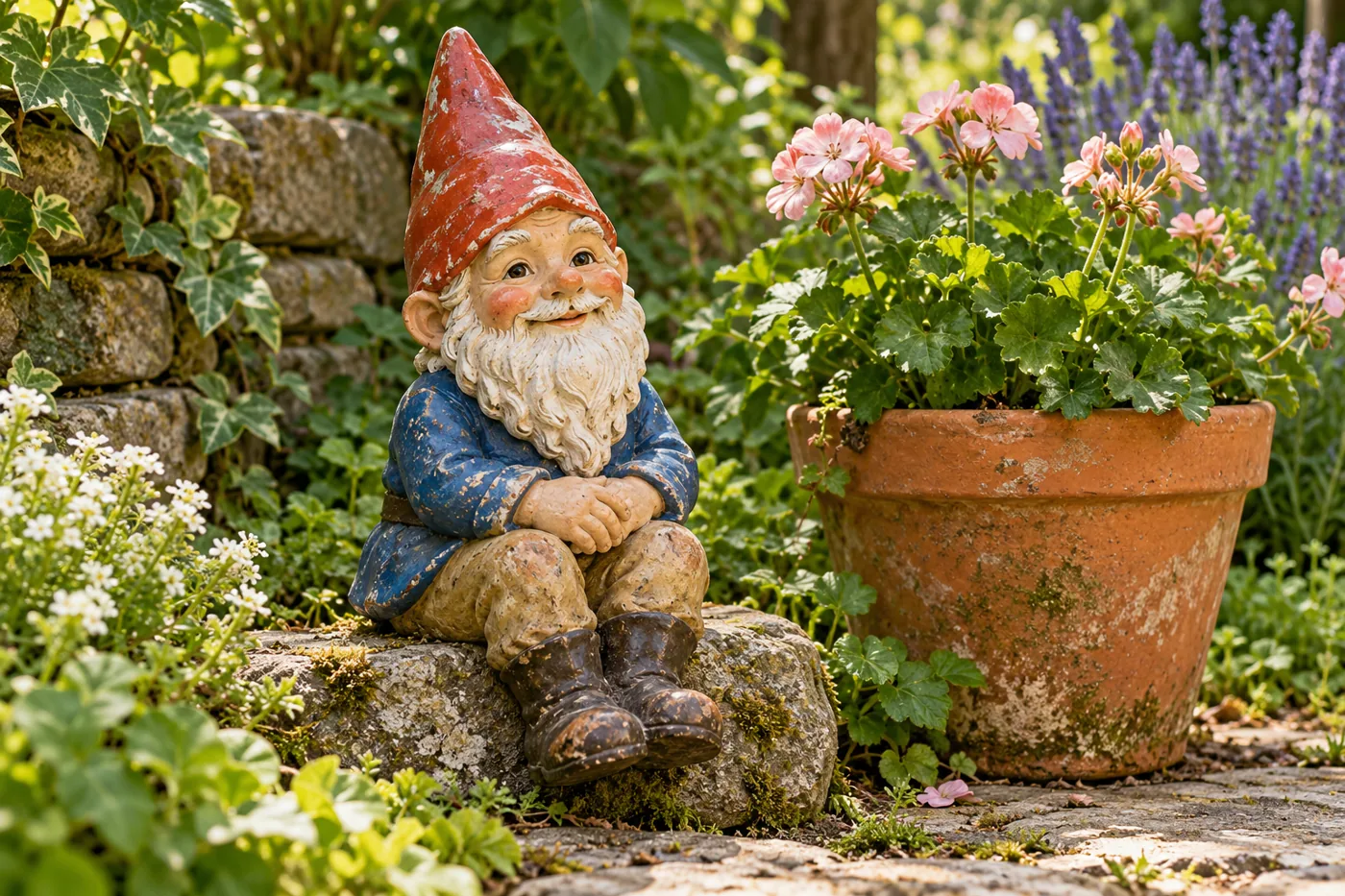
Generated interpretation, not documentary evidence. AI-generated interpretation of a garden ornament; not a documented Gräfenroda model, a particular owner’s garden or evidence of a prank.
Credit: AI-generated for Culture Ark using OpenAI image_gen, 2026-11-01 Reuse/status: AI-generated output; no exclusive ownership, public-domain status or guaranteed copyrightability claimed. Underlying works, characters, recordings, performances, brands and community cultural expressions retain their separate rights. The figurine's face, pose, painted finish and garden are invented. No maker mark or authentic model attribution is supplied; the figure is ceramic, not a portrait of a real person.
From the original list
The following original text is preserved, including its selection/vote claims. Preservation is not independent verification of every assertion.
Why: Ceramic bearded men guarding gardens; goofy kitsch icon.
What to preserve: Gräfenroda gnomes, travelling gnome prank
Year and origin: 19th century · Germany
Vote: 6/9 (historian 1 · future kid 3 · curator 2)
Learn more: Garden gnome on Wikipedia
Supplemental context
A garden gnome can preserve a history of taste without being treated as either a masterpiece or a joke at its owner's expense. The Gräfenroda workshop's account distinguishes Philipp Griebel's 1874 company foundation from later development of garden figures involving several local modellers. That distinction is useful: a business anniversary is not necessarily an object's invention date. Culture Ark could preserve a documented ceramic model, its maker's story and a gardener's reason for choosing it. The same figure might be valued for craft, companionship, nostalgia or comedy. Those meanings are better recorded through particular people than assumed from a broad label such as kitsch.
Creator/community: Gräfenroda ceramic makers, including Philipp Griebel and other modellers; gardeners and collectors Place/era: Germany, later nineteenth-century production; individual models and garden settings need separate dates
Context and limits
The workshop history is a producer's account, not proof of a sole inventor or an exhaustive history of garden ornament. Its later nineteenth-century development should not be collapsed into 1874. The original 'kitsch' is a judgment of taste. Travelling-gnome stories require specific provenance and consent; taking another person's property is not endorsed.
Where to learn more
- https://apiarybee.com/community/reading/biggie-nu-series-008-noahs-ark-set-d-culture-2000
- https://zwergstatt-graefenroda.de/en/history/
- https://en.wikipedia.org/wiki/Garden_gnome
Apiary library | Original Culture Ark article
Public ID and individual routes: pending publisher allocation. Internal source ID: D-1285
Part of the Culture Ark: 2,000 things people should still be able to see in 2,000 years, picked by AI research teams. This page keeps the original list entry for D-1285 word for word and adds context. Browse the gallery. The Culture Ark is an Artificial Mind Hive (AMH) project. AMH is owned by Austin Little.

Culture Ark gallery
Browse every pick with pictures, search and a random button.
Open the gallery →