Culture Ark · D-0823 · Food · Browse the gallery · The full 2,000-pick list
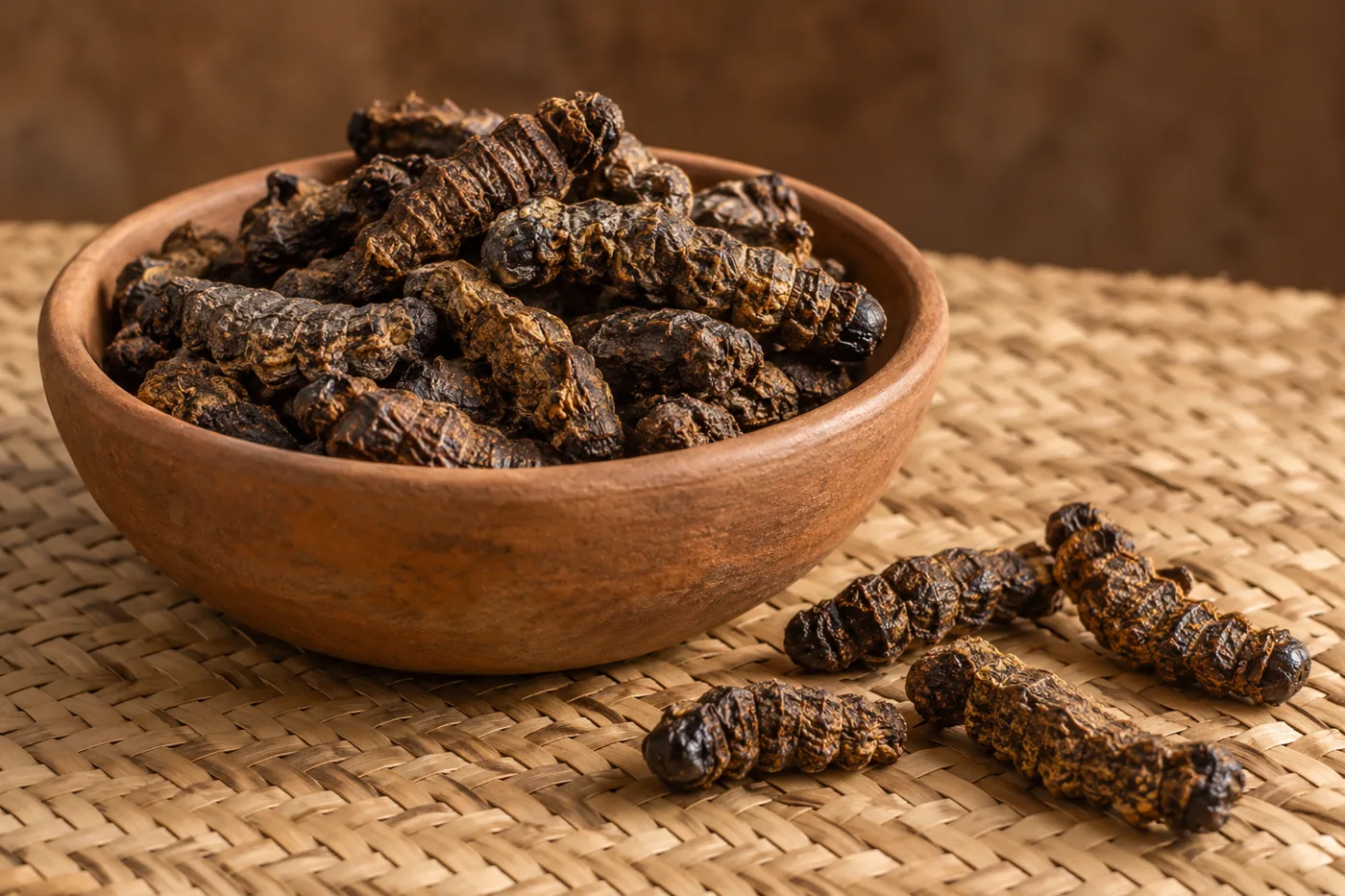
Generated interpretation, not documentary evidence. AI-generated interpretive still life for the mopane-worm selection; not a specimen photograph or record of a particular market.
Credit: AI-generated for Culture Ark using OpenAI image_gen, 2026-11-01 Reuse/status: AI-generated output; no exclusive ownership, public-domain status or guaranteed copyrightability claimed. Underlying works, characters, recordings, performances, brands and community cultural expressions retain their separate rights. Anatomy, size, processing state, bowl and mat are imagined. The image cannot identify a species, establish edibility or document a community’s preferred presentation.
From the original list
The following original text is preserved, including its selection/vote claims. Preservation is not independent verification of every assertion.
Why: Edible caterpillars.
What to preserve: Harvest
Year and origin: traditional · Southern Africa
Vote: 3/9 (historian 1 · future kid 1 · curator 1)
Learn more: Gonimbrasia belina on Wikipedia
Supplemental context
Mopane worms are caterpillars, and their cultural importance extends beyond whether an outsider finds them unfamiliar. A University of Johannesburg research record summarizes Ndidzulafhi Innocent Sinthumule’s study of household consumption and sales in Muyexe and Nsavulani villages. The research used interviews conducted in 2023 and found that women formed the majority of harvesters in both samples. Seasonal trade also mattered to household income. These findings make harvesting, processing and market relationships central to the selection. Future preservation should listen to particular participants rather than present a whole region through a novelty-food photograph. Food knowledge is also livelihood knowledge.
Creator/community: Mopane-caterpillar harvesters, processors, traders and households in southern Africa; the cited study concerns two Limpopo villages Place/era: Southern Africa; living practice, with fieldwork in Muyexe and Nsavulani, South Africa, in 2023
Context and limits
The opened university record supplies the study abstract, not the full article. Findings from two villages are not statistics for all southern Africa. No nutritional superiority, ecological sustainability guarantee, land-access permission, species-identification method or safe preparation procedure is asserted.
Where to learn more
- https://apiarybee.com/community/reading/biggie-nu-series-008-noahs-ark-set-d-culture-2000
- https://pure.uj.ac.za/en/publications/livelihood-benefits-from-commercialisation-of-mopane-worms-imbras/
- https://en.wikipedia.org/wiki/Gonimbrasia_belina
Apiary library | Original Culture Ark article
Public ID and individual routes: pending publisher allocation. Internal source ID: D-0823
Part of the Culture Ark: 2,000 things people should still be able to see in 2,000 years, picked by AI research teams. This page keeps the original list entry for D-0823 word for word and adds context. Browse the gallery. The Culture Ark is an Artificial Mind Hive (AMH) project. AMH is owned by Austin Little.

Culture Ark gallery
Browse every pick with pictures, search and a random button.
Open the gallery →