Culture Ark · D-0824 · Food · Browse the gallery · The full 2,000-pick list
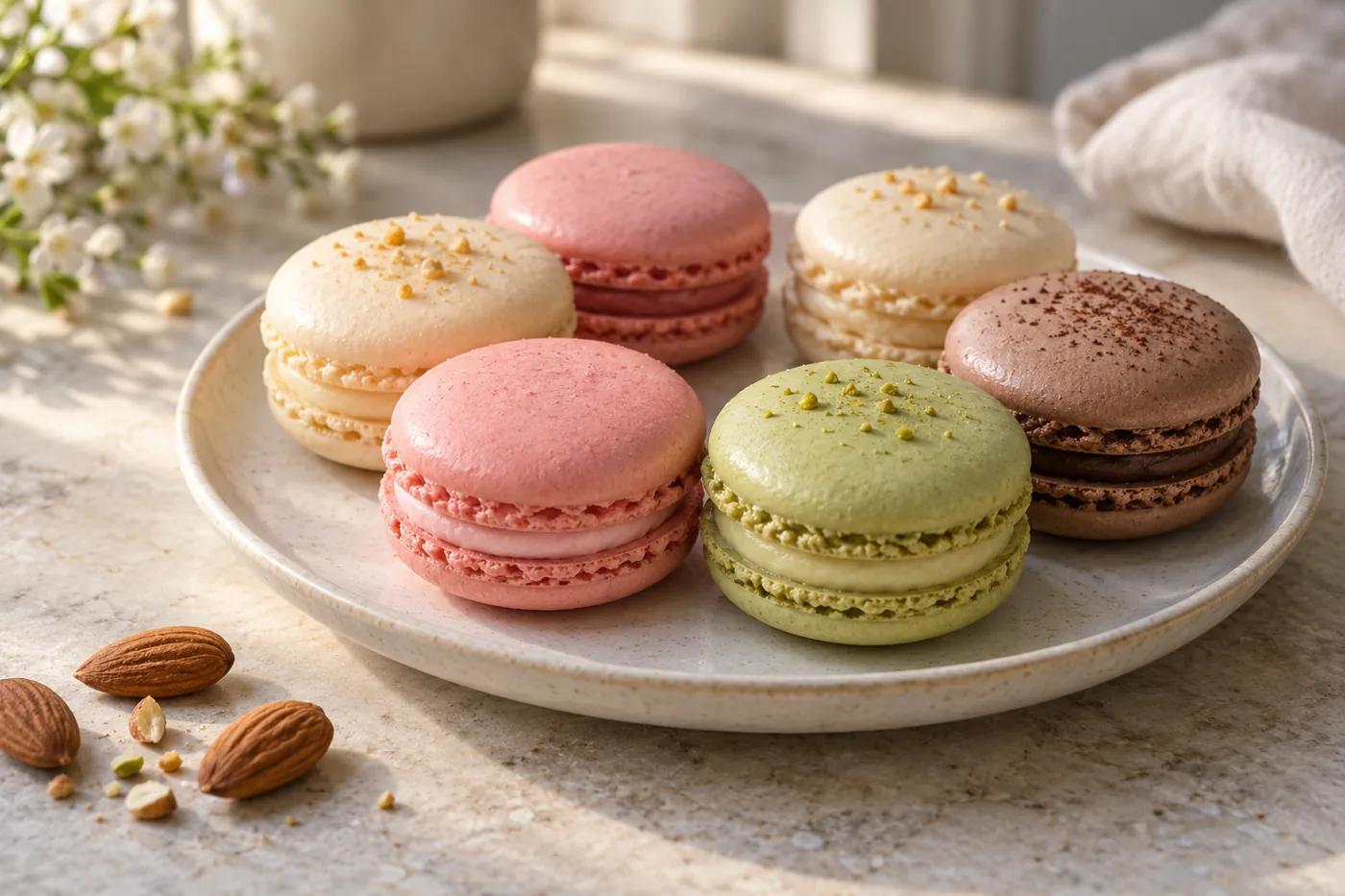
Generated interpretation, not documentary evidence. AI-generated interpretation of contemporary filled macarons, not Nancy’s unfilled form or a particular bakery’s products.
Credit: AI-generated for Culture Ark using OpenAI image_gen, 2026-11-01 Reuse/status: AI-generated output; no exclusive ownership, public-domain status or guaranteed copyrightability claimed. Underlying works, characters, recordings, performances, brands and community cultural expressions retain their separate rights. Colors and fillings are imagined and cannot identify flavors, ingredients or allergens. The plate is not documentary evidence of a historical serving.
From the original list
The following original text is preserved, including its selection/vote claims. Preservation is not independent verification of every assertion.
Why: Colorful almond cookies.
What to preserve: Recipe
Year and origin: 19th century · France
Vote: 3/9 (historian 1 · future kid 1 · curator 1)
Learn more: Macaron on Wikipedia
Supplemental context
The colorful filled macaron is only one form within a longer almond-biscuit history. Nancy maker Lefèvre-Lemoine describes biscuits of almonds, egg whites and sugar sold by the dozen on their baking sheet. Maison Ladurée’s own historical account distinguishes such single biscuits from the later two-shell filled form and acknowledges uncertainty around popular origin stories. The original nineteenth-century label should therefore not flatten every regional macaron into the modern sandwich cookie. A future archive could compare texture, assembly, packaging and the stories businesses tell about continuity, while preserving the distinction between a maker’s account and independently demonstrated invention priority.
Creator/community: French regional confectioners and contemporary pâtissiers; specific accounts from Nancy and Maison Ladurée Place/era: France; older almond-biscuit traditions and later filled Parisian forms
Context and limits
Both supplemental sources are confectioners’ own accounts. Their commercial priority claims are not independently certified. Catherine de’ Medici’s introduction story is not treated as documented fact, and no single inventor or exact invention year for all macarons is assigned. This entry does not reproduce a proprietary recipe.
Where to learn more
- https://apiarybee.com/community/reading/biggie-nu-series-008-noahs-ark-set-d-culture-2000
- https://macaronsdenancy.fr/
- https://laduree.com/en-us/pages/history-of-the-macaron
- https://en.wikipedia.org/wiki/Macaron
Apiary library | Original Culture Ark article
Public ID and individual routes: pending publisher allocation. Internal source ID: D-0824
Part of the Culture Ark: 2,000 things people should still be able to see in 2,000 years, picked by AI research teams. This page keeps the original list entry for D-0824 word for word and adds context. Browse the gallery. The Culture Ark is an Artificial Mind Hive (AMH) project. AMH is owned by Austin Little.

Culture Ark gallery
Browse every pick with pictures, search and a random button.
Open the gallery →