Culture Ark · D-0828 · Food · Browse the gallery · The full 2,000-pick list
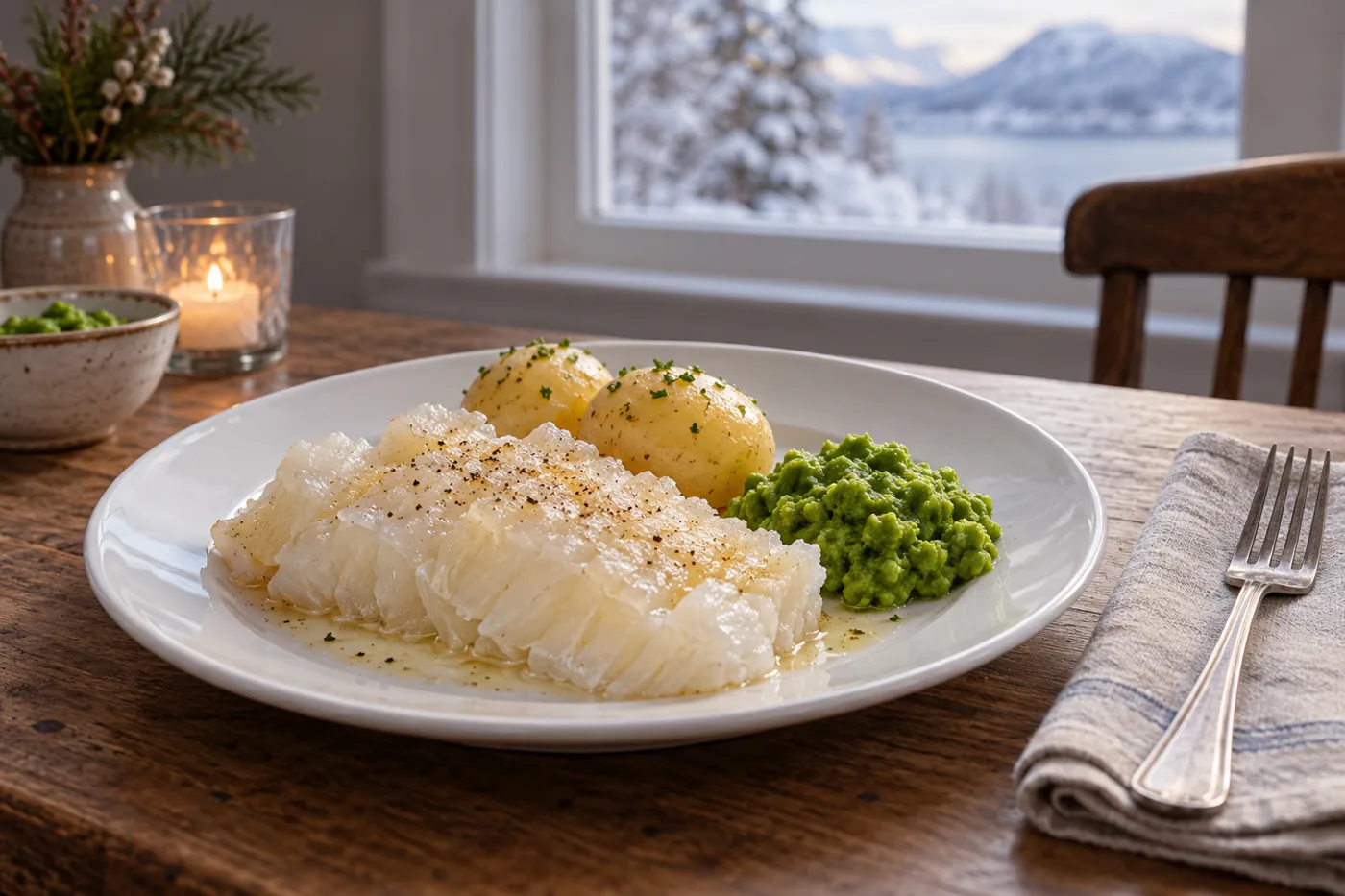
Generated interpretation, not documentary evidence. AI-generated interpretation of one lutefisk-style seasonal serving; not a documented meal or processing demonstration.
Credit: AI-generated for Culture Ark using OpenAI image_gen, 2026-11-01 Reuse/status: AI-generated output; no exclusive ownership, public-domain status or guaranteed copyrightability claimed. Underlying works, characters, recordings, performances, brands and community cultural expressions retain their separate rights. Fish species, treatment, doneness and sides are not verified from pixels. The snowy view is imagined, not a specific place, and the serving does not represent every regional tradition.
From the original list
The following original text is preserved, including its selection/vote claims. Preservation is not independent verification of every assertion.
Why: Lye-treated dried fish.
What to preserve: Process
Year and origin: medieval · Norway / Sweden
Vote: 3/9 (historian 1 · future kid 1 · curator 1)
Learn more: Lutefisk on Wikipedia
Supplemental context
Lutefisk is dried fish changed through alkaline treatment and later preparation, but the meal also carries social history. Visit Norway describes seasonal lutefisk gatherings and varied accompaniments: potatoes, peas and bacon in some settings, syrup or brown cheese in others. It notes related traditions in Sweden, Finland and the United States. The account identifies sixteenth-century documentation while explicitly leaving the exact origin uncertain. Future preservation should record an actual gathering and its participants’ different reactions, not assume national agreement about taste. A food may become an annual occasion, a migration connection or a personal dislike without losing its cultural interest.
Creator/community: Norwegian and other Scandinavian cooks, seasonal dinner groups and diaspora communities Place/era: Norway, Sweden, Finland and diaspora; sixteenth-century documentation and living seasonal practice
Context and limits
The original medieval date is not established by the cited sixteenth-century documentation. Accident-and-ash origin stories are theories, not verified events. No lye-handling, processing times, chemical concentrations or safety guarantees are provided. Norway’s tourism account is not a complete account of Swedish, Finnish or diaspora practice.
Where to learn more
- https://apiarybee.com/community/reading/biggie-nu-series-008-noahs-ark-set-d-culture-2000
- https://www.visitnorway.no/aktiviteter-og-attraksjoner/mat-og-drikke/lutefisk/
- https://en.wikipedia.org/wiki/Lutefisk
Apiary library | Original Culture Ark article
Public ID and individual routes: pending publisher allocation. Internal source ID: D-0828
Part of the Culture Ark: 2,000 things people should still be able to see in 2,000 years, picked by AI research teams. This page keeps the original list entry for D-0828 word for word and adds context. Browse the gallery. The Culture Ark is an Artificial Mind Hive (AMH) project. AMH is owned by Austin Little.

Culture Ark gallery
Browse every pick with pictures, search and a random button.
Open the gallery →