Culture Ark · D-0825 · Food · Browse the gallery · The full 2,000-pick list
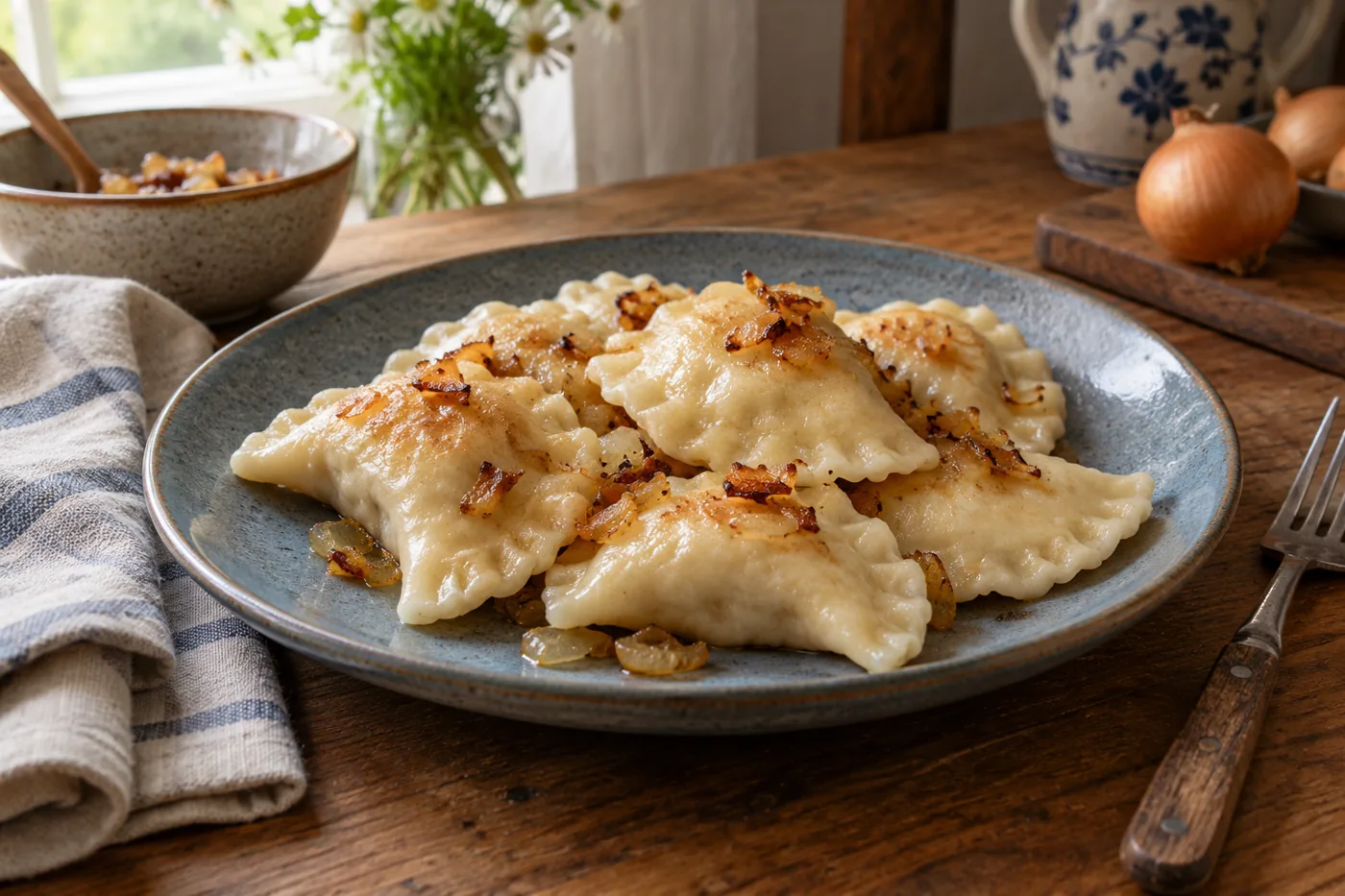
Generated interpretation, not documentary evidence. AI-generated interpretation of a pierogi serving; not a documented family meal or a view of a verified filling.
Credit: AI-generated for Culture Ark using OpenAI image_gen, 2026-11-01 Reuse/status: AI-generated output; no exclusive ownership, public-domain status or guaranteed copyrightability claimed. Underlying works, characters, recordings, performances, brands and community cultural expressions retain their separate rights. The unseen filling is unspecified. Onion garnish and household objects are imagined; background ceramic decoration is not authenticated regional craft.
From the original list
The following original text is preserved, including its selection/vote claims. Preservation is not independent verification of every assertion.
Why: Filled dumplings.
What to preserve: Recipe
Year and origin: 13th century · Poland
Vote: 3/9 (historian 1 · future kid 1 · curator 1)
Learn more: Pierogi on Wikipedia
Supplemental context
Pierogi connect the finished dumpling with the work of filling and closing dough. Culture.pl’s account lists both savory and sweet fillings and recalls a grandmother teaching the writer how to make them. It also discusses mushroom-filled uszka in beet soup and sauerkraut pierogi at Christmas Eve meals. These are specific contexts, not a requirement that every household follows the same menu. The article distinguishes the thirteenth-century Saint Jacek story as legend and points to later written evidence. Preserving a maker’s remembered lesson beside a purchased packet would help future readers see how handwork, convenience and affection can coexist.
Creator/community: Polish household cooks, dumpling makers and diaspora families Place/era: Poland and diaspora; early modern documentation and continuing household and festive practice
Context and limits
The original thirteenth-century origin is not independently established. Saint Jacek’s role is a legend in the cited account. Historical uses of the name do not all describe the present half-moon dumpling. Pierogi is already plural. No single filling or family practice stands for all Polish people.
Where to learn more
- https://apiarybee.com/community/reading/biggie-nu-series-008-noahs-ark-set-d-culture-2000
- https://culture.pl/en/article/polands-most-famous-dish-pierogi
- https://en.wikipedia.org/wiki/Pierogi
Apiary library | Original Culture Ark article
Public ID and individual routes: pending publisher allocation. Internal source ID: D-0825
Part of the Culture Ark: 2,000 things people should still be able to see in 2,000 years, picked by AI research teams. This page keeps the original list entry for D-0825 word for word and adds context. Browse the gallery. The Culture Ark is an Artificial Mind Hive (AMH) project. AMH is owned by Austin Little.

Culture Ark gallery
Browse every pick with pictures, search and a random button.
Open the gallery →