Culture Ark · D-0826 · Food · Browse the gallery · The full 2,000-pick list
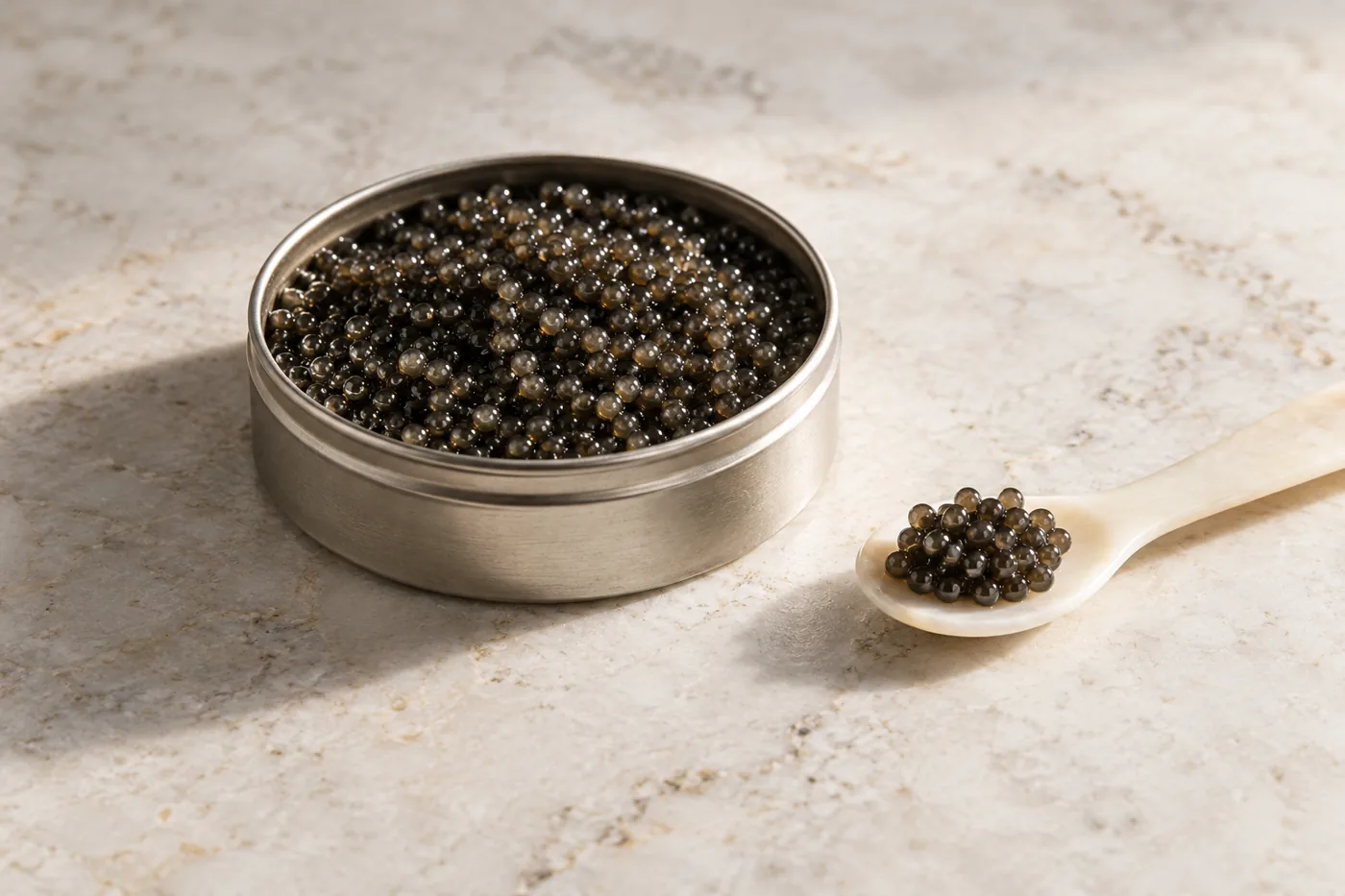
Generated interpretation, not documentary evidence. AI-generated interpretation of caviar as a material and container; not a certified product, species, grade or trade record.
Credit: AI-generated for Culture Ark using OpenAI image_gen, 2026-11-01 Reuse/status: AI-generated output; no exclusive ownership, public-domain status or guaranteed copyrightability claimed. Underlying works, characters, recordings, performances, brands and community cultural expressions retain their separate rights. The label is intentionally absent. The image is not a compliant-packaging example, traceability document, purchasing recommendation or claim of sustainable sourcing.
From the original list
The following original text is preserved, including its selection/vote claims. Preservation is not independent verification of every assertion.
Why: Sturgeon roe, luxury and conservation story.
What to preserve: Grades
Year and origin: ancient · Caspian Sea (Russia / Iran)
Vote: 3/9 (historian 1 · future kid 1 · curator 1)
Learn more: Caviar on Wikipedia
Supplemental context
Caviar invites a record of luxury that does not stop at taste or appearance. The European Commission and TRAFFIC’s wildlife-trade reference guide explains a labeling system that records such information as species, source, country, harvest year and processing facility. It also records the extension of CITES coverage to all sturgeon and paddlefish species in 1998. Those details turn a small container into a document connecting food with animals, waters and trade. A preservation record should retain provenance and the meaning of any grade alongside the product name, rather than assume that dark roe or an expensive presentation proves a particular origin.
Creator/community: Sturgeon-fishing and aquaculture communities, processors and traders; conservation and traceability institutions Place/era: Caspian associations in the original selection; a wider modern trade and conservation history
Context and limits
The ancient Caspian attribution is retained as original wording, not a verified first-use date. This supplement is not an import, purchase or legal-compliance guide. A quality grade, species identification, provenance label and sustainability assessment are different things; none can be inferred from the generated image.
Where to learn more
- https://apiarybee.com/community/reading/biggie-nu-series-008-noahs-ark-set-d-culture-2000
- https://environmental-data.ec.europa.eu/cites/reference-guide/chapters/annexes_xiv.html
- https://en.wikipedia.org/wiki/Caviar
Apiary library | Original Culture Ark article
Public ID and individual routes: pending publisher allocation. Internal source ID: D-0826
Part of the Culture Ark: 2,000 things people should still be able to see in 2,000 years, picked by AI research teams. This page keeps the original list entry for D-0826 word for word and adds context. Browse the gallery. The Culture Ark is an Artificial Mind Hive (AMH) project. AMH is owned by Austin Little.

Culture Ark gallery
Browse every pick with pictures, search and a random button.
Open the gallery →