Culture Ark · D-0821 · Food · Browse the gallery · The full 2,000-pick list
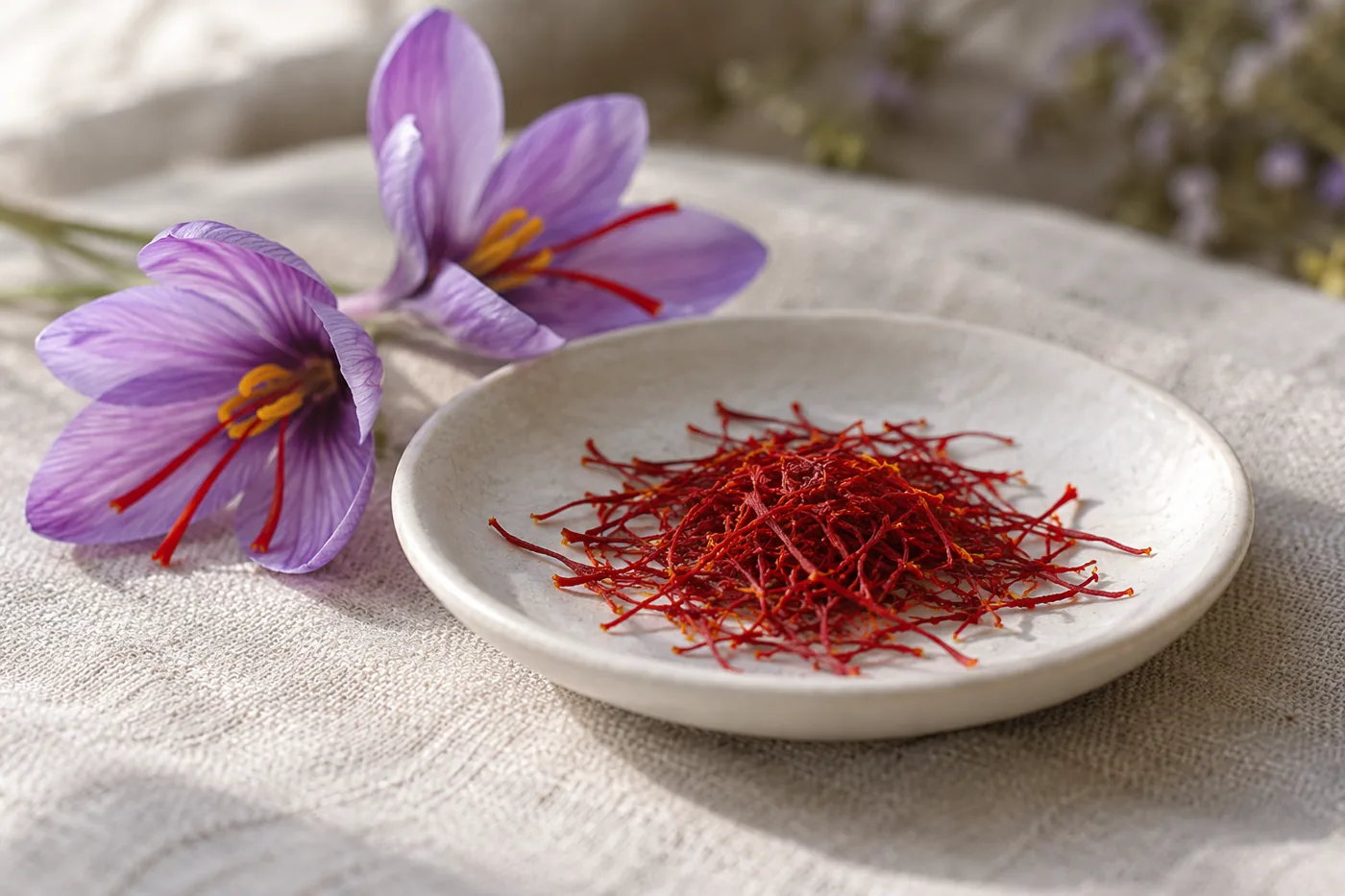
Generated interpretation, not documentary evidence. AI-generated interpretation of saffron as gathered material, with contextual flowers; not a documented harvest or botanical specimen.
Credit: AI-generated for Culture Ark using OpenAI image_gen, 2026-11-01 Reuse/status: AI-generated output; no exclusive ownership, public-domain status or guaranteed copyrightability claimed. Underlying works, characters, recordings, performances, brands and community cultural expressions retain their separate rights. The flowers, thread quantities and scale are invented. Do not use this image to identify edible plants, distinguish poisonous lookalikes or plan a harvest.
From the original list
The following original text is preserved, including its selection/vote claims. Preservation is not independent verification of every assertion.
Why: The world's most expensive spice.
What to preserve: Harvest
Year and origin: ancient · Persia / Greece
Vote: 3/9 (historian 1 · future kid 1 · curator 1)
Learn more: Saffron on Wikipedia
Supplemental context
Saffron is made from the red stigmas of Crocus sativus flowers. The Royal Horticultural Society describes a sterile cultivated plant, propagated through corms rather than seed, and the careful separation of these tiny flower parts. Its value can therefore be read through human attention and repeated handwork, not only through a price superlative. The RHS presents descent from Crocus cartwrightianus as probable rather than certain. A useful cultural record would identify a particular growing community, season and use, allowing agricultural knowledge and culinary choices to accompany the finished threads. A small quantity of spice can carry a much larger history of work.
Creator/community: Saffron growers, harvest workers, traders and cooks across multiple regions Place/era: Long-established cultivation; the original Persia / Greece attribution is not a settled single-origin finding
Context and limits
The original most-expensive claim is not a live price comparison. Ancient Persia / Greece is retained as source wording, not a proven exclusive birthplace. Similar common plant names can be misleading; the RHS warns about poisonous Colchicum. This article and illustration are not identification, harvesting or dosage guidance.
Where to learn more
- https://apiarybee.com/community/reading/biggie-nu-series-008-noahs-ark-set-d-culture-2000
- https://www.rhs.org.uk/herbs/saffron
- https://en.wikipedia.org/wiki/Saffron
Apiary library | Original Culture Ark article
Public ID and individual routes: pending publisher allocation. Internal source ID: D-0821
Part of the Culture Ark: 2,000 things people should still be able to see in 2,000 years, picked by AI research teams. This page keeps the original list entry for D-0821 word for word and adds context. Browse the gallery. The Culture Ark is an Artificial Mind Hive (AMH) project. AMH is owned by Austin Little.

Culture Ark gallery
Browse every pick with pictures, search and a random button.
Open the gallery →