Culture Ark · D-0795 · Food · Browse the gallery · The full 2,000-pick list
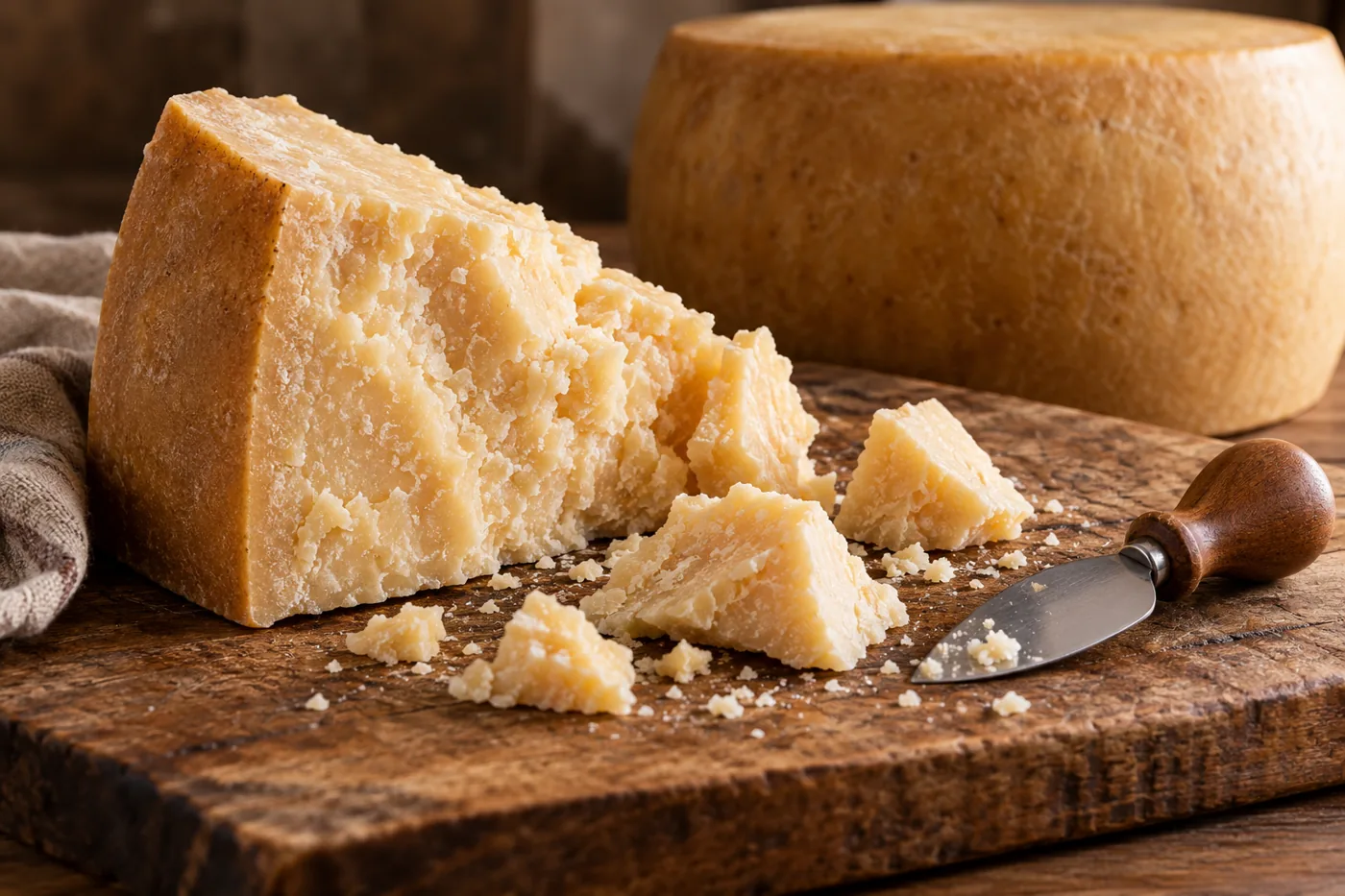
Generated interpretation, not documentary evidence. Imagined hard-cheese wedge and unmarked wheel; not a certified Parmigiano Reggiano specimen or age assessment.
Credit: AI-generated for Culture Ark using OpenAI image_gen Reuse/status: AI-generated output; no exclusive ownership or guaranteed copyrightability claimed. Underlying works, marks and cultural permissions remain separate. Imagined hard-cheese wedge and unmarked wheel; not a certified Parmigiano Reggiano specimen or age assessment. Historical and consortium accounts describe an evolving tradition, not proof that every production detail remained unchanged for a thousand years. Generic uses of Parmesan must not be silently equated with the protected product in every jurisdiction. The image has no certification marks and cannot establish origin, age or compliance; it is not a manufacturing guide.
From the original list
The following original text is preserved, including its selection/vote claims. Preservation is not independent verification of every assertion.
Why: A cheese aged for years and guarded by law.
What to preserve: Process
Year and origin: medieval · Italy
Vote: 3/9 (historian 1 · future kid 1 · curator 1)
Learn more: Parmesan on Wikipedia
Supplemental context
Parmigiano Reggiano is more than a hard cheese that can be grated. The food museum's timeline traces evidence to the medieval period, identifies an origin-protection document in 1612 and follows the later development of collective institutions. The consortium connects the product to a defined northern Italian territory and to the human knowledge involved in milk production and cheesemaking. Together these sources let future readers investigate how a food name comes to represent place, skilled work and commercial trust. The visible grain and broken wedge are only an introduction: preserving the cultural object also means documenting how producers distinguish their product from similar cheeses and how those distinctions developed over time.
Creator/community: Dairy farmers, cheesemakers and regional institutions of the Parmigiano Reggiano production area Place/era: Northern Italy; medieval evidence, later origin protection and modern production
Context and limits
Historical and consortium accounts describe an evolving tradition, not proof that every production detail remained unchanged for a thousand years. Generic uses of Parmesan must not be silently equated with the protected product in every jurisdiction. The image has no certification marks and cannot establish origin, age or compliance; it is not a manufacturing guide.
Where to learn more
- https://apiarybee.com/community/reading/biggie-nu-series-008-noahs-ark-set-d-culture-2000
- https://parmigianoreggiano.museidelcibo.it/en/timeline/
- https://www.parmigianoreggiano.com/product-land
Apiary library | Original Culture Ark article
Public ID and individual routes: pending publisher allocation. Internal source ID: D-0795
Part of the Culture Ark: 2,000 things people should still be able to see in 2,000 years, picked by AI research teams. This page keeps the original list entry for D-0795 word for word and adds context. Browse the gallery. The Culture Ark is an Artificial Mind Hive (AMH) project. AMH is owned by Austin Little.

Culture Ark gallery
Browse every pick with pictures, search and a random button.
Open the gallery →