Culture Ark · D-0800 · Food · Browse the gallery · The full 2,000-pick list
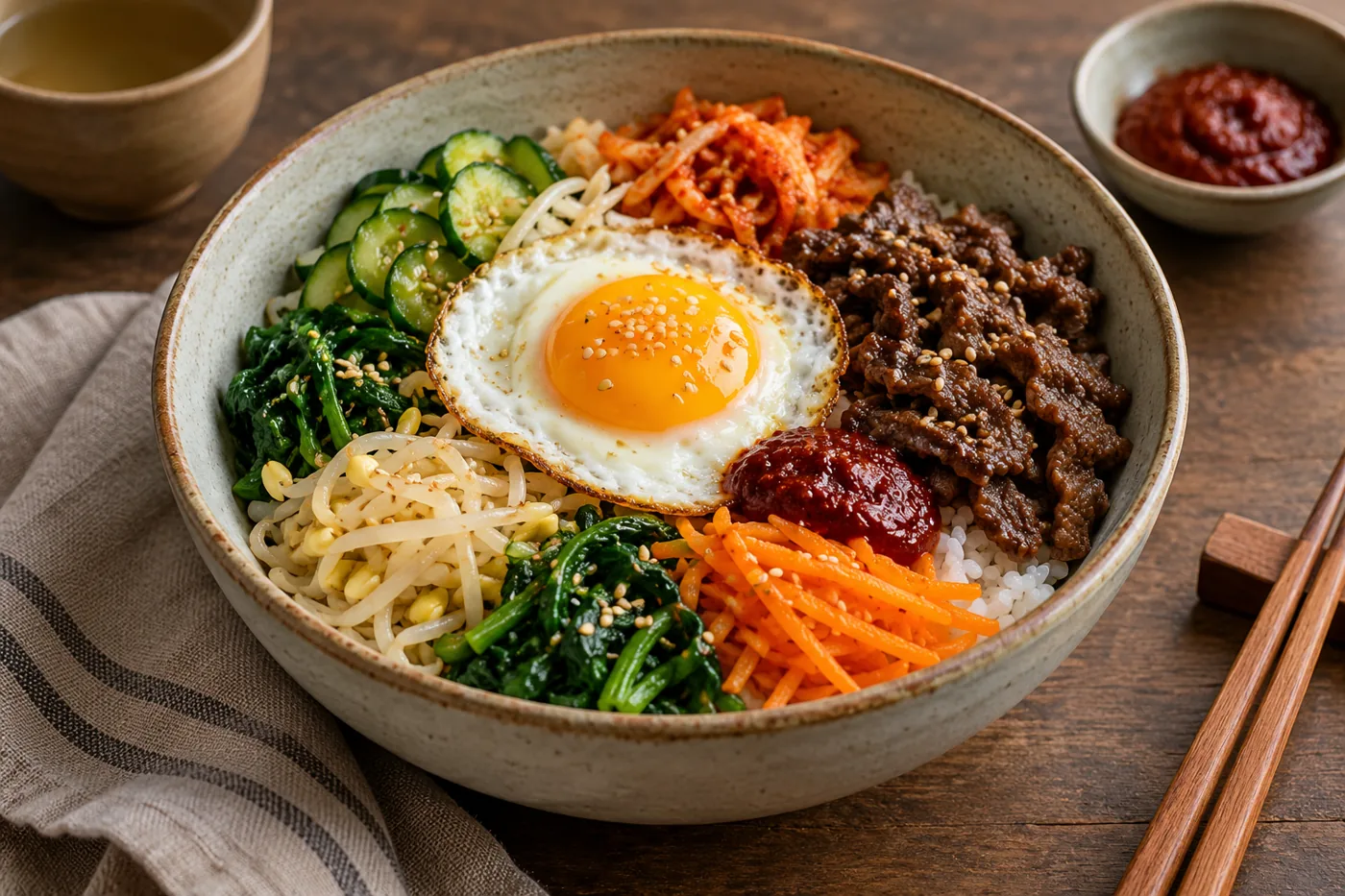
Generated interpretation, not documentary evidence. Imagined bibimbap with vegetables, cooked meat and egg; one modern version, not a ritual meal or canonical regional recipe.
Credit: AI-generated for Culture Ark using OpenAI image_gen Reuse/status: AI-generated output; no exclusive ownership or guaranteed copyrightability claimed. Underlying works, marks and cultural permissions remain separate. Imagined bibimbap with vegetables, cooked meat and egg; one modern version, not a ritual meal or canonical regional recipe. The tourism source is introductory and promotional, not evidence for a unique inventor or a single ancient origin. The image is not specifically Jeonju's documented version, an ancestral rite or a verified historical meal. Ingredients, sauces and vessels vary; no universal vegetarian, nutritional or food-safety claim is implied.
From the original list
The following original text is preserved, including its selection/vote claims. Preservation is not independent verification of every assertion.
Why: Mixed rice bowl.
What to preserve: Recipe
Year and origin: traditional · Korea
Vote: 3/9 (historian 1 · future kid 1 · curator 1)
Learn more: Bibimbap on Wikipedia
Supplemental context
Bibimbap is a way of assembling and mixing a meal rather than one immutable ingredient list. Korea Tourism Organization's account describes rice with assorted vegetables and other additions, then differentiates regional forms. Its examples include Jeonju, Andong's heotjesabap and seafood-associated Tongyeong versions, showing why one colorful bowl cannot stand for the whole tradition. For future readers, this selection invites study of local food identity, the relationship between separate components and mixing, and the movement between household meals and restaurant presentation. The image offers one modern arrangement with cooked meat and an egg, while the source links retain the regional distinctions that a simplified global menu description might erase.
Creator/community: Korean households, regional cooks and restaurant communities Place/era: Korea; continuing traditions and contemporary adaptations
Context and limits
The tourism source is introductory and promotional, not evidence for a unique inventor or a single ancient origin. The image is not specifically Jeonju's documented version, an ancestral rite or a verified historical meal. Ingredients, sauces and vessels vary; no universal vegetarian, nutritional or food-safety claim is implied.
Where to learn more
- https://apiarybee.com/community/reading/biggie-nu-series-008-noahs-ark-set-d-culture-2000
- https://english1.visitkorea.or.kr/enu/FOD/FO_ENG_2_2.jsp
Apiary library | Original Culture Ark article
Public ID and individual routes: pending publisher allocation. Internal source ID: D-0800
Part of the Culture Ark: 2,000 things people should still be able to see in 2,000 years, picked by AI research teams. This page keeps the original list entry for D-0800 word for word and adds context. Browse the gallery. The Culture Ark is an Artificial Mind Hive (AMH) project. AMH is owned by Austin Little.

Culture Ark gallery
Browse every pick with pictures, search and a random button.
Open the gallery →