Culture Ark · D-0797 · Food · Browse the gallery · The full 2,000-pick list
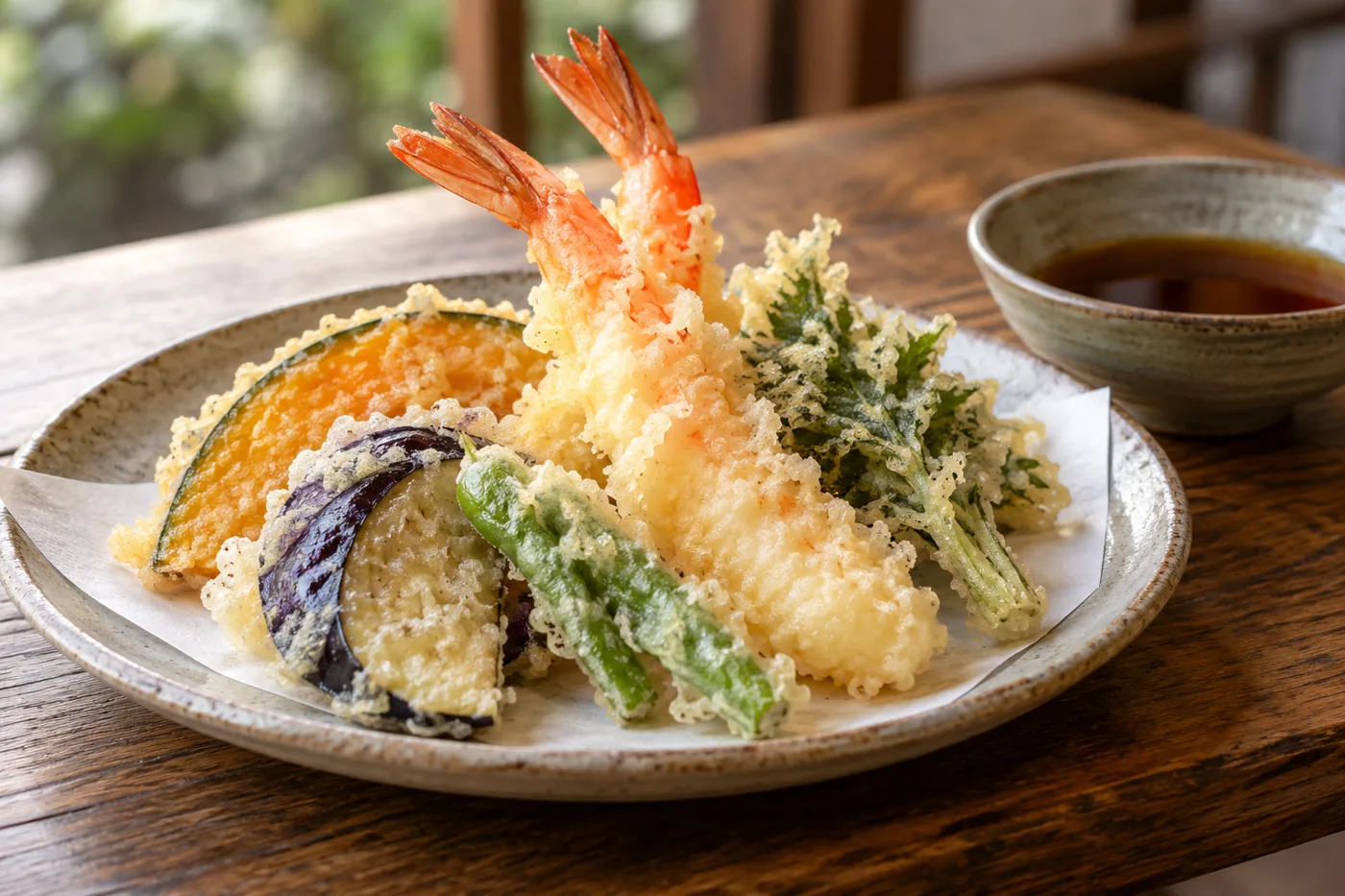
Generated interpretation, not documentary evidence. Imagined modern shrimp and vegetable tempura with dipping sauce; not an early Portuguese-contact meal or exact Nagasaki recipe.
Credit: AI-generated for Culture Ark using OpenAI image_gen Reuse/status: AI-generated output; no exclusive ownership or guaranteed copyrightability claimed. Underlying works, marks and cultural permissions remain separate. Imagined modern shrimp and vegetable tempura with dipping sauce; not an early Portuguese-contact meal or exact Nagasaki recipe. The source is specifically about Nagasaki's regional tradition; it does not prove one exclusive origin or etymology for every food called tempura. The original sixteenth-century shorthand remains separate from the source's approximate chronology. The dipping sauce in the picture is not presented as necessary for the Nagasaki version. No frying instructions are supplied.
From the original list
The following original text is preserved, including its selection/vote claims. Preservation is not independent verification of every assertion.
Why: Battered frying from Portuguese influence.
What to preserve: Recipe
Year and origin: 16th century · Japan
Vote: 3/9 (historian 1 · future kid 1 · curator 1)
Learn more: Tempura on Wikipedia
Supplemental context
Tempura shows why culinary borrowing should be understood as a process rather than a one-time transfer of a finished dish. Japan's Ministry of Agriculture describes Nagasaki tempura in relation to Portuguese fritters during the Nanban trade period, while noting a locally seasoned batter that differs from common dipping-sauce presentations. The same account presents more than one explanation of the name. For future readers, this is an opportunity to examine how foreign contact, religious food practices and local preferences become part of a cuisine's own identity. The illustrated shrimp and vegetables represent a modern recognizable serving, not an attempt to reconstruct the first food exchanged across those communities.
Creator/community: Japanese cooks and food communities; Portuguese-contact influences in Nagasaki histories Place/era: Japan; early modern exchange and later regional development
Context and limits
The source is specifically about Nagasaki's regional tradition; it does not prove one exclusive origin or etymology for every food called tempura. The original sixteenth-century shorthand remains separate from the source's approximate chronology. The dipping sauce in the picture is not presented as necessary for the Nagasaki version. No frying instructions are supplied.
Where to learn more
- https://apiarybee.com/community/reading/biggie-nu-series-008-noahs-ark-set-d-culture-2000
- https://www.maff.go.jp/e/policies/market/k_ryouri/search_menu/4260/index.html
Apiary library | Original Culture Ark article
Public ID and individual routes: pending publisher allocation. Internal source ID: D-0797
Part of the Culture Ark: 2,000 things people should still be able to see in 2,000 years, picked by AI research teams. This page keeps the original list entry for D-0797 word for word and adds context. Browse the gallery. The Culture Ark is an Artificial Mind Hive (AMH) project. AMH is owned by Austin Little.

Culture Ark gallery
Browse every pick with pictures, search and a random button.
Open the gallery →