Culture Ark · D-0799 · Food · Browse the gallery · The full 2,000-pick list
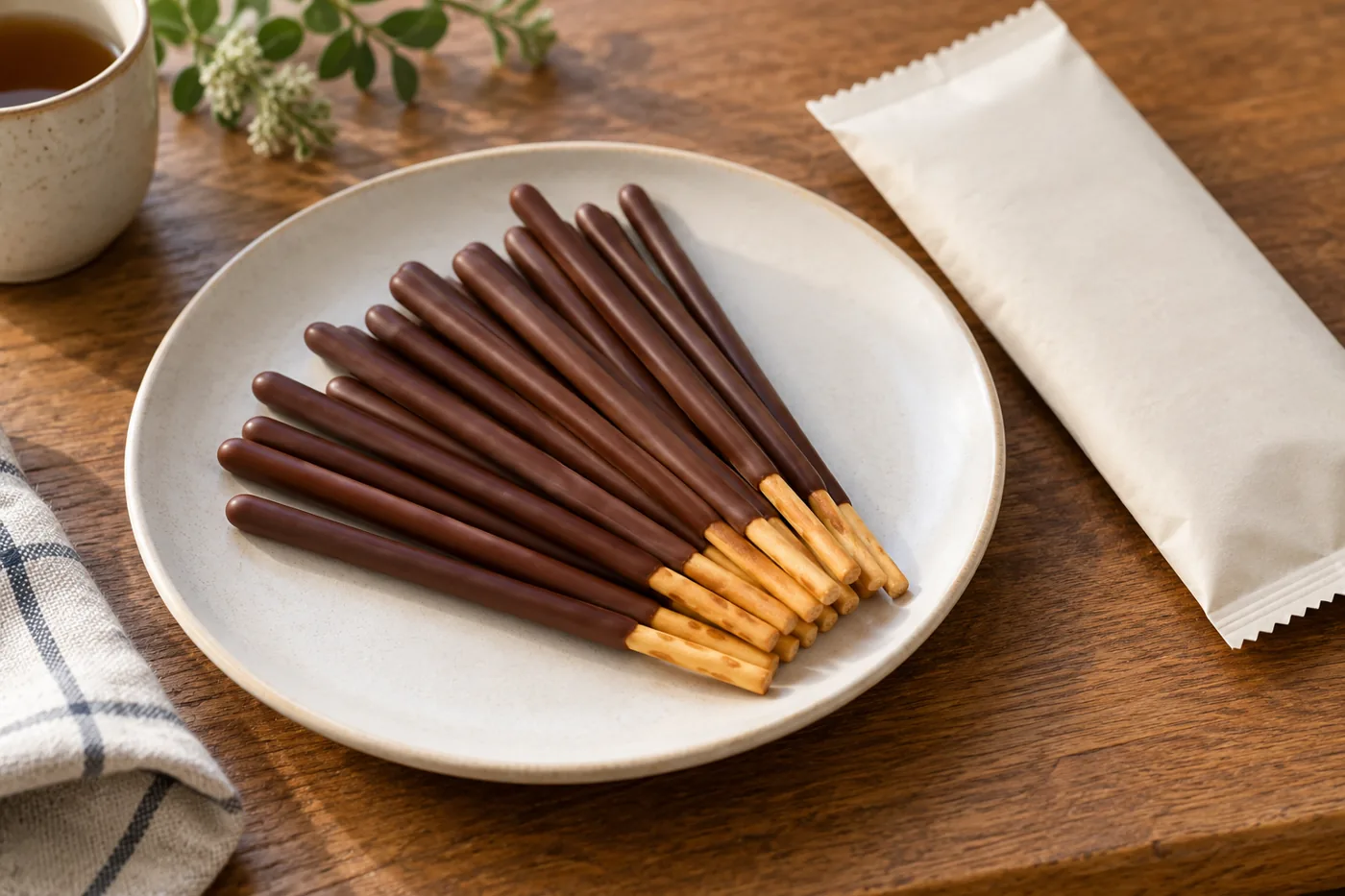
Generated interpretation, not documentary evidence. Imagined chocolate-coated biscuit sticks with exposed handles and blank sleeve; not official Pocky packaging or a product photograph.
Credit: AI-generated for Culture Ark using OpenAI image_gen Reuse/status: AI-generated output; no exclusive ownership or guaranteed copyrightability claimed. Underlying works, marks and cultural permissions remain separate. Imagined chocolate-coated biscuit sticks with exposed handles and blank sleeve; not official Pocky packaging or a product photograph. Glico is the manufacturer and an interested source for its history. Its promotional anniversary is not a national public holiday. The illustration intentionally omits branded packaging and is not an authentic product photograph; underlying marks and product-design rights are not transferred by generating a picture. No exclusivity or recipe claim is made.
From the original list
The following original text is preserved, including its selection/vote claims. Preservation is not independent verification of every assertion.
Why: Chocolate-dipped biscuit sticks.
What to preserve: Box, Pocky Day
Year and origin: 1966 · Japan
Vote: 3/9 (historian 1 · future kid 1 · curator 1)
Learn more: Pocky on Wikipedia
Supplemental context
Pocky is a small example of how industrial food design becomes shared cultural memory. Glico's corporate history records its 1966 launch and emphasizes the exposed biscuit end that lets someone hold the snack without grasping the chocolate coating. The same timeline follows new flavors, packaging changes and the establishment of Pocky and Pretz Day on November 11 in 1999, linking the date's repeated upright digits with the products' shapes. For future readers, the snack can open questions about manufacturing, naming, advertising and informal sharing. Preserving the cultural selection means distinguishing the edible object from the brand story surrounding it, while retaining enough documentation to understand why consumers recognized the difference.
Creator/community: Ezaki Glico product designers, manufacturers and Pocky consumers Place/era: Japan; launched 1966, followed by international products and promotional traditions
Context and limits
Glico is the manufacturer and an interested source for its history. Its promotional anniversary is not a national public holiday. The illustration intentionally omits branded packaging and is not an authentic product photograph; underlying marks and product-design rights are not transferred by generating a picture. No exclusivity or recipe claim is made.
Where to learn more
- https://apiarybee.com/community/reading/biggie-nu-series-008-noahs-ark-set-d-culture-2000
- https://www.glico.com/global/100th_history_contents/highlight/product/006.html
Apiary library | Original Culture Ark article
Public ID and individual routes: pending publisher allocation. Internal source ID: D-0799
Part of the Culture Ark: 2,000 things people should still be able to see in 2,000 years, picked by AI research teams. This page keeps the original list entry for D-0799 word for word and adds context. Browse the gallery. The Culture Ark is an Artificial Mind Hive (AMH) project. AMH is owned by Austin Little.

Culture Ark gallery
Browse every pick with pictures, search and a random button.
Open the gallery →