Culture Ark · D-0792 · Food · Browse the gallery · The full 2,000-pick list
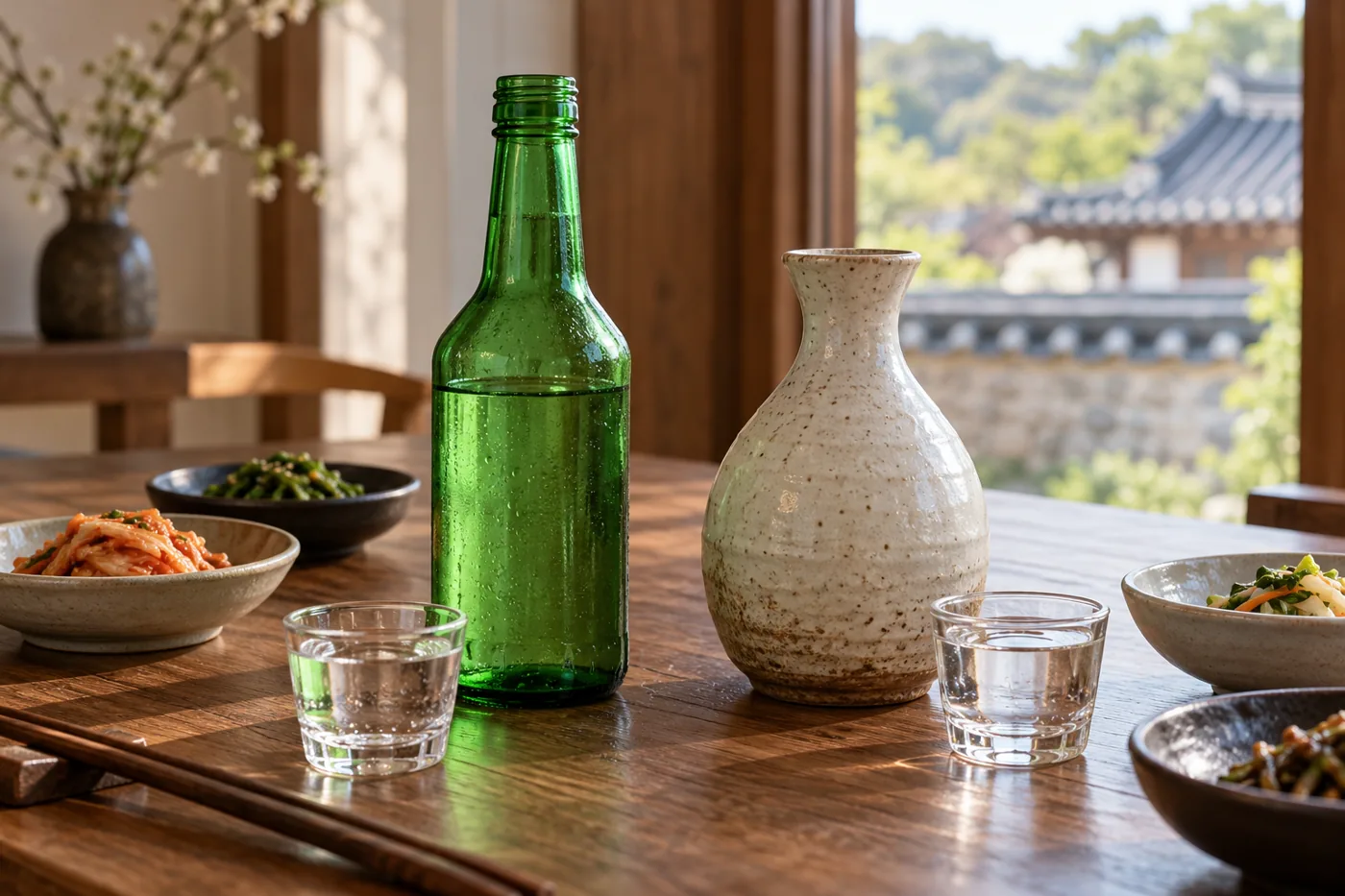
Generated interpretation, not documentary evidence. Imagined green bottle and ceramic flask on a dining table; not verified brands, dates or contents.
Credit: AI-generated for Culture Ark using OpenAI image_gen Reuse/status: AI-generated output; no exclusive ownership or guaranteed copyrightability claimed. Underlying works, marks and cultural permissions remain separate. Imagined green bottle and ceramic flask on a dining table; not verified brands, dates or contents. The original best-selling assertion conflates brands and categories and is not independently ranked here. Nor does the checked article establish the precise thirteenth-century starting point. The image shows invented unbranded vessels, not actual commercial products or ceremonial evidence. No drinking, distilling or health advice is supplied.
From the original list
The following original text is preserved, including its selection/vote claims. Preservation is not independent verification of every assertion.
Why: The world's best-selling liquor brand category.
What to preserve: Bottles
Year and origin: 13th century · Korea
Vote: 3/9 (historian 1 · future kid 1 · curator 1)
Learn more: Soju on Wikipedia
Supplemental context
Soju is not a single unchanging liquid hidden inside a familiar green bottle. Korea.net distinguishes distilled varieties from the diluted products that became especially prominent after grain-use restrictions associated with food shortages in 1965. Its reporting also describes a contemporary distillery and the different sensory identities claimed for its products. This contrast lets future readers examine how agricultural policy, manufacturing and branding can change an everyday cultural category. Preserving bottles is therefore only a beginning: their materials, price positions and associations with meals should be read alongside production histories. The paired vessels in the illustration suggest diversity without pretending that container shape alone reliably identifies what is inside.
Creator/community: Korean distilled-soju makers, industrial producers and drinking communities Place/era: Korea; older distilling traditions and twentieth-century diluted-soju expansion
Context and limits
The original best-selling assertion conflates brands and categories and is not independently ranked here. Nor does the checked article establish the precise thirteenth-century starting point. The image shows invented unbranded vessels, not actual commercial products or ceremonial evidence. No drinking, distilling or health advice is supplied.
Where to learn more
- https://apiarybee.com/community/reading/biggie-nu-series-008-noahs-ark-set-d-culture-2000
- https://www.korea.net/NewsFocus/FoodTravel/view?articleId=218975
Apiary library | Original Culture Ark article
Public ID and individual routes: pending publisher allocation. Internal source ID: D-0792
Part of the Culture Ark: 2,000 things people should still be able to see in 2,000 years, picked by AI research teams. This page keeps the original list entry for D-0792 word for word and adds context. Browse the gallery. The Culture Ark is an Artificial Mind Hive (AMH) project. AMH is owned by Austin Little.

Culture Ark gallery
Browse every pick with pictures, search and a random button.
Open the gallery →