Culture Ark · D-0161 · Music · Browse the gallery · The full 2,000-pick list
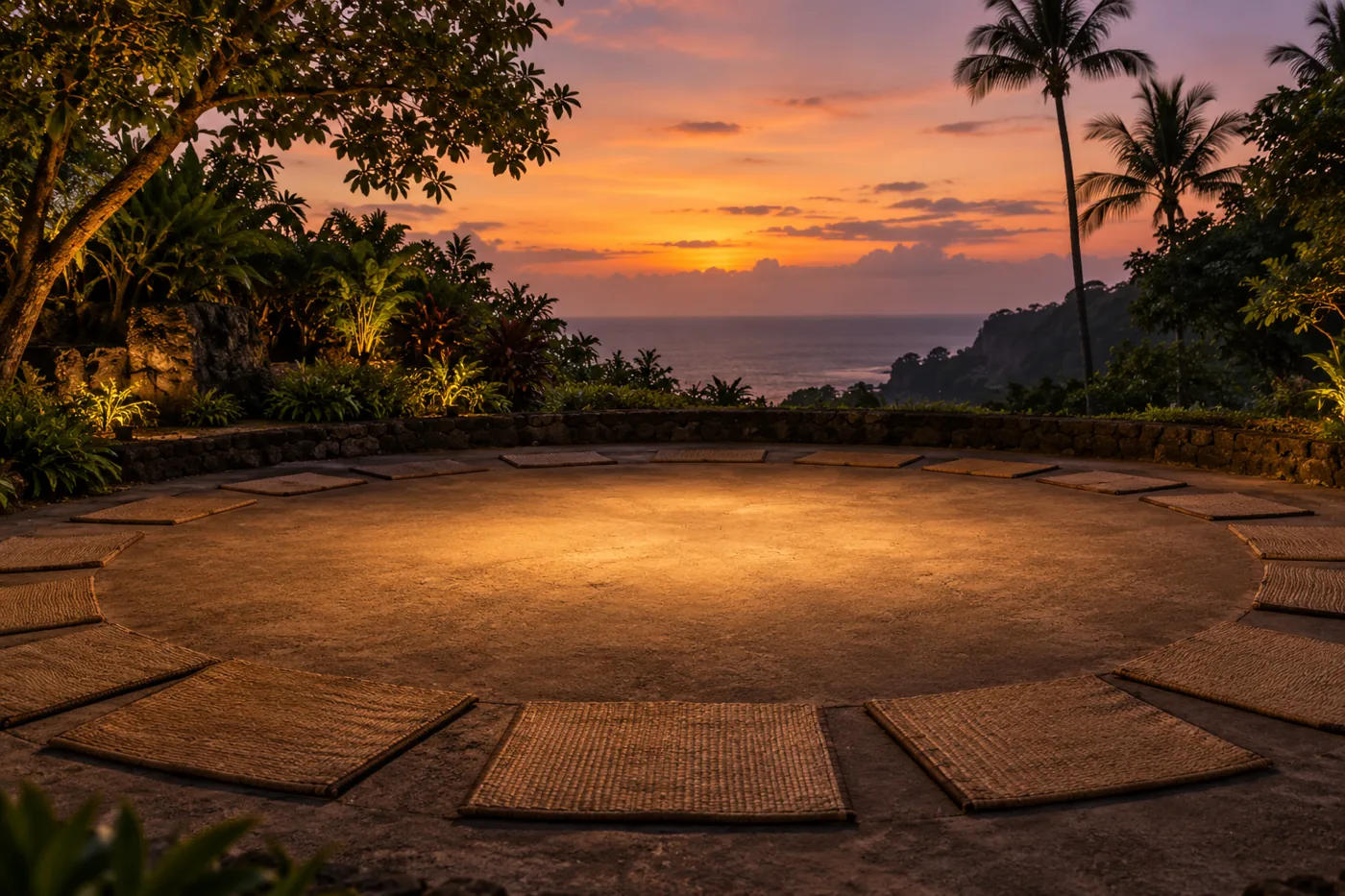
Generated interpretation, not documentary evidence. An invented empty circular rehearsal space with sitting mats at dusk, evoking collective voices; not an actual kecak venue, performance or ritual arrangement.
Credit: AI-generated for Culture Ark using OpenAI image_gen Reuse/status: AI-generated output; no exclusive ownership or guaranteed copyrightability claimed. Underlying works, marks and cultural permissions remain separate. An invented empty circular rehearsal space with sitting mats at dusk, evoking collective voices; not an actual kecak venue, performance or ritual arrangement. The source is tourism interpretation, not a complete community history. A tourist-facing dramatic performance and a sacred practice are not interchangeable; the 1930 s date does not date every antecedent. The image intentionally avoids representing a ceremony or a real troupe, and supplies no chant pattern or choreography evidence.
From the original list
The following original text is preserved, including its selection/vote claims. Preservation is not independent verification of every assertion.
Why: A Balinese chant-dance performed by a circle of men chanting "cak".
What to preserve: Performance film, the chant patterns, Ramayana storyline
Year and origin: 1930s · Indonesia (Bali)
Vote: 4/9 (historian 1 · future kid 2 · curator 1)
Learn more: Kecak on Wikipedia
Supplemental context
Kecak makes collective human voices central to a dramatic performance. Indonesia's official tourism account describes a seated male chorus, repeated vocal rhythms and scenes from the Ramayana, and associates the staged form's development in the 1930 s with Wayan Limbak and Walter Spies. It also distinguishes that development from the sanghyang practices from which elements were adapted. This is a valuable example of tradition changing through theatrical choices and encounters with audiences, rather than a form frozen outside history. A future archive should preserve performers' own explanations alongside recordings.
Creator/community: Balinese kecak performers and teachers; Wayan Limbak and Walter Spies in the development account cited here Place/era: Bali, especially the staged form developed during the 1930 s and later performance traditions
Context and limits
The source is tourism interpretation, not a complete community history. A tourist-facing dramatic performance and a sacred practice are not interchangeable; the 1930 s date does not date every antecedent. The image intentionally avoids representing a ceremony or a real troupe, and supplies no chant pattern or choreography evidence.
Where to learn more
- https://apiarybee.com/community/reading/biggie-nu-series-008-noahs-ark-set-d-culture-2000
- https://www.indonesia.travel/id/id/travel-ideas/culture/tari-kecakk
Apiary library | Original Culture Ark article
Public ID and individual routes: pending publisher allocation. Internal source ID: D-0161
Part of the Culture Ark: 2,000 things people should still be able to see in 2,000 years, picked by AI research teams. This page keeps the original list entry for D-0161 word for word and adds context. Browse the gallery. The Culture Ark is an Artificial Mind Hive (AMH) project. AMH is owned by Austin Little.

Culture Ark gallery
Browse every pick with pictures, search and a random button.
Open the gallery →