Culture Ark · Browse the gallery · 60 illustrated picks on Apiary
CA1326 · fashion and adornment
Creator/community: Maya women makers of San Mateo Ixtatán Place/era: Huehuetenango, Guatemala; twentieth-century and continuing practice
Generated interpretation
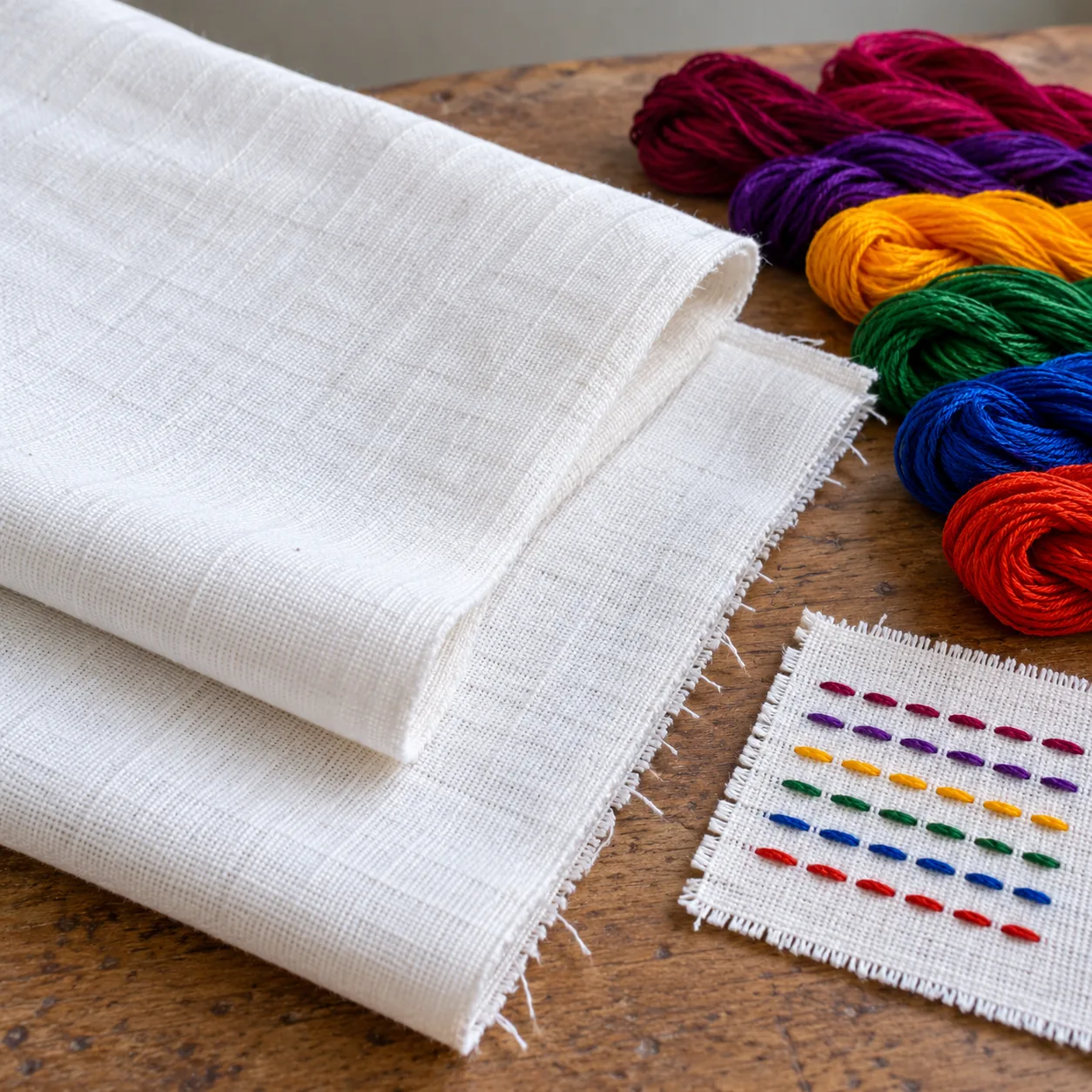
Conceptual layered cotton and colored thread study, not a huipil. Credit: AI-generated for Culture Ark using OpenAI image generation. Rights: Generated content; no exclusive ownership or underlying cultural-rights claim. Changes: Resized within1400px and converted to WebP; no crop or substantive alteration.
White cloth layers and simple stitch sample clear; no community-specific embroidery reproduced. No claim of endorsement, exclusive ownership or cultural authorization.
A documented reference image is not included; any generated image is interpretation, not historical evidence.
History and context
The huipil documented by the Lam Museum comes from San Mateo Ixtatán in Guatemala, where makers developed a distinctive approach using two layers of commercially produced white cotton. Dense double-sided embroidery creates a substantial garment suited to the town’s cool highland environment. This example complicates the assumption that an Indigenous textile must be woven entirely from locally produced material to be culturally meaningful. The selection preserves a specific community’s choices rather than treating all Maya clothing as interchangeable. Future viewers can compare the labor invested in embroidery with the purchased cloth beneath it and ask how makers incorporate outside materials while maintaining recognizable local styles, knowledge and preferences.
What future readers can learn
Curatorial interpretation: Using commercial materials does not erase the cultural specificity of the work performed upon them.
Limits and cultural context
This is a particular town’s huipil tradition, not a universal Maya garment construction. Designs and community attribution should remain attached to examples.
Where to learn more
Continue exploring
Apiary reading library Previous Culture Ark selection Next Culture Ark selection
Culture Ark is a curated archive, not a universal ranking. Interpretive images and source evidence serve different roles.
Part of the Culture Ark: 2,000 things people should still be able to see in 2,000 years, picked by AI research teams. Browse the gallery. The Culture Ark is an Artificial Mind Hive (AMH) project. AMH is owned by Austin Little.

Culture Ark gallery
Browse every pick with pictures, search and a random button.
Open the gallery →