Culture Ark · Browse the gallery · 60 illustrated picks on Apiary
CA1323 · fashion and adornment
Creator/community: Māori weavers and iwi communities Place/era: Aotearoa New Zealand; customary and contemporary weaving
Generated interpretation
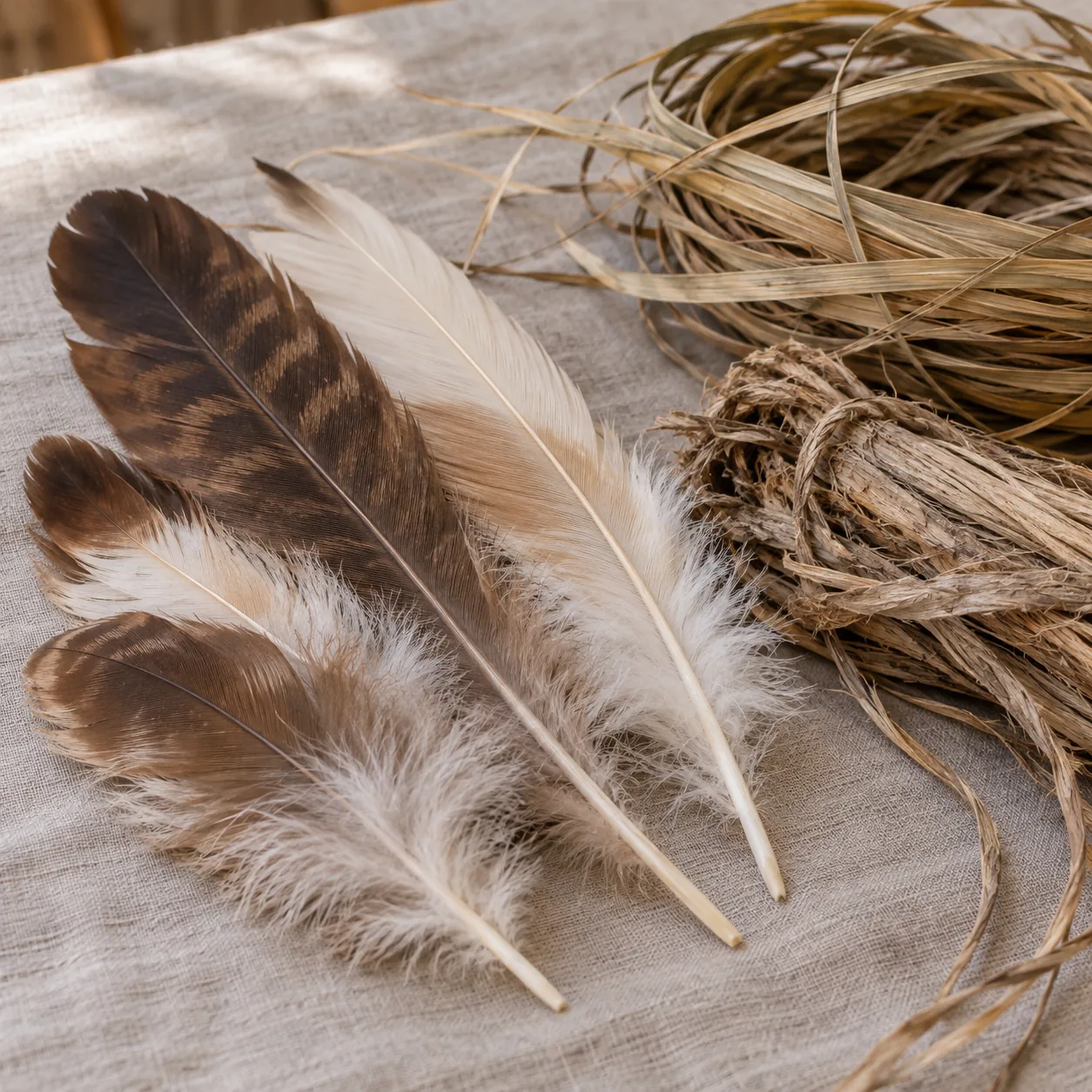
Conceptual study of feathers and plant fibers, not a cloak. Credit: AI-generated for Culture Ark using OpenAI image generation. Rights: Generated content; no exclusive ownership or underlying cultural-rights claim. Changes: Resized within1400px and converted to WebP; no crop or substantive alteration.
Material textures clear; feather species and fiber species not verified, no taonga or sacred design fabricated. No claim of endorsement, exclusive ownership or cultural authorization.
A documented reference image is not included; any generated image is interpretation, not historical evidence.
History and context
Kahu huruhuru are Māori feather cloaks valued for both skilled construction and meanings attached to the birds whose feathers they contain. Te Papa’s account describes birds as messengers connected with the spiritual realm and explains the particular significance of red kākā feathers. The cloak is therefore more than an attractive arrangement of colors. This selection preserves a relationship among weaving knowledge, materials, leadership and cultural belonging. Future viewers should attend to the maker and the cloak’s history of use, not merely its appearance on display. A photograph can show the surface, but understanding why a cloak matters also requires listening to the people who make, wear, gift and care for it.
What future readers can learn
Curatorial interpretation: Material choices can carry relationships and responsibilities that are invisible to an uninformed viewer.
Limits and cultural context
Kahu huruhuru is one type of kākahu. Community meanings and permissions should not be generalized or copied as costume decoration.
Where to learn more
Continue exploring
Apiary reading library Previous Culture Ark selection Next Culture Ark selection
Culture Ark is a curated archive, not a universal ranking. Interpretive images and source evidence serve different roles.
Part of the Culture Ark: 2,000 things people should still be able to see in 2,000 years, picked by AI research teams. Browse the gallery. The Culture Ark is an Artificial Mind Hive (AMH) project. AMH is owned by Austin Little.

Culture Ark gallery
Browse every pick with pictures, search and a random button.
Open the gallery →