Culture Ark · Browse the gallery · 60 illustrated picks on Apiary
CA0818 · food and drink
Creator/community: Durban Indian cooks, customers and family-run food businesses Place/era: Durban, South Africa; twentieth-century development and living practice
Generated interpretation
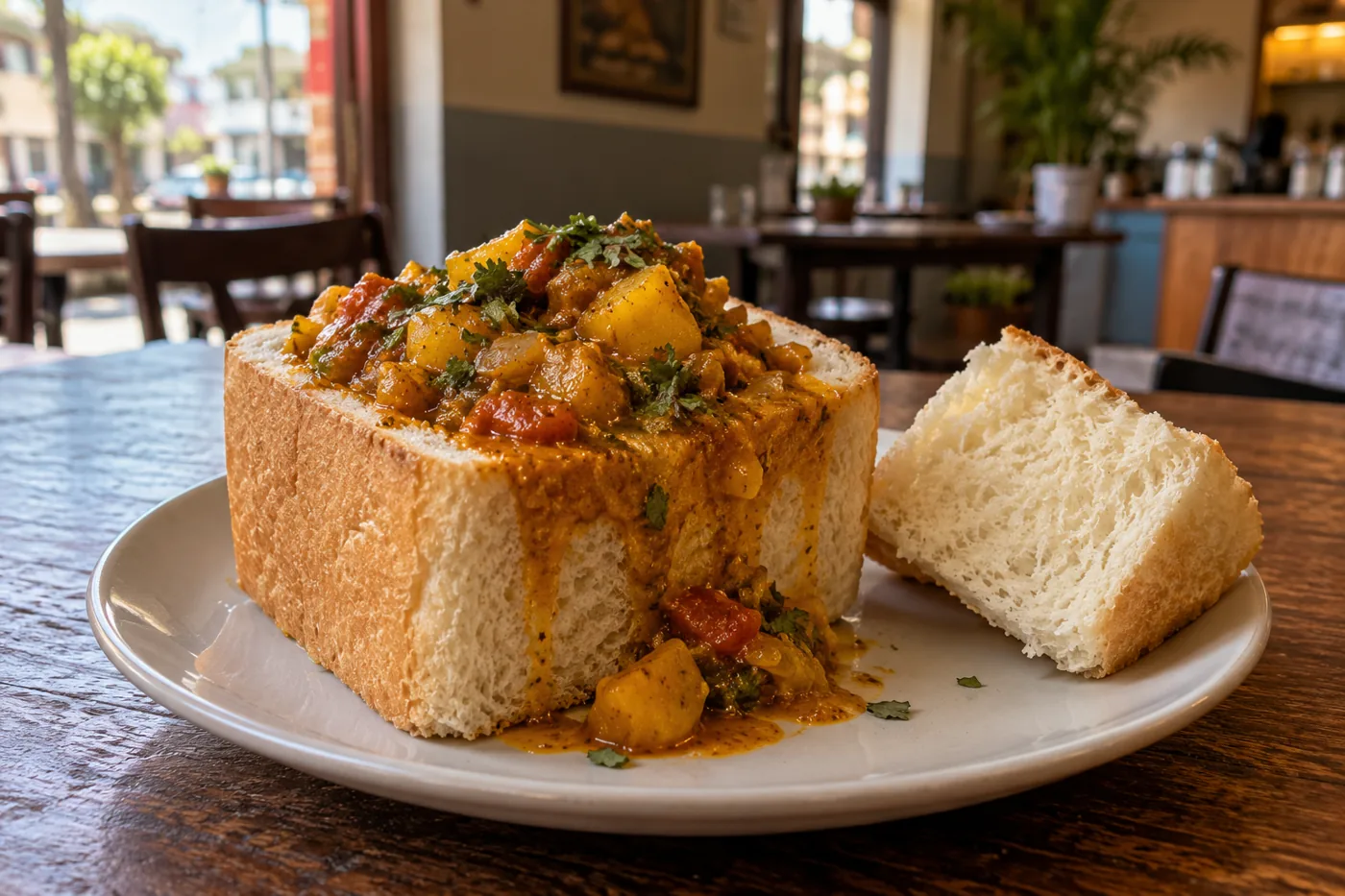
AI-created vegetable bunny chow in a fictional café. The filling, bread size and venue are invented; this is not evidence for a first inventor or an exact Durban business's product. Credit: AI-generated for Culture Ark using OpenAI image_gen. Rights: AI-generated output; no exclusive ownership or guaranteed copyrightability claimed. Changes: Resized within1400px and converted to WebP; no crop or substantive alteration.
Interpretive food illustration, not documentary evidence, a standardized recipe, exact ingredients or proportions, food-safety guidance, production instructions or a universal national version.
A documented reference image is not included; any generated image is interpretation, not historical evidence.
History and context
Bunny chow places curry inside a hollowed portion of a bread loaf, with the removed bread used alongside it. The format makes bread a container as well as an accompaniment. South African Tourism’s account of Durban Indian cuisine includes Manilal Patel’s memories of a family refreshment room founded by his father in 1932, while acknowledging that the identity of the first inventor remains unsettled. Vegetarian and meat versions belong to the dish’s contemporary range. Future readers should resist a tidy single-origin anecdote and instead notice the local combination of bakery bread, curry-making, commerce and urban eating. A food associated with one city can preserve histories of migration without reducing its makers to a stereotype.
What future readers can learn
An edible container links food design, local business history and migrant culinary adaptation.
Limits and cultural context
Origin stories are disputed. The archive does not repeat tourism copy’s inconsistent chronology or assign invention to a single person.
Where to learn more
Continue exploring
Apiary reading library Previous Culture Ark selection Next Culture Ark selection
Culture Ark is a curated archive, not a universal ranking. Interpretive images and source evidence serve different roles.
Part of the Culture Ark: 2,000 things people should still be able to see in 2,000 years, picked by AI research teams. Browse the gallery. The Culture Ark is an Artificial Mind Hive (AMH) project. AMH is owned by Austin Little.

Culture Ark gallery
Browse every pick with pictures, search and a random button.
Open the gallery →