Culture Ark · Browse the gallery · 60 illustrated picks on Apiary
CA0810 · food and drink
Creator/community: Haitian families, cooks, farmers and utensil makers Place/era: Haiti and diaspora; independence-day and everyday tradition, inscription 2021
Generated interpretation
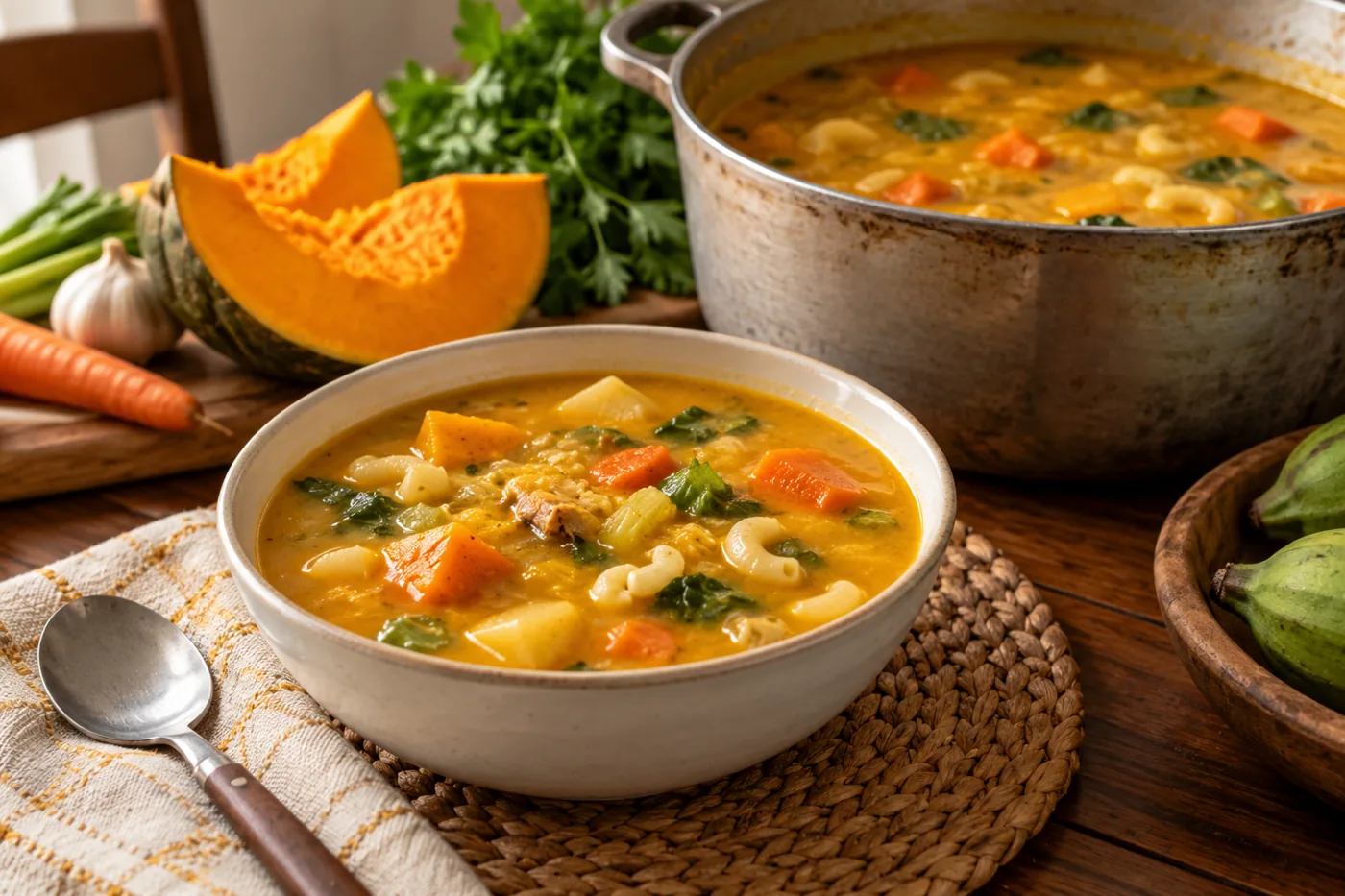
AI-created pumpkin-based joumou soup scene. Its vegetables, pasta shapes and serving arrangement are invented household possibilities, not a historical reconstruction or authoritative recipe. Credit: AI-generated for Culture Ark using OpenAI image_gen. Rights: AI-generated output; no exclusive ownership or guaranteed copyrightability claimed. Changes: Resized within1400px and converted to WebP; no crop or substantive alteration.
Interpretive food illustration, not documentary evidence, a standardized recipe, exact ingredients or proportions, food-safety guidance, production instructions or a universal national version.
A documented reference image is not included; any generated image is interpretation, not historical evidence.
History and context
Joumou soup joins a pumpkin-based meal to the memory of Haitian independence. Its ingredients can include vegetables, plantain, meat, pasta and spices, but its cultural importance is not reducible to a shopping list. UNESCO describes its preparation for the first of January, Haiti’s Independence Day, as well as its place in Sunday breakfasts. Family members, growers and makers of cooking equipment contribute to the practice. The source relates the soup’s transformation from a food associated with slave owners into an expression of freedom and dignity. Future readers should preserve that remembered meaning alongside household variation, recognizing that cooking can make political history present in an intimate and recurring way.
What future readers can learn
It demonstrates how a shared meal can carry a community’s account of freedom and historical change.
Limits and cultural context
The emancipation narrative is presented as the heritage account, not a claim that every detail of origin is independently settled. Recipes and family customs vary.
Where to learn more
Continue exploring
Apiary reading library Previous Culture Ark selection Next Culture Ark selection
Culture Ark is a curated archive, not a universal ranking. Interpretive images and source evidence serve different roles.
Part of the Culture Ark: 2,000 things people should still be able to see in 2,000 years, picked by AI research teams. Browse the gallery. The Culture Ark is an Artificial Mind Hive (AMH) project. AMH is owned by Austin Little.

Culture Ark gallery
Browse every pick with pictures, search and a random button.
Open the gallery →