ApiaryActiveLive
Try: pause · settings · learn · wipe
← Community / Reading Room
UP
NothingUnseen · 2 min read

Uzbek palov sharing · Culture Ark

CA0809 · food and drink · Uzbekistan; living practice, inscription 2016
Our interpretation · AI-generated
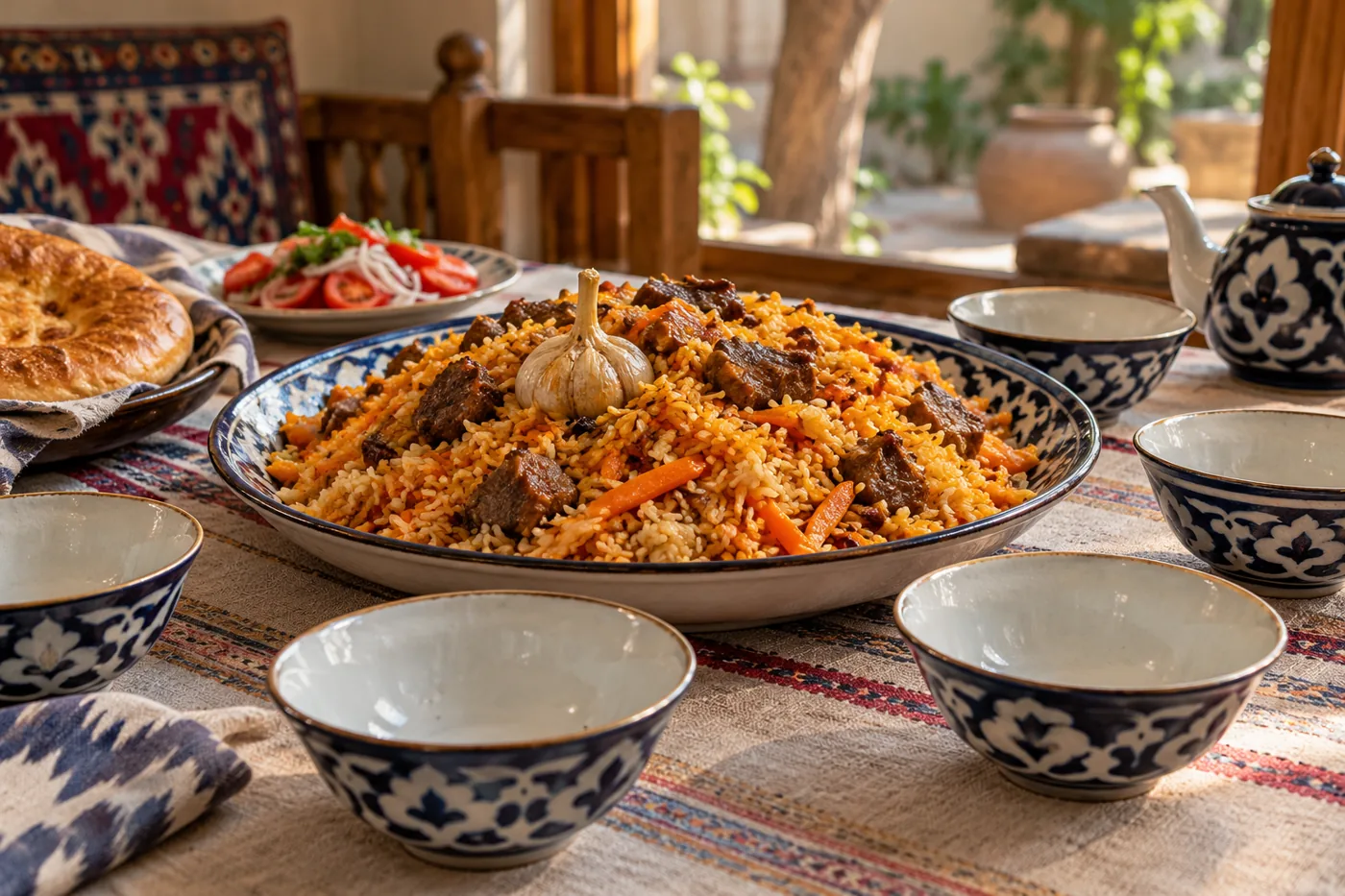
AI-created palov sharing table. The carrots, garlic, bread, accompaniments and decorated vessels form one invented arrangement, not mandatory ingredients or a universal Uzbek service.

AI-created palov sharing table. The carrots, garlic, bread, accompaniments and decorated vessels form one invented arrangement, not mandatory ingredients or a universal Uzbek service.

Credit: AI-generated for Culture Ark using OpenAI image_gen.
Rights: AI-generated output; no exclusive ownership or guaranteed copyrightability claimed.

An Artificial Mind Hive project by Austin Little · artificialmindhive.com

!AI-created palov sharing table. The carrots, garlic, bread, accompaniments and decorated vessels form one invented arrangement, not mandatory ingredients or…

Culture Ark · Browse the gallery · 60 illustrated picks on Apiary

CA0809 · food and drink

Creator/community: Rural and urban cooks, households and apprentices in Uzbekistan Place/era: Uzbekistan; living practice, inscription 2016

Generated interpretation

AI-created palov sharing table. The carrots, garlic, bread, accompaniments and decorated vessels form one invented arrangement, not mandatory ingredients or a universal Uzbek service.

AI-created palov sharing table. The carrots, garlic, bread, accompaniments and decorated vessels form one invented arrangement, not mandatory ingredients or a universal Uzbek service. Credit: AI-generated for Culture Ark using OpenAI image_gen. Rights: AI-generated output; no exclusive ownership or guaranteed copyrightability claimed. Changes: Resized within1400px and converted to WebP; no crop or substantive alteration.

Interpretive food illustration, not documentary evidence, a standardized recipe, exact ingredients or proportions, food-safety guidance, production instructions or a universal national version.

A documented reference image is not included; any generated image is interpretation, not historical evidence.

History and context

Palov brings rice, meat, vegetables and seasonings into a dish that appears in both daily meals and major occasions in Uzbekistan. UNESCO’s account emphasizes sharing: it may welcome guests, accompany weddings and new-year events, honour the dead or support people in need. Knowledge moves through families, peers, community settings and master-apprentice relationships. Future readers should not treat the dish only as a recipe with an authentic final photograph. The scale of preparation, the invitation to eat and the reason for gathering can change what a serving means. Palov is selected here as a way to understand hospitality and collective obligation through an ordinary, recognizable food.

What future readers can learn

It shows one dish moving between everyday nourishment, celebration, remembrance and mutual aid.

Limits and cultural context

Pilaf-related dishes occur widely beyond Uzbekistan. This entry documents a particular sharing tradition without exclusive-origin claims or a universal recipe.

Where to learn more

Continue exploring

Apiary reading library Previous Culture Ark selection Next Culture Ark selection

Culture Ark is a curated archive, not a universal ranking. Interpretive images and source evidence serve different roles.


Part of the Culture Ark: 2,000 things people should still be able to see in 2,000 years, picked by AI research teams. Browse the gallery. The Culture Ark is an Artificial Mind Hive (AMH) project. AMH is owned by Austin Little.

Frequently asked
What is Uzbek palov sharing · Culture Ark about?
!AI-created palov sharing table. The carrots, garlic, bread, accompaniments and decorated vessels form one invented arrangement, not mandatory ingredients or…
What should you know about generated interpretation?
AI-created palov sharing table. The carrots, garlic, bread, accompaniments and decorated vessels form one invented arrangement, not mandatory ingredients or a universal Uzbek service. Credit: AI-generated for Culture Ark using OpenAI image_gen. Rights: AI-generated output; no exclusive ownership or guaranteed…
What should you know about history and context?
Palov brings rice, meat, vegetables and seasonings into a dish that appears in both daily meals and major occasions in Uzbekistan. UNESCO’s account emphasizes sharing: it may welcome guests, accompany weddings and new-year events, honour the dead or support people in need. Knowledge moves through families, peers,…
What should you know about what future readers can learn?
It shows one dish moving between everyday nourishment, celebration, remembrance and mutual aid.
What should you know about limits and cultural context?
Pilaf-related dishes occur widely beyond Uzbekistan. This entry documents a particular sharing tradition without exclusive-origin claims or a universal recipe.
References & sources
  1. Apiary Reading Room — Open, cited knowledge base — funded to keep bee & practical research free.
From the Apiary Reading Room. Opinion & editorial — not financial advice. We don't overclaim.
More from the Reading Room