Culture Ark · Browse the gallery · 60 illustrated picks on Apiary
CA0797 · food and drink
Creator/community: Thai cooks and riverside communities of the Central Plains Place/era: Thailand; living soup tradition, inscription 2024
Generated interpretation
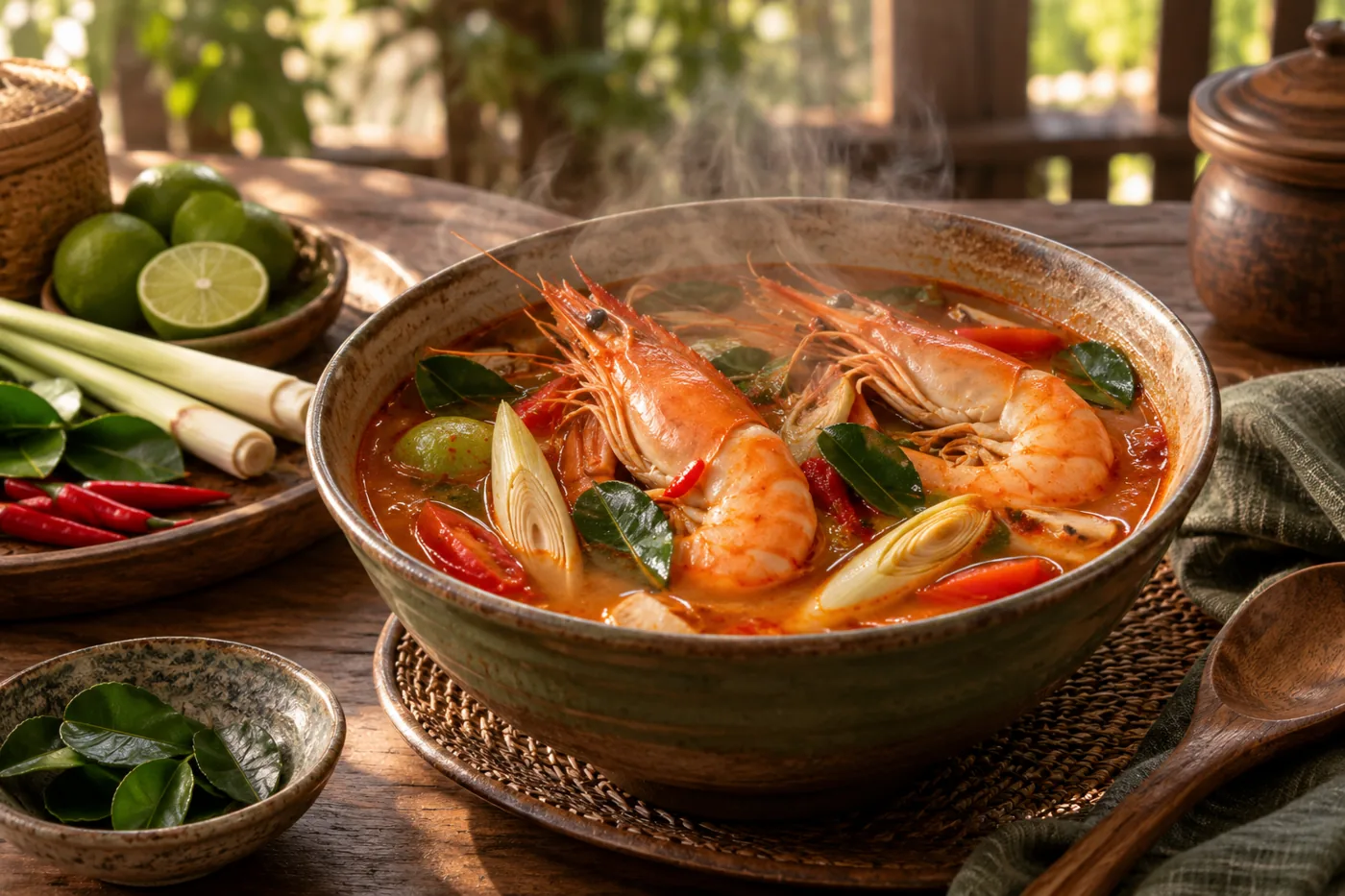
AI-created prawn-soup scene inspired by Tomyum Kung. Ingredient placement, colour and serving arrangement are invented; the image is not a standardized recipe or evidence of health effects. Credit: AI-generated for Culture Ark using OpenAI image_gen. Rights: AI-generated output; no exclusive ownership or guaranteed copyrightability claimed. Changes: Resized within1400px and converted to WebP; no crop or substantive alteration.
Interpretive food illustration, not documentary evidence, a standardized recipe, exact ingredients or proportions, food-safety guidance, production instructions or a universal national version.
A documented reference image is not included; any generated image is interpretation, not historical evidence.
History and context
Tomyum Kung brings prawns into a broth whose aroma and flavour depend on herbs and seasonings. UNESCO’s account associates the dish with riverside communities in Thailand’s Central Plains, identifying lemongrass, lime leaves, galangal and shallots among its ingredients. The cultural knowledge includes choosing ingredients as well as cooking them, and it circulates through families, gatherings, restaurants and teaching institutions. A future reader should not reduce the dish to a single sensation called spicy: contrasting sourness, fragrance and other tastes matter to its recognition. Preserving Tomyum Kung also means remembering the environmental relationships and practical judgement behind a familiar bowl, rather than imagining that popularity abroad has erased its local settings.
What future readers can learn
It shows how sensory knowledge, local resources and teaching travel together when a dish becomes internationally recognizable.
Limits and cultural context
Traditional wellness beliefs in the source are not presented as medical facts. This is cultural description, not a fixed recipe.
Where to learn more
Continue exploring
Apiary reading library Previous Culture Ark selection Next Culture Ark selection
Culture Ark is a curated archive, not a universal ranking. Interpretive images and source evidence serve different roles.
Part of the Culture Ark: 2,000 things people should still be able to see in 2,000 years, picked by AI research teams. Browse the gallery. The Culture Ark is an Artificial Mind Hive (AMH) project. AMH is owned by Austin Little.

Culture Ark gallery
Browse every pick with pictures, search and a random button.
Open the gallery →