Culture Ark · Browse the gallery · 60 illustrated picks on Apiary
CA0796 · food and drink
Creator/community: Tunisian growers, household cooks and culinary practitioners Place/era: Tunisia; living culinary practice, inscription 2022
Generated interpretation
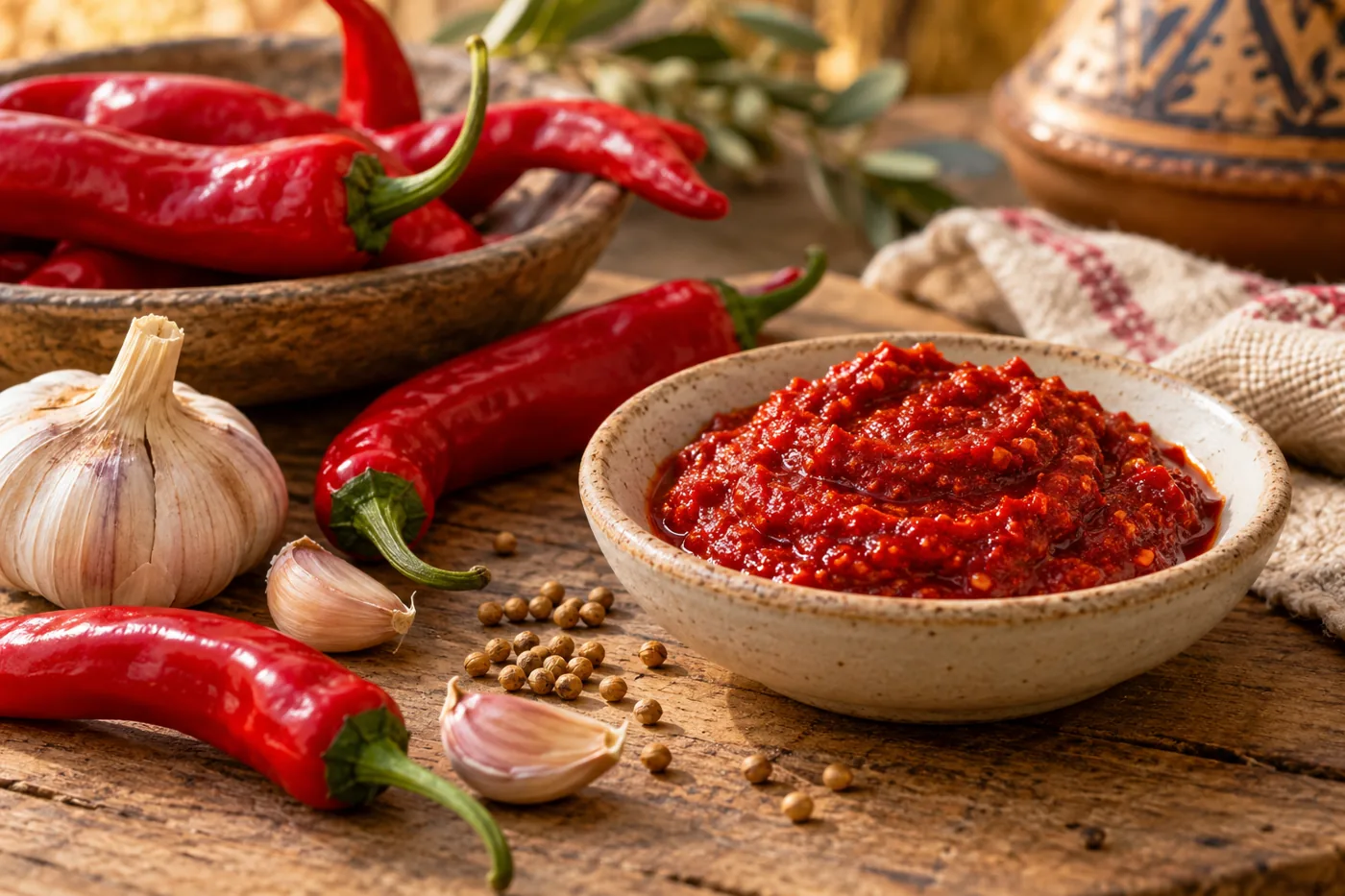
AI-created harissa still life with peppers, garlic and coriander. It illustrates ingredients named in the source, not their proportions, a storage method or a universal Tunisian recipe. Credit: AI-generated for Culture Ark using OpenAI image_gen. Rights: AI-generated output; no exclusive ownership or guaranteed copyrightability claimed. Changes: Resized within1400px and converted to WebP; no crop or substantive alteration.
Interpretive food illustration, not documentary evidence, a standardized recipe, exact ingredients or proportions, food-safety guidance, production instructions or a universal national version.
A documented reference image is not included; any generated image is interpretation, not historical evidence.
History and context
A jar of harissa condenses several kinds of work: growing peppers, preparing a paste, maintaining household provisions and deciding whom to share it with. The Tunisian tradition documented by UNESCO joins these activities to family and neighbourhood gatherings. Chilli peppers are combined with ingredients such as garlic and coriander, but the important cultural record is not a standardized recipe. Skills pass through watching experienced relatives and neighbours, and through professional education. Harissa may appear as an ingredient, condiment or appetizer, linking routine meals with celebrations. Future readers should notice how a small accompaniment can organize a year’s preparation and carry an exchange of care between households.
What future readers can learn
A condiment can preserve evidence of agricultural calendars, domestic labour, teaching and gift exchange.
Limits and cultural context
No preservation or food-safety instructions are offered. Regional recipes differ; UNESCO warns against standardization that stifles creativity.
Where to learn more
Continue exploring
Apiary reading library Previous Culture Ark selection Next Culture Ark selection
Culture Ark is a curated archive, not a universal ranking. Interpretive images and source evidence serve different roles.
Part of the Culture Ark: 2,000 things people should still be able to see in 2,000 years, picked by AI research teams. Browse the gallery. The Culture Ark is an Artificial Mind Hive (AMH) project. AMH is owned by Austin Little.

Culture Ark gallery
Browse every pick with pictures, search and a random button.
Open the gallery →