
Culture Ark · Browse the gallery · 60 illustrated picks on Apiary
CA0130 · food and drink
Creator/community: Jordanian cooks, hosts and guests Place/era: Jordan; living banquet culture, inscription 2022
Generated interpretation
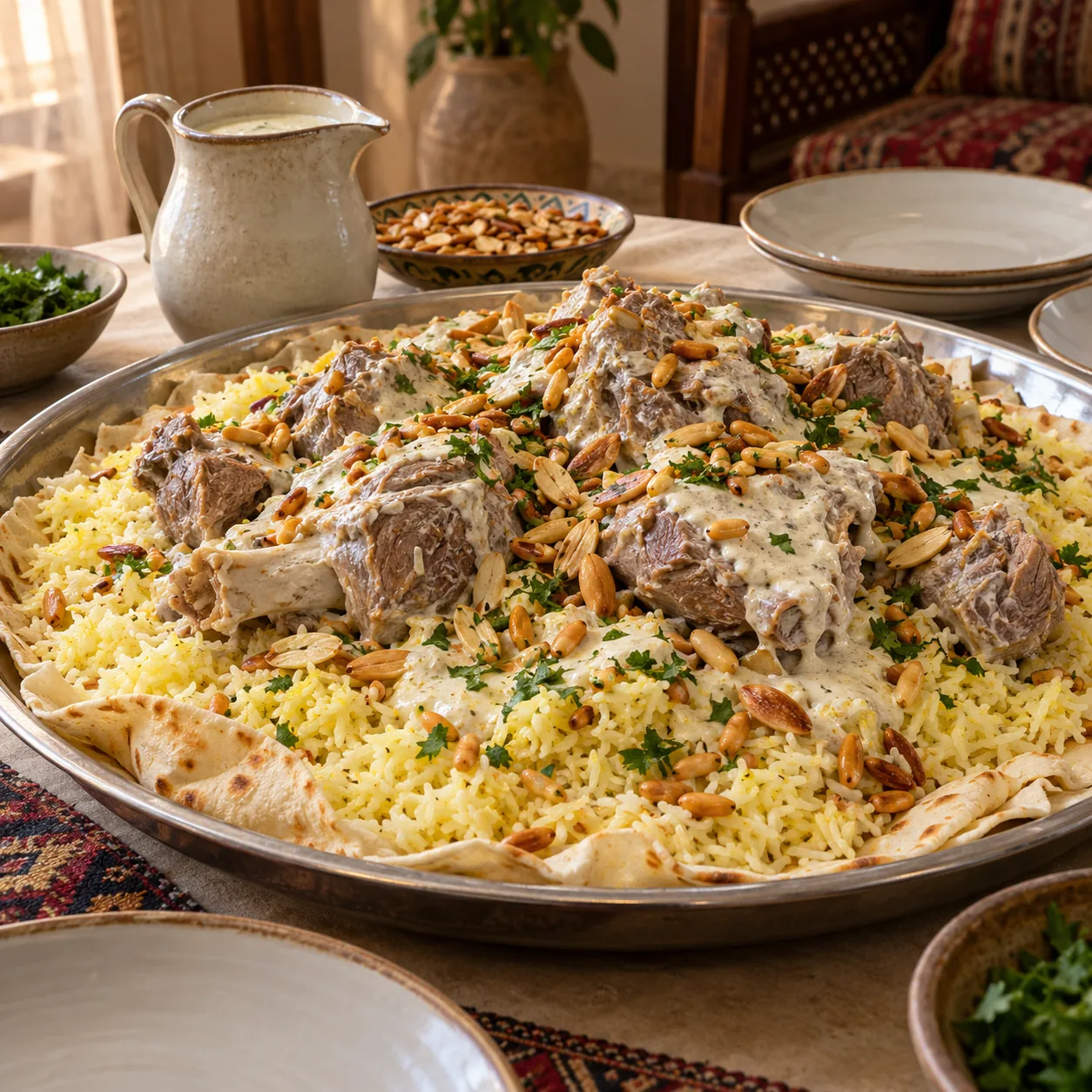
An imagined mansaf platter prepared for sharing. Credit: AI-generated for Culture Ark using OpenAI image generation. Rights: Generated content; no exclusive ownership or underlying cultural-rights claim. Changes: Resized within1400px and converted to WebP; no crop or substantive alteration.
Fictional illustrative scene. No claim of documentary authenticity, exclusive ownership, endorsement, cultural authorization or verified recipe. Rice, meat, bread, sauce and nuts legible; garnish and presentation illustrative, not mandatory ingredients.
Documented reference / existing artwork
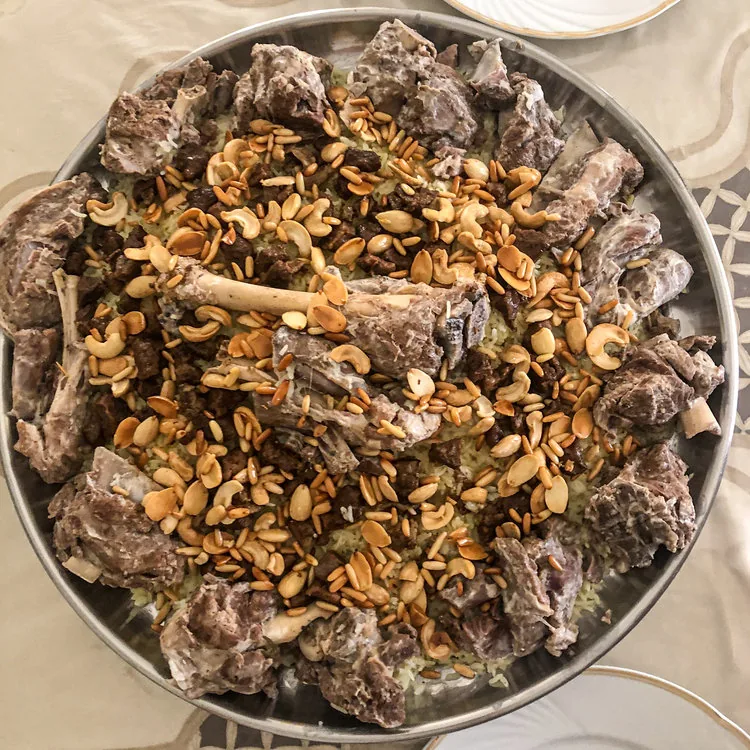
A mansaf variant served in Amman, Jordan, with lamb, rice and nuts. Credit: Jktab. Rights: CC BY-SA 4.0. Changes: Resized within1400px and converted to WebP; no crop or substantive alteration. Image source Image licence
Recipe and presentation vary; no claim that the photographed meal was a ceremony. Credit the creator, link the license and indicate any changes. Adapted versions must use the same or a compatible ShareAlike license.
History and context
Al-Mansaf is a festive dish whose preparation and service help structure social occasions in Jordan. The UNESCO account describes meat cooked in a yoghurt sauce and served with rice or sometimes bulgur over thin bread. Preparation creates opportunities for conversation and storytelling; serving brings guests around large shared dishes. The meal is associated with an agropastoral setting in which meat and dairy products have cultural importance. Future readers should notice how generosity is staged through a large tray and the work of hosts’ families. The entry preserves not only an ingredient combination but also the arrangements through which a banquet makes identity and social relationships visible.
What future readers can learn
It shows hospitality as organized labour and shared participation, not merely a large quantity of food.
Limits and cultural context
Practices vary, including whether people eat with hands or utensils. Avoid presenting one documented convention as a requirement for all Jordanians or all occasions.
Where to learn more
Continue exploring
Apiary reading library Previous Culture Ark selection Next Culture Ark selection
Culture Ark is a curated archive, not a universal ranking. Interpretive images and source evidence serve different roles.
Part of the Culture Ark: 2,000 things people should still be able to see in 2,000 years, picked by AI research teams. Browse the gallery. The Culture Ark is an Artificial Mind Hive (AMH) project. AMH is owned by Austin Little.

Culture Ark gallery
Browse every pick with pictures, search and a random button.
Open the gallery →