Culture Ark · Browse the gallery · 60 illustrated picks on Apiary
CA0129 · food and drink
Creator/community: Household bakers and communities in the shared flatbread inscription Place/era: Azerbaijan, Iran, Kazakhstan, Kyrgyzstan and Türkiye; inscription 2016
Generated interpretation
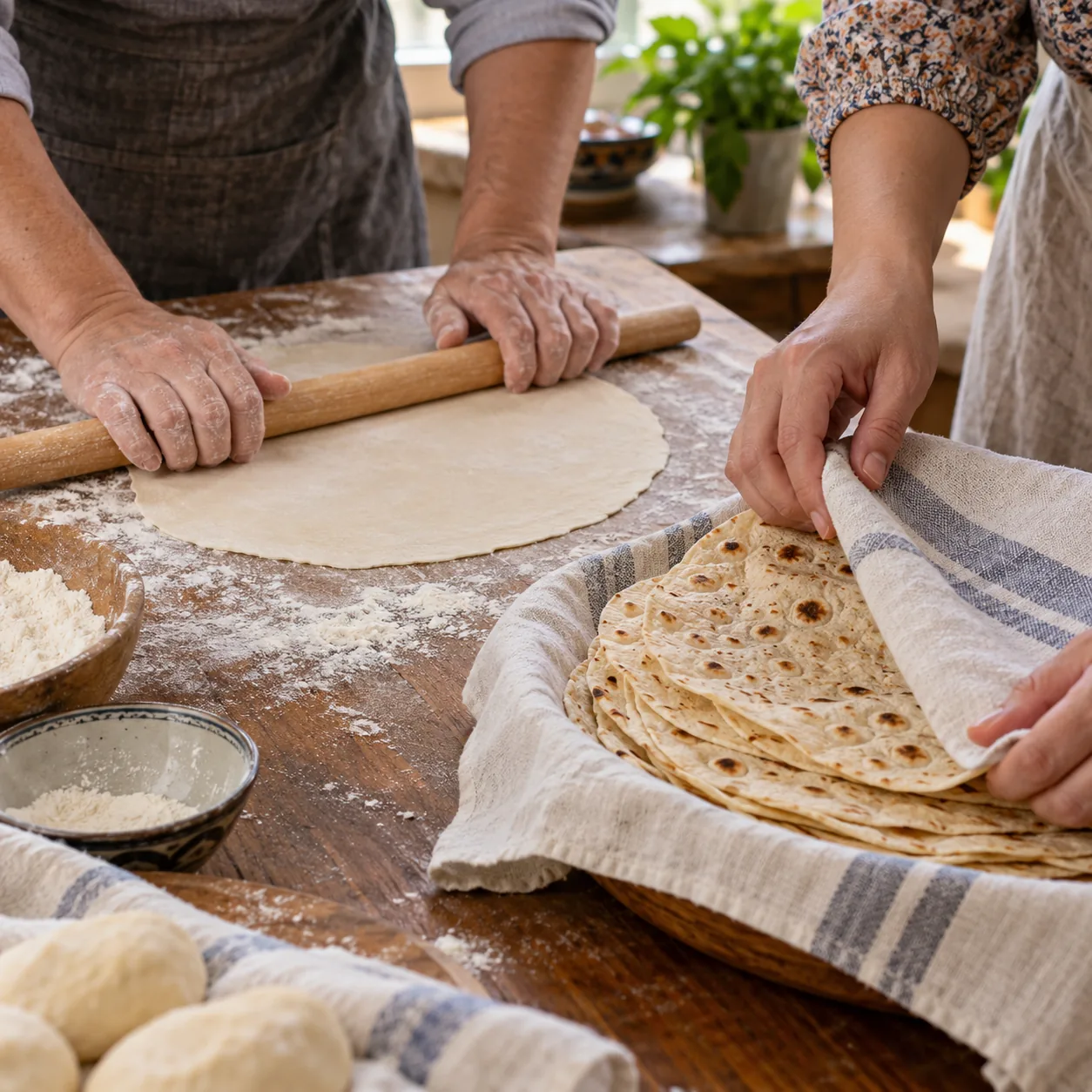
Imagined cooperative preparation of thin flatbread, with rolled dough and a covered stack. Credit: AI-generated for Culture Ark using OpenAI image generation. Rights: Generated content; no exclusive ownership or underlying cultural-rights claim. Changes: Resized within1400px and converted to WebP; no crop or substantive alteration.
Fictional illustrative scene. No claim of documentary authenticity, exclusive ownership, endorsement, cultural authorization or verified recipe. Hands, rolling pin and bread stack coherent; generic flatbread scene not an exact named-bread reconstruction.
Documented reference / existing artwork
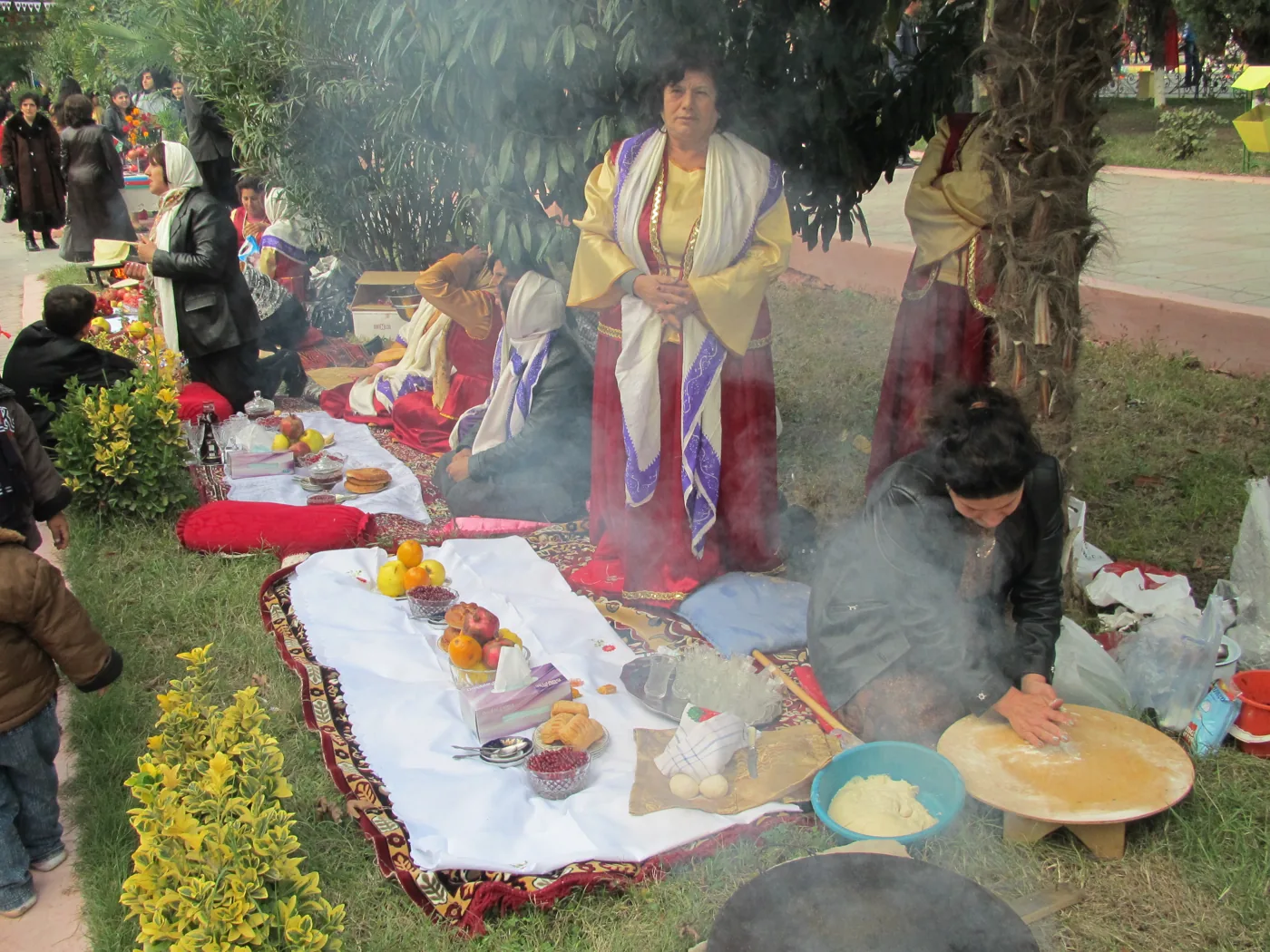
Women making lavash at the Pomegranate Festival in Goychay, Azerbaijan,2011. Credit: Moonsun1981. Rights: CC BY-SA 3.0. Changes: Resized within1400px and converted to WebP; no crop or substantive alteration. Image source.jpg) Image licence
Not mislabeled Armenian or representative of every flatbread; identifiable people, no endorsement/model-release claim. Credit the creator, link the license and indicate any changes. Adapted versions must use the same or a compatible ShareAlike license.
History and context
Making and sharing flatbread joins practical baking to mutual help and ceremonial life. The shared heritage record includes lavash, katyrma, jupka and yufka across five countries. The Turkish government’s account of the Azerbaijani tradition describes families and neighbours gathering to prepare thin dough and bake bread for daily use and important occasions. Bread can also carry blessings at weddings. Future readers should understand the named breads as related but not interchangeable. Comparing the people who gather, the equipment they use and the occasions for distributing bread reveals how a widely travelled food can maintain local forms of hospitality, obligation and celebration across a large region.
What future readers can learn
It shows cooperation and ceremony embedded in an ordinary staple shared across borders.
Limits and cultural context
The entry groups a specific multinational nomination, not every flatbread tradition. Local bread names and ceremonial meanings must not be indiscriminately transferred to one another.
Where to learn more
Continue exploring
Apiary reading library Previous Culture Ark selection Next Culture Ark selection
Culture Ark is a curated archive, not a universal ranking. Interpretive images and source evidence serve different roles.
Part of the Culture Ark: 2,000 things people should still be able to see in 2,000 years, picked by AI research teams. Browse the gallery. The Culture Ark is an Artificial Mind Hive (AMH) project. AMH is owned by Austin Little.

Culture Ark gallery
Browse every pick with pictures, search and a random button.
Open the gallery →