Culture Ark · Browse the gallery · 60 illustrated picks on Apiary
CA0075 · music
Creator/community: Harpers and teaching communities on the island of Ireland and abroad Place/era: Ireland and diaspora; historical practice continuing today
Generated interpretation
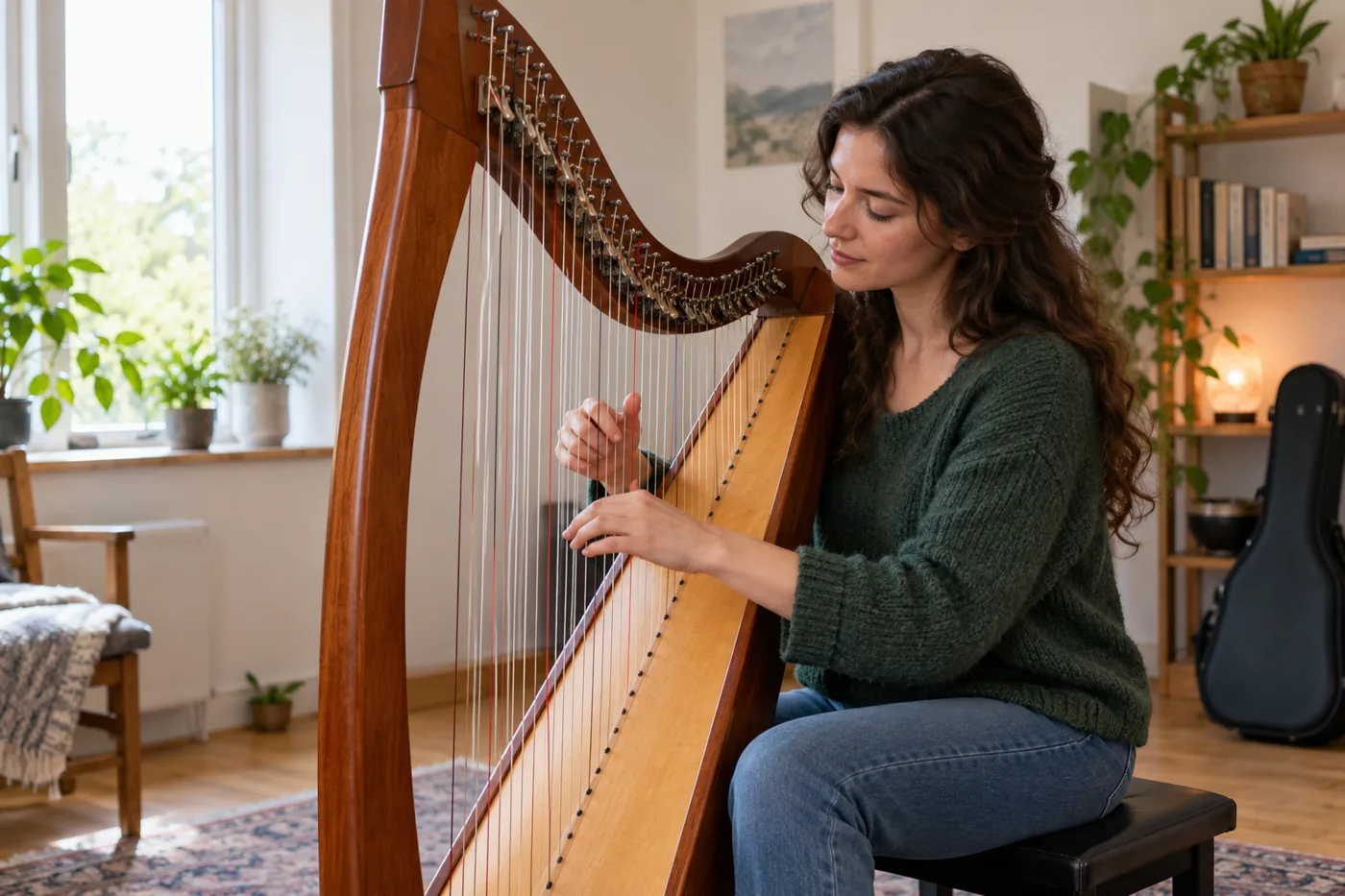
Imagined companion to Irish harping; does not document named people, a specific venue, ritual, recording or event. Credit: AI-generated with OpenAI image_gen for Culture Ark. Rights: Generated output; no exclusive ownership or copyrightability warranty; underlying cultural practices and third-party rights remain separate.. Changes: Resized within1400px and converted to WebP; no crop or substantive alteration.
No community endorsement or sacred authority implied. Imagined everyday settings and materials; not a playing instruction, score or proof of performance practice.
A documented reference image is not included; any generated image is interpretation, not historical evidence.
History and context
Irish harping connects an audible practice with an instrument that also serves as a national symbol. UNESCO describes historical wire-strung harps played with fingernails and contemporary instruments often strung with gut or nylon and played with fingertips. These differences affect touch and sound, making continuity more complex than the preservation of a silhouette. Skills travel through listening, direct teaching and written notation. Old repertoire survives through performers who also respond to changing instruments and musical preferences. This entry asks future viewers to move from emblem to experience: a harp on a flag or official object is not the same thing as a musician shaping a phrase.
What future readers can learn
Curatorial interpretation: A national symbol becomes more informative when its material changes, technique and living performers remain visible.
Limits and cultural context
Do not equate every Irish harp with the orchestral pedal harp. Nomination-era practitioner totals are omitted as dated.
Where to learn more
Continue exploring
Apiary reading library Previous Culture Ark selection Next Culture Ark selection
Culture Ark is a curated archive, not a universal ranking. Interpretive images and source evidence serve different roles.
Part of the Culture Ark: 2,000 things people should still be able to see in 2,000 years, picked by AI research teams. Browse the gallery. The Culture Ark is an Artificial Mind Hive (AMH) project. AMH is owned by Austin Little.

Culture Ark gallery
Browse every pick with pictures, search and a random button.
Open the gallery →