Culture Ark · Browse the gallery · 60 illustrated picks on Apiary
CA0077 · music
Creator/community: Dalmatian klapa singers and their communities Place/era: Dalmatia, southern Croatia; living vocal tradition
Generated interpretation
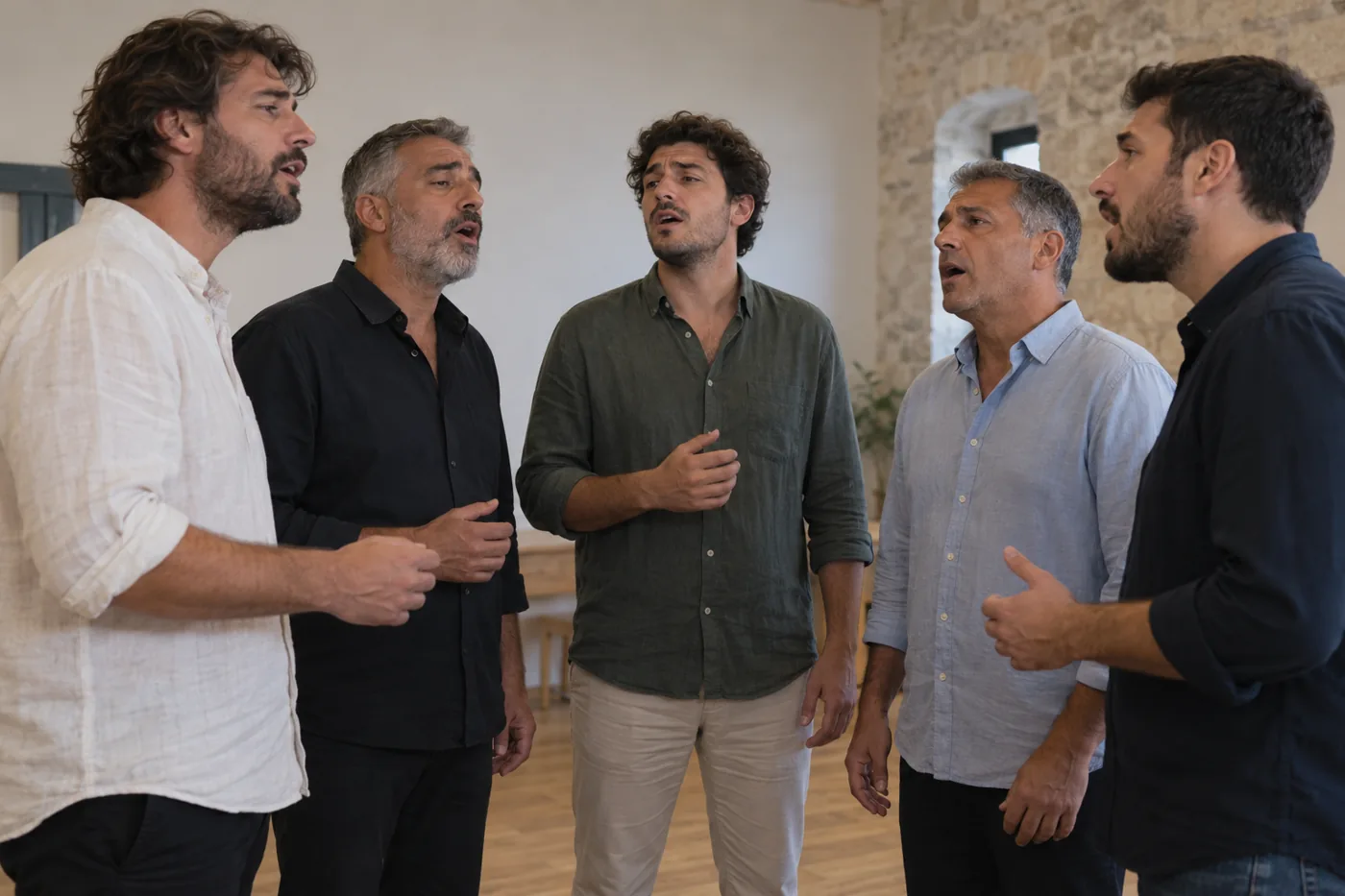
Imagined companion to Klapa multipart singing; does not document named people, a specific venue, ritual, recording or event. Credit: AI-generated with OpenAI image_gen for Culture Ark. Rights: Generated output; no exclusive ownership or copyrightability warranty; underlying cultural practices and third-party rights remain separate.. Changes: Resized within1400px and converted to WebP; no crop or substantive alteration.
No community endorsement or sacred authority implied. Imagined everyday settings and materials; not a playing instruction, score or proof of performance practice.
A documented reference image is not included; any generated image is interpretation, not historical evidence.
History and context
Klapa is a multipart vocal practice in which a leading tenor begins and other voices join to create a closely blended sound. Singers traditionally stand in a compact semicircle, shaping phrases together without instrumental accompaniment. Songs often address affection, daily situations and the surrounding environment. UNESCO distinguishes orally transmitted traditional groups from festival-oriented and modern forms, where organized performance and recordings play larger roles. The entry preserves this range rather than presenting one unchanging format. It draws attention to how a musical group listens internally: successful blending depends on individual singers adjusting themselves to one another, while retaining the different functions of higher and lower voices.
What future readers can learn
Curatorial interpretation: Ensemble skill includes listening and adjustment, not merely the accumulation of impressive individual voices.
Limits and cultural context
A cappella describes the documented tradition; contemporary arrangements can differ. Do not treat festival staging as its only setting.
Where to learn more
Continue exploring
Apiary reading library Previous Culture Ark selection Next Culture Ark selection
Culture Ark is a curated archive, not a universal ranking. Interpretive images and source evidence serve different roles.
Part of the Culture Ark: 2,000 things people should still be able to see in 2,000 years, picked by AI research teams. Browse the gallery. The Culture Ark is an Artificial Mind Hive (AMH) project. AMH is owned by Austin Little.

Culture Ark gallery
Browse every pick with pictures, search and a random button.
Open the gallery →