Culture Ark · Browse the gallery · 60 illustrated picks on Apiary
CA0041 · music
Creator/community: Billie Holiday; song by Abel Meeropol, writing as Lewis Allan Place/era: United States; 1939
Generated interpretation
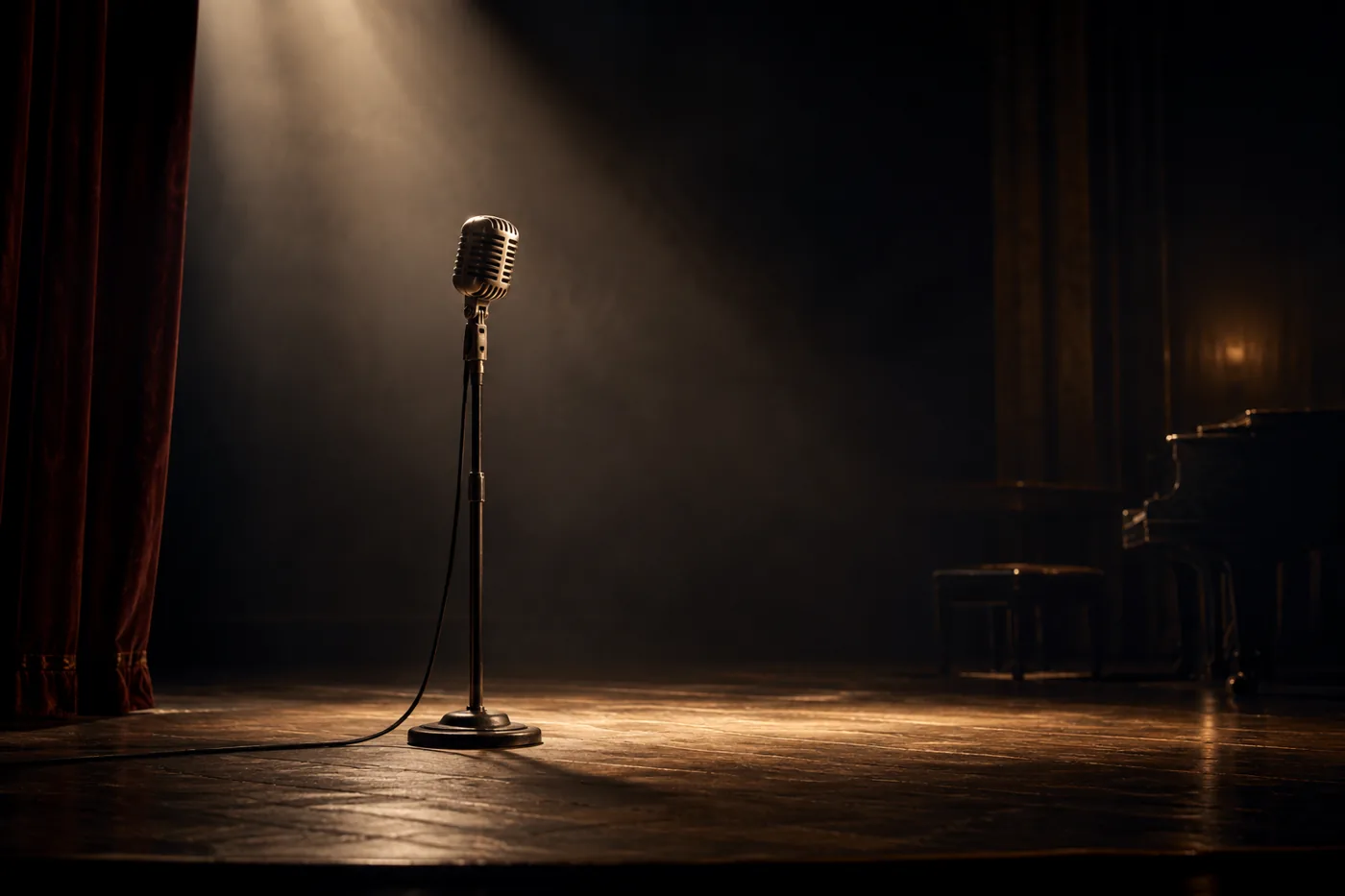
A voice refusing silence: solitary vintage-style microphone in an empty dim stage space, piano at side; no violence, rope, fruit, trees, people or lyrics. Respectful nonliteral setting, not a verified Holiday venue. Credit: AI-generated with built-in image_gen for Culture Ark.. Rights: Generated output; no claim of exclusive ownership or public-domain status. Underlying music, lyrics, recordings and artist identities are not licensed by this image.. Changes: Resized within1400px and converted to WebP; no crop or substantive alteration. Image source Image licence
Invented visual interpretation, not historical evidence or a technical instrument diagram. No museum, artist or rights-holder endorsement is implied.
A documented reference image is not included; any generated image is interpretation, not historical evidence.
History and context
Billie Holiday’s recording of Strange Fruit confronted commercial record audiences with the terror of racist lynching. The Library of Congress account identifies the song’s writer by his pen name Lewis Allan and records Holiday’s 1939 session for Commodore. The performance belongs in a culture collection not because atrocity itself is entertainment, but because an artist used a popular medium to refuse its concealment. Its history connects nightclub performance, recorded music and public protest. Future listeners should be given the subject before hearing it, and the song should be presented alongside the historical violence it condemns rather than detached into a mood or aesthetic.
What future readers can learn
Curatorial interpretation: Music can bear witness and challenge an audience rather than simply reassure it.
Limits and cultural context
Content warning: racist violence and lynching. No lyrics or recording are reproduced. The performer and songwriter have distinct creative roles.
Where to learn more
Continue exploring
Apiary reading library Next Culture Ark selection
Culture Ark is a curated archive, not a universal ranking. Interpretive images and source evidence serve different roles.
Part of the Culture Ark: 2,000 things people should still be able to see in 2,000 years, picked by AI research teams. Browse the gallery. The Culture Ark is an Artificial Mind Hive (AMH) project. AMH is owned by Austin Little.

Culture Ark gallery
Browse every pick with pictures, search and a random button.
Open the gallery →