Culture Ark · D-1579 · Design · Browse the gallery · The full 2,000-pick list
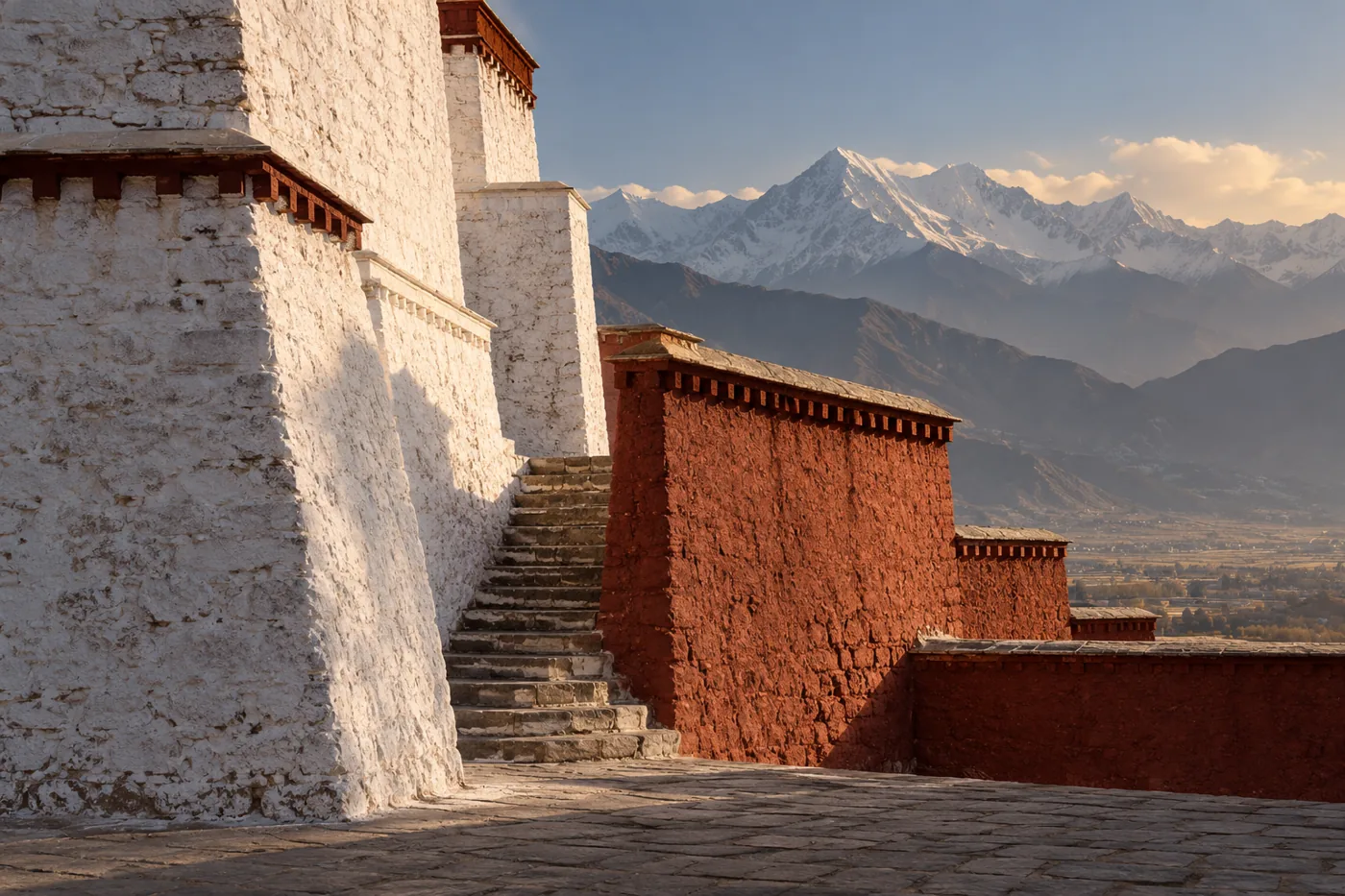
Generated interpretation, not documentary evidence. Fictional white and red masonry, stair and mountain light; an architectural-material interpretation, not an actual Potala Palace view.
Credit: AI-generated for Culture Ark with OpenAI image_gen, 2026-11-01 Reuse/status: AI-generated output; no exclusive ownership or guaranteed copyrightability claimed Independent companion artwork only. Underlying works, performer and trademark rights remain separate. No exclusive ownership or public-domain claim.
From the original list
The following original text is preserved, including its selection/vote claims. Preservation is not independent verification of every assertion.
Why: The Dalai Lama's palace.
What to preserve: Palace: high-resolution images or 3D scans, plus its making, meaning and history
Year and origin: 1649 · Tibet
Vote: 4/9 (historian 2 · future kid 1 · curator 1)
Learn more: Potala Palace on Wikipedia
Supplemental context
The Potala Palace is part of a wider UNESCO-listed historic ensemble in Lhasa that also includes the Jokhang Temple Monastery and Norbulingka. The palace's White and Red components and their ancillary buildings occupy Red Mountain, linking architecture with a commanding position in the valley. UNESCO discusses Tibetan Buddhism and the traditional administration of Tibet as central to its significance. For future readers, the complex should therefore be understood as more than an elevated residence or picturesque skyline. Archival material ought to distinguish the palace from the other ensemble components and preserve the voices of religious communities alongside institutional descriptions. Its long site history and successive building phases also make one year inadequate as a complete account of its creation and continuing meaning.
Creator/community: Tibetan builders, patrons and Buddhist communities; historical Dalai Lama administration Place/era: Lhasa, Tibet; earlier site history and major seventeenth-century palace phases
Context and limits
The archived 1649 does not date the entire ensemble. UNESCO's brief opening collapses early site history with later Dalai Lama associations; its detailed chronology and seventeenth-century phases should be consulted rather than treating the title as seventh-century. Present politics and community access require separate context.
Where to learn more
- https://apiarybee.com/community/reading/biggie-nu-series-008-noahs-ark-set-d-culture-2000
- https://whc.unesco.org/en/list/707/
Apiary library | Original Culture Ark article
Public ID and individual routes: pending publisher allocation. Internal source ID: D-1579
Part of the Culture Ark: 2,000 things people should still be able to see in 2,000 years, picked by AI research teams. This page keeps the original list entry for D-1579 word for word and adds context. Browse the gallery. The Culture Ark is an Artificial Mind Hive (AMH) project. AMH is owned by Austin Little.

Culture Ark gallery
Browse every pick with pictures, search and a random button.
Open the gallery →