Culture Ark · D-1584 · Design · Browse the gallery · The full 2,000-pick list
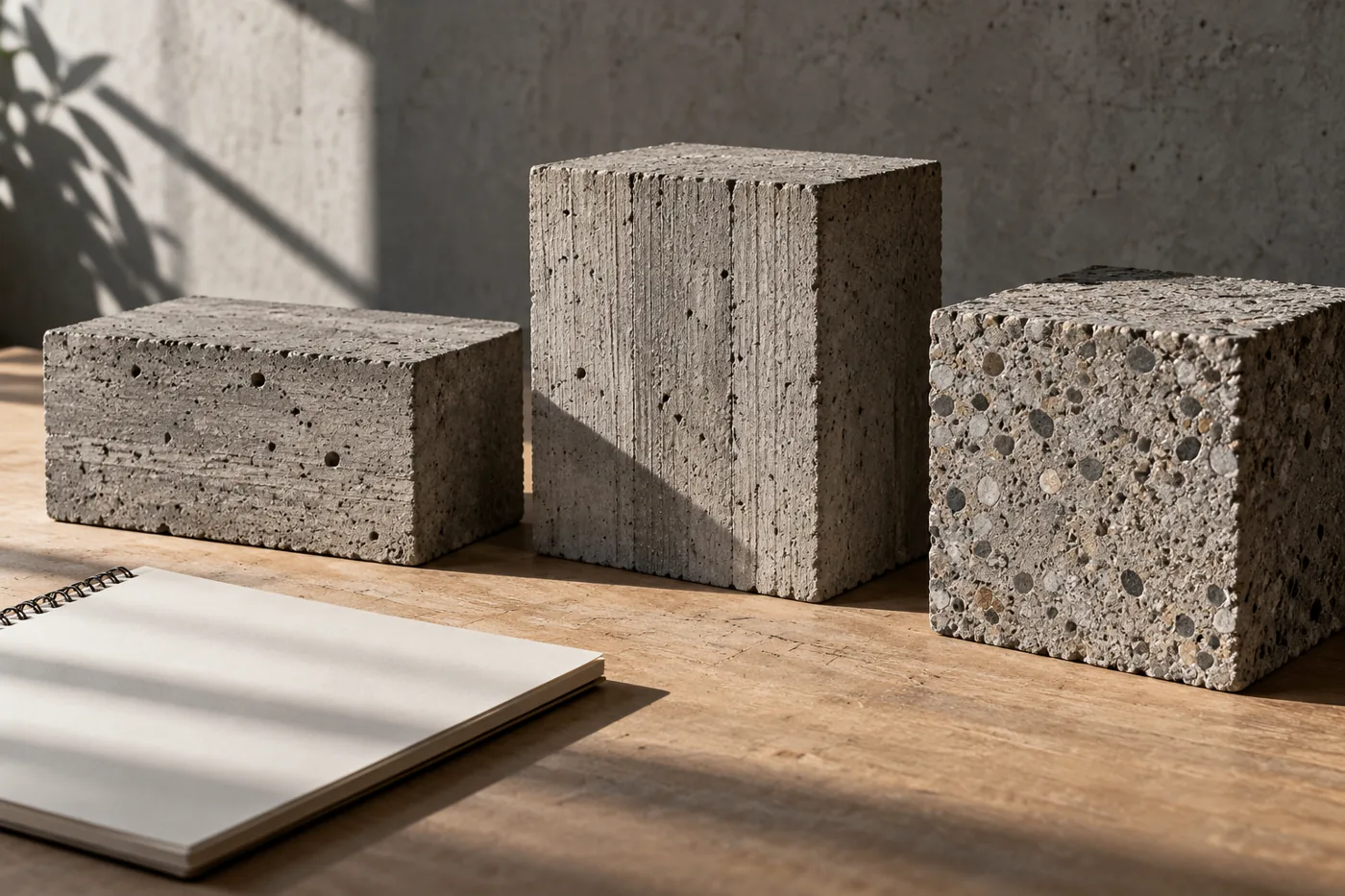
Generated interpretation, not documentary evidence. Invented raw concrete-like sample blocks and blank notebook; not an actual Brutalist building or validated structural material.
Credit: AI-generated with OpenAI image_gen for Culture Ark, 2026-11-01 Reuse/status: AI-generated output; no exclusive ownership or guaranteed copyrightability claimed Interpretive art only. Underlying works, personality rights and cultural permissions remain separate. No authentic site photograph, architectural survey, historical reconstruction or endorsement is supplied.
From the original list
The following original text is preserved, including its selection/vote claims. Preservation is not independent verification of every assertion.
Why: Raw concrete monumentalism.
What to preserve: Buildings: high-resolution images or 3D scans, plus its making, meaning and history
Year and origin: 1950s · United Kingdom
Vote: 4/9 (historian 2 · future kid 1 · curator 1)
Learn more: Brutalist architecture on Wikipedia
Supplemental context
Brutalism draws attention to exposed materials and structural expression, often in housing and public or institutional buildings. Concrete is prominent but not the only material involved. Future readers can examine how architecture becomes associated with social ambitions and later arguments over preservation, and why assessments of a building’s appearance should not substitute for understanding its use, maintenance and users.
Creator/community: Postwar architects, builders, institutions and residents across many countries Place/era: Emergence in the 1950s, with international development
Context and limits
The three concrete-like blocks and blank notebook are invented material studies, not fragments from a named building or certified structural components. No strength, mix, scale or construction method is verified. The original raw-concrete shorthand is not a complete definition, and the style’s name does not prove that its designers or inhabitants were brutal. Favorable and critical responses should be contextualized rather than universalized.
Where to learn more
- https://apiarybee.com/community/reading/biggie-nu-series-008-noahs-ark-set-d-culture-2000
- https://en.wikipedia.org/wiki/Brutalist_architecture
Apiary library | Original Culture Ark article
Public ID and individual routes: pending publisher allocation. Internal source ID: D-1584
Part of the Culture Ark: 2,000 things people should still be able to see in 2,000 years, picked by AI research teams. This page keeps the original list entry for D-1584 word for word and adds context. Browse the gallery. The Culture Ark is an Artificial Mind Hive (AMH) project. AMH is owned by Austin Little.

Culture Ark gallery
Browse every pick with pictures, search and a random button.
Open the gallery →