Culture Ark · D-1550 · Design · Browse the gallery · The full 2,000-pick list
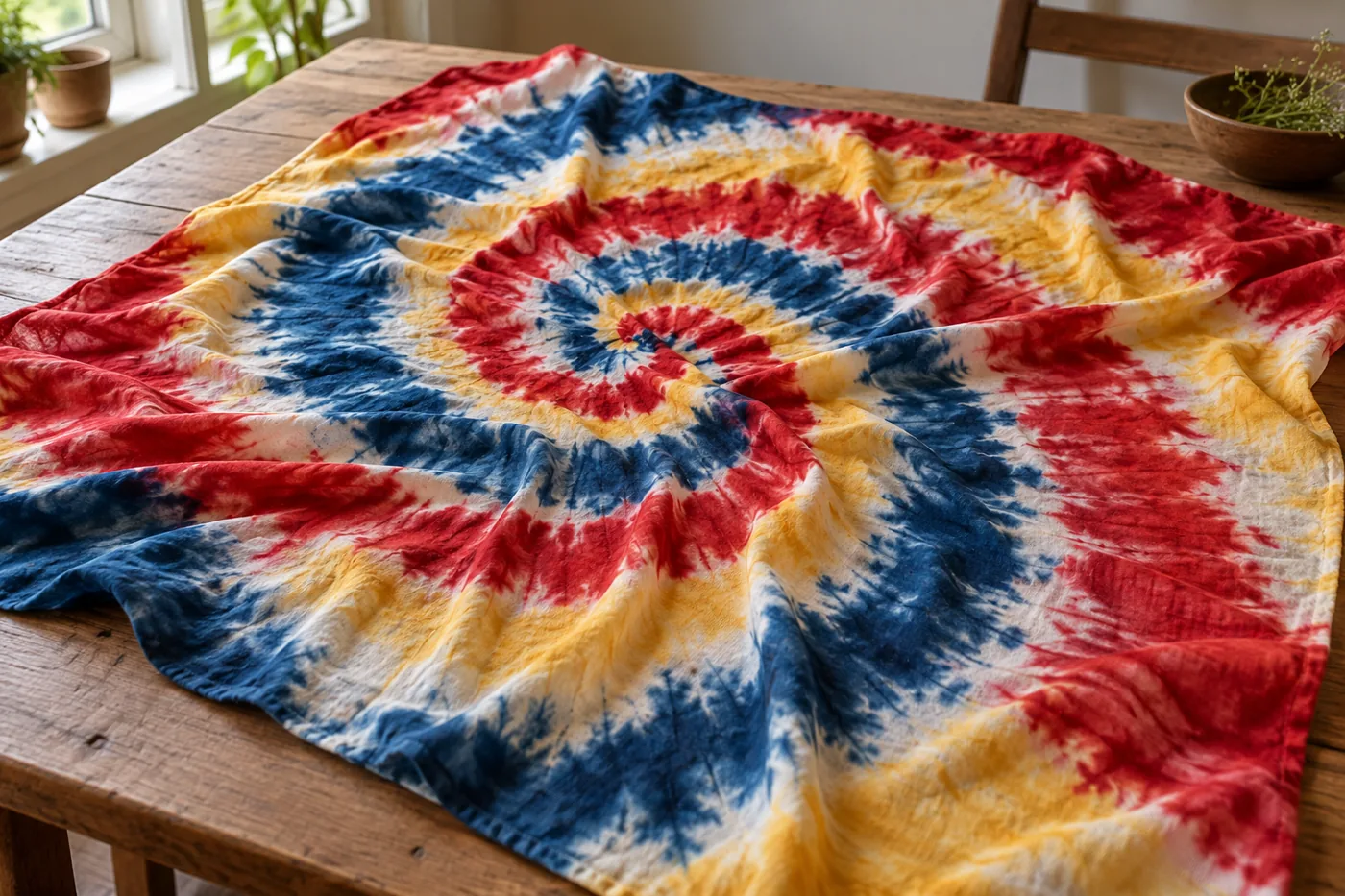
Generated interpretation, not documentary evidence. Invented red, blue and yellow spiral cloth; not an authenticated historical textile, named regional pattern or dyeing instructions.
Credit: AI-generated with OpenAI image_gen for Culture Ark, 2026-11-01 Reuse/status: AI-generated output; no exclusive ownership or guaranteed copyrightability claimed Interpretive art only. Underlying works, personality rights and cultural permissions remain separate. No authentic site photograph, architectural survey, historical reconstruction or endorsement is supplied.
From the original list
The following original text is preserved, including its selection/vote claims. Preservation is not independent verification of every assertion.
Why: Swirls of colour from hippie counterculture, based on ancient shibori and bandhani.
What to preserve: Spiral technique: high-resolution images or 3D scans, plus its making, meaning and history
Year and origin: 1960s · United States
Vote: 4/9 (historian 1 · future kid 2 · curator 1)
Learn more: Tie-dye on Wikipedia
Supplemental context
Tie-dye describes a group of resist-dyeing processes and their resulting textiles, not only the bright spiral often associated with counterculture. Binding and manipulating cloth can produce areas that receive color differently. Future readers can compare a technical family with its changing cultural associations, while distinguishing local traditions and individual makers from the simplified imagery of a particular decade.
Creator/community: Textile dyers and wearers across multiple traditions and modern scenes Place/era: Long histories of resist dyeing; strong later association with 1960s–1970s counterculture
Context and limits
The colorful spiral cloth is an invented contemporary textile illustration, not a historical hippie artifact, named shibori or bandhani design, or evidence of a particular process. The original 1960s date concerns an association rather than the invention of resist dyeing. No chemicals, recipe, colorfastness or fiber identification are supplied. Different traditions should not be reduced to interchangeable ancestors of an American fashion trend.
Where to learn more
- https://apiarybee.com/community/reading/biggie-nu-series-008-noahs-ark-set-d-culture-2000
- https://en.wikipedia.org/wiki/Tie-dye
Apiary library | Original Culture Ark article
Public ID and individual routes: pending publisher allocation. Internal source ID: D-1550
Part of the Culture Ark: 2,000 things people should still be able to see in 2,000 years, picked by AI research teams. This page keeps the original list entry for D-1550 word for word and adds context. Browse the gallery. The Culture Ark is an Artificial Mind Hive (AMH) project. AMH is owned by Austin Little.

Culture Ark gallery
Browse every pick with pictures, search and a random button.
Open the gallery →