Culture Ark · D-1549 · Design · Browse the gallery · The full 2,000-pick list
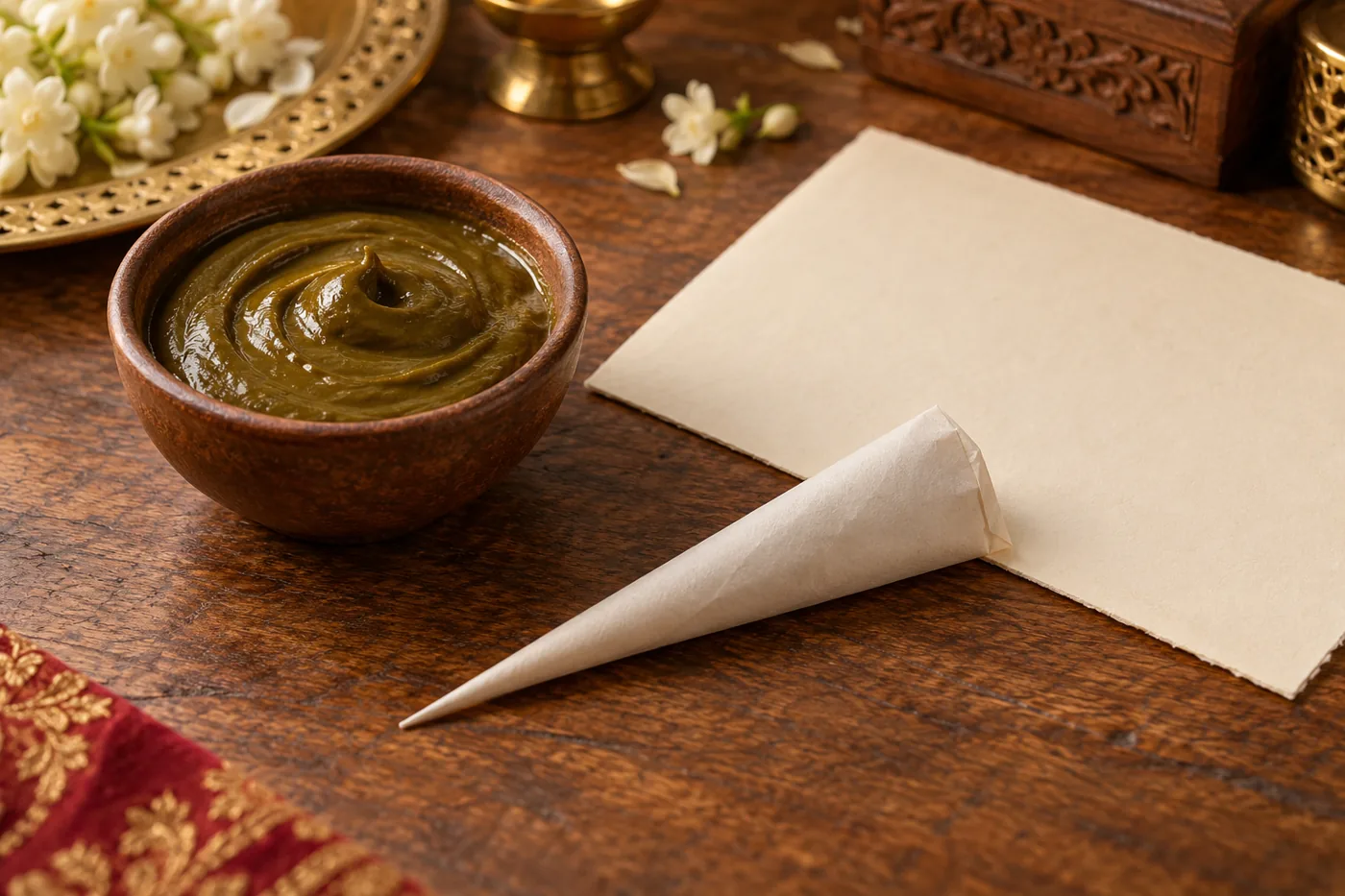
Generated interpretation, not documentary evidence. Invented paste-like material, plain paper cone and blank sheet; not a henna recipe, bridal pattern or authentic ceremony.
Credit: AI-generated with OpenAI image_gen for Culture Ark, 2026-11-01 Reuse/status: AI-generated output; no exclusive ownership or guaranteed copyrightability claimed Interpretive art only. Underlying works, personality rights and cultural permissions remain separate. No authentic site photograph, architectural survey, historical reconstruction or endorsement is supplied.
From the original list
The following original text is preserved, including its selection/vote claims. Preservation is not independent verification of every assertion.
Why: Henna patterns painted for weddings and festivals.
What to preserve: Bridal designs, henna plant
Year and origin: ancient · India
Vote: 4/9 (historian 1 · future kid 1 · curator 2)
Learn more: Mehndi on Wikipedia
Supplemental context
Mehndi uses henna-based paste for temporary skin decoration and belongs to varied social and celebratory practices. Related henna traditions also occur beyond South Asia, so one national label cannot capture every history or meaning. Future readers can explore how adornment connects skilled work, personal choice and occasions of gathering, while keeping specific designs and customs tied to the people who practice them.
Creator/community: Henna artists and families in varied South Asian and connected regional traditions Place/era: Longstanding temporary body-decoration practices with distinct local and ceremonial contexts
Context and limits
The paste-like material, paper cone, blank sheet and decorative props are invented context, not a bridal design, actual ceremony or verified ingredient sample. No skin application, formula or safety claim is provided. Generic background ornament is not authenticated cultural pattern. The opened overview has a citation warning, so ancient origins and universal wedding roles are not asserted; appearance alone cannot establish what a cosmetic contains.
Where to learn more
- https://apiarybee.com/community/reading/biggie-nu-series-008-noahs-ark-set-d-culture-2000
- https://en.wikipedia.org/wiki/Mehndi
Apiary library | Original Culture Ark article
Public ID and individual routes: pending publisher allocation. Internal source ID: D-1549
Part of the Culture Ark: 2,000 things people should still be able to see in 2,000 years, picked by AI research teams. This page keeps the original list entry for D-1549 word for word and adds context. Browse the gallery. The Culture Ark is an Artificial Mind Hive (AMH) project. AMH is owned by Austin Little.

Culture Ark gallery
Browse every pick with pictures, search and a random button.
Open the gallery →